The story in Ha Loc fishing village (Tam Xuan commune, Da Nang city) is proving the principle: to sustainably preserve marine ecosystems, protect the environment and biodiversity, it is necessary to create sustainable livelihoods for the people.
Ron's way of thinking
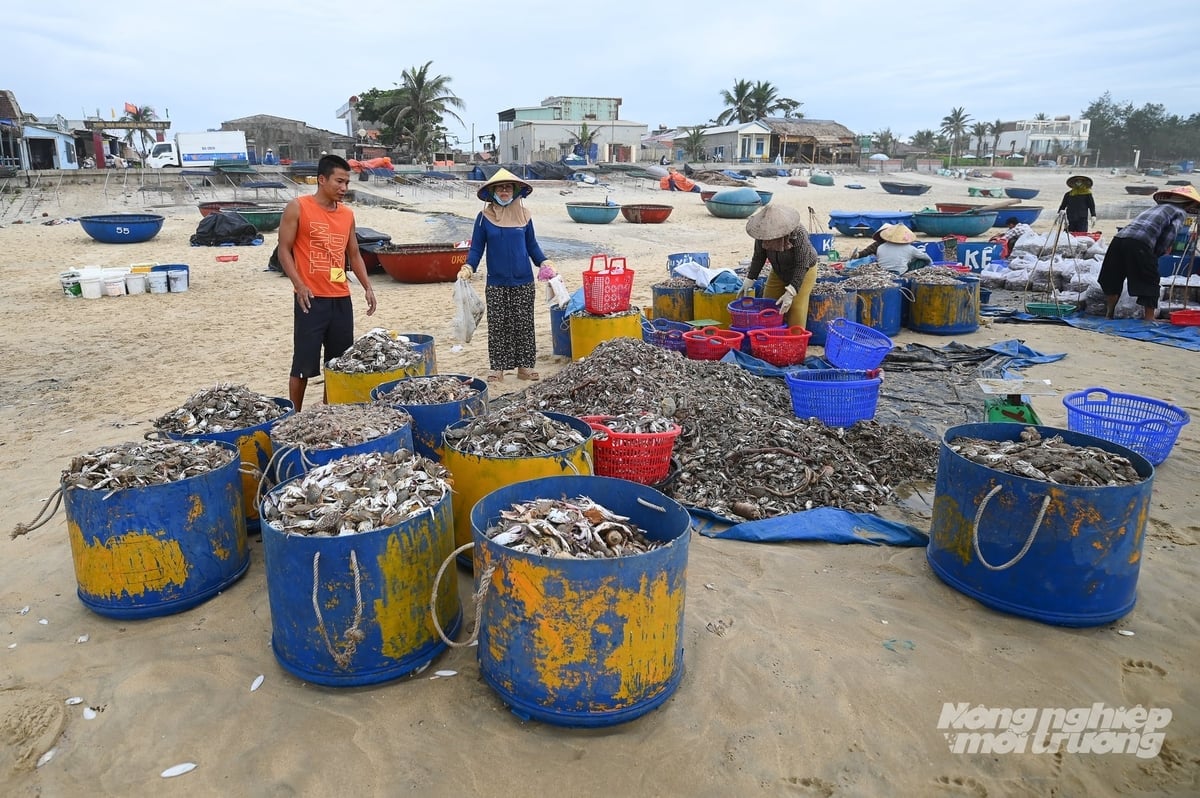
At 4 a.m., the dawn was still hidden beneath the sea. The fishing boats had just returned, their lights illuminating the distance like a floating city. On the beach, before dawn, the Tam Tien fish market (Ha Loc village, Tam Xuan commune, Da Nang city) was already bustling and lively. Traders from six communes of Nui Thanh district (formerly Quang Nam province) flocked there to buy seafood. The hustle and bustle continued until the sun rose above the coconut trees.
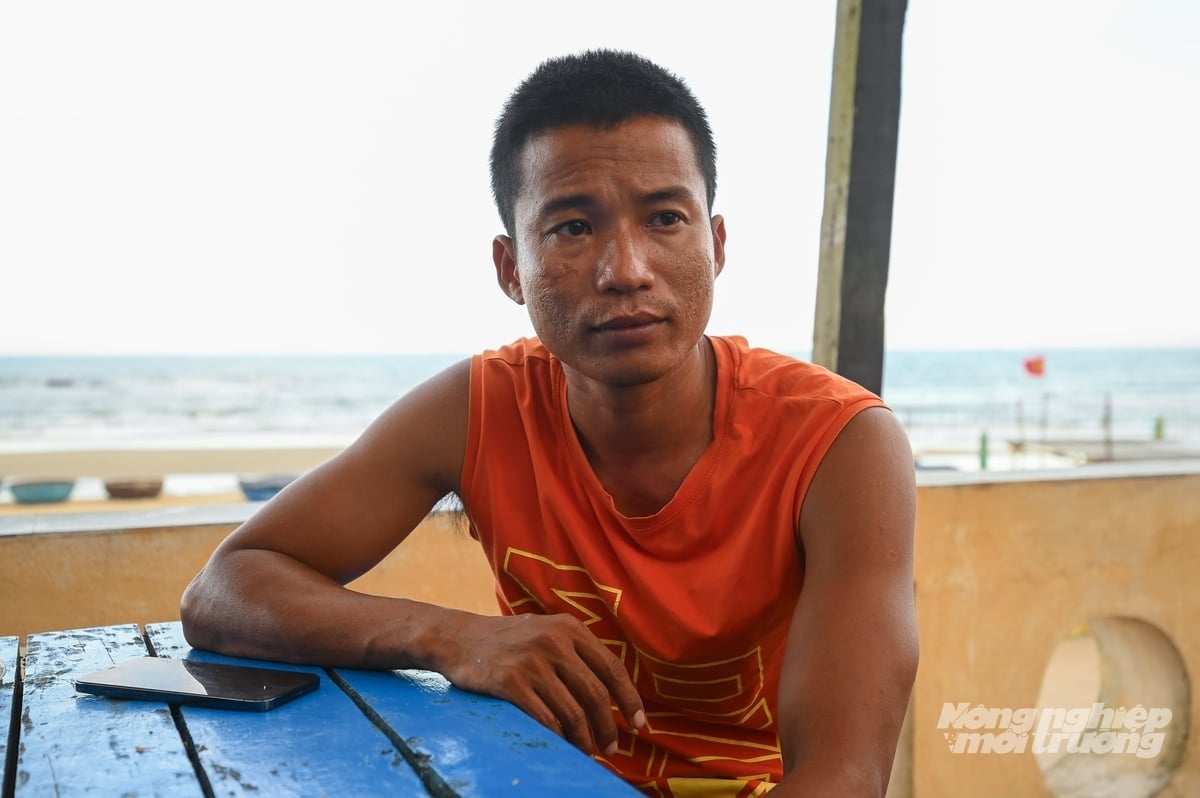
Vo Hong Ron, 34 years old - Deputy Head of the Community Conservation Team for the 64-hectare sea surface of Ba Dau Reef. Photo: Tung Dinh.
From here, seafood continues its journey to tourist areas, restaurants, hotels, and resorts in bustling coastal cities like Da Nang and Hoi An, as well as to traditional markets familiar to the people of Quang Nam province. The fresh fish, shrimp, crabs, and other seafood retain the original flavor of the sea, the sun, and the wind of Tam Xuan.
Every day, more than 200 offshore fishing vessels bring hundreds of tons of seafood to Tam Xuan. Each year, the amount of seafood harvested reaches 3,000 tons, placing Ha Loc among the top producers of seafood in Nui Thanh district. This is the main livelihood of the local people, preserved and passed down as a traditional occupation.
However, natural fish and shrimp populations have declined over time, coupled with destructive fishing practices, leading to increasing scarcity. This situation made Ron ponder.
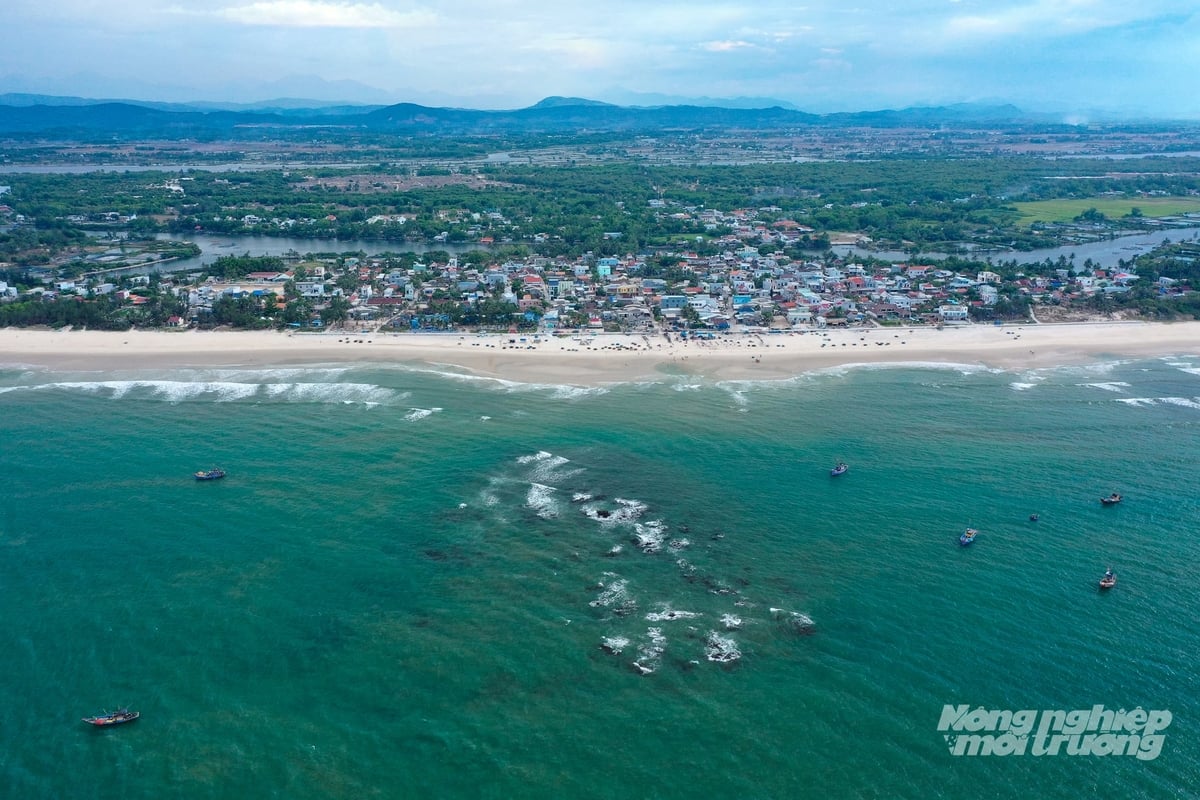
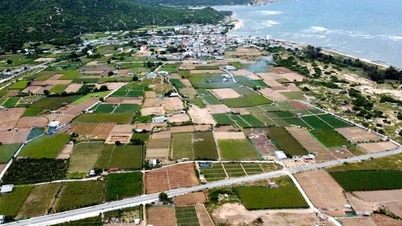
Ha Loc fishing village (Tam Xuan commune, Da Nang city) overlooks a 64-hectare coral reef in the East Sea. Photo: Tung Dinh.
Born in 1992, Vo Hong Ron is a well-trained engineer specializing in petroleum engineering. For four years (from 2014 to 2017), Ron worked for several oil and gas companies, earning a monthly salary of hundreds of millions of dong. But one day, Ron decided to quit that high-paying job and return to his hometown of Tam Tien, joining the fishermen to go out to sea and preserve their traditional livelihood.
One afternoon, Ron strolled along the beach. The long, golden, smooth sand stretched endlessly, with white-crested waves crashing against the shore. The sea was deep blue. On a sunny day, the water at Ba Dau Reef was crystal clear, allowing one to see the bottom and schools of fish and shrimp swimming. This is a breeding ground for valuable marine species such as lobsters, which live in the coral reef; the people of Ha Loc call it Ba Dau Reef. The natural spawning grounds near the shore, dating back thousands of years, are the pride of the fishing village. Because of these spawning grounds, the fishing grounds of Tam Xuan are more prosperous than other coastal areas.
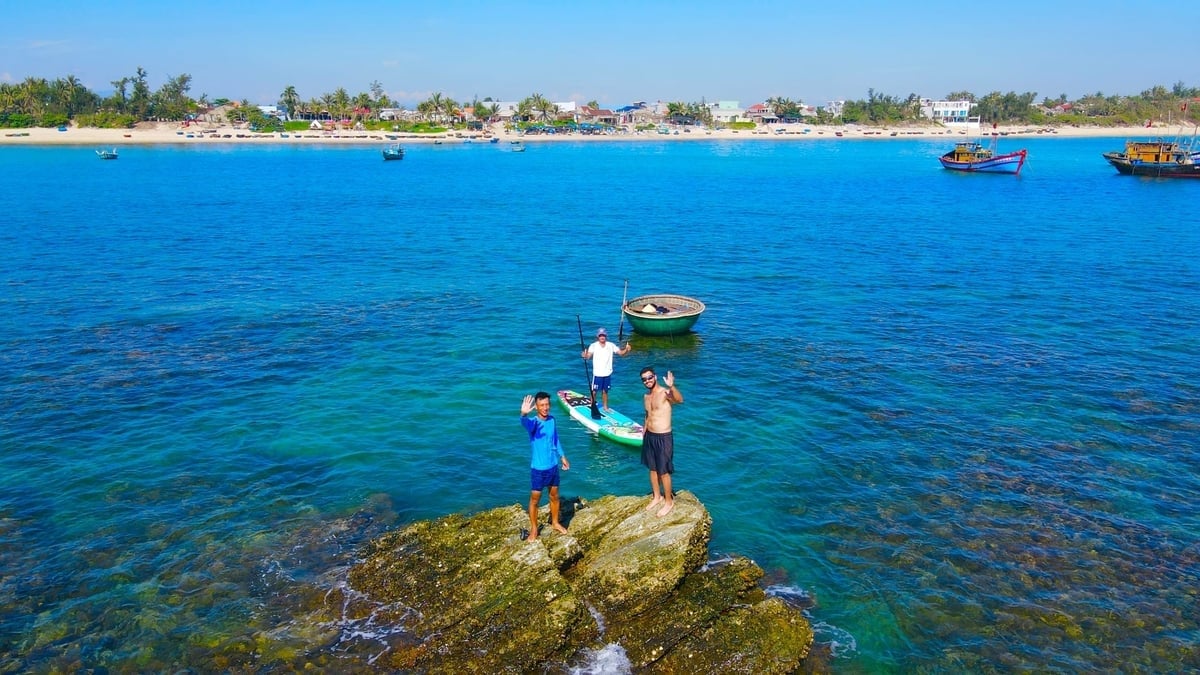
Natural coral reefs are habitats and natural breeding grounds for marine life. Photo: Tung Dinh.
But for generations in this fishing village, the only thing people care about is the daily catch. Fish coming off the boat means money. The exhausted men return home to catch up on sleep after a sleepless night, leaving the restless boats out at sea, their heads resting on the waves. This cycle repeats, day after day, for easily a hundred years. Only on days of rough seas, when unavoidable circumstances prevent them from staying home, does the sea get a rest.
Inland, closer to the residential area, are overflowing, foul-smelling garbage dumps…
“I myself am a fisherman. Seeing that seafood stocks will gradually dwindle if things continue like this, I am very saddened. Furthermore, where you were standing a few years ago, the piles of household waste were towering, mostly organic waste, shrimp shells, and leftover fish heads… The garbage collection schedule in the commune is only once a week. Therefore, the final collection point is the empty plots of land next to the fish market adjacent to the sea… Over time, the amount of waste accumulates year after year, and leachate flows directly into the sea. If this continues, it can't go on,” Ron confided.
It was a late afternoon in 2022…
Ron's method
After that thought-provoking afternoon, Ron decided to leave the ship and abandon his livelihood of offshore fishing. But how to start over remained a distant question.
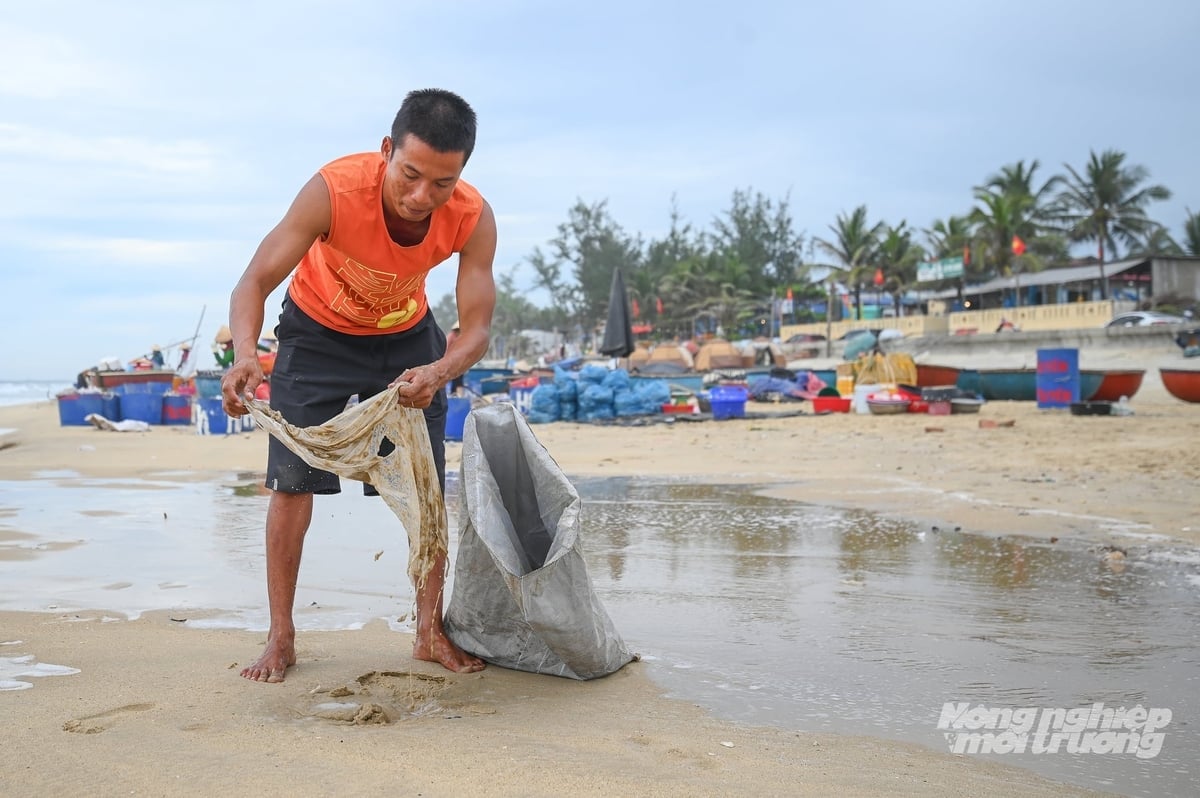
Ron's method. Photo: Tung Dinh.
One of Ron's brothers owns a wooden house built right on the beach. He lives outside of Tam Ky and only comes back to his hometown occasionally, so the house is left empty and rarely used. Tam Tien beach is pristine; on weekends, small groups of tourists still come to play and swim, but because there is no accommodation or food services, they stay for a while and then leave.
Meanwhile, Tam Tien fish market, famous throughout the region and located only about 40 km from Hoi An, still attracts foreign tourists. Tam Tien seafood is renowned for its freshness and quality, serving as a major supplier of fish and shrimp throughout Quang Nam province.
Furthermore, Tam Tien beach is pristine, with golden, gently sloping, smooth, and beautiful waters characteristic of the South Central coastal region. The coral reefs stretch for dozens of hectares, and local fishermen still dive to watch the fish and shrimp swimming, creating a vibrant scene. These are enormous potentials for tourism, but the only shortcomings are infrastructure and the lack of people willing to take the initiative to develop tourism.
Ron is currently serving as the Deputy Head of the patrol team protecting the Ba Dau reef. Photo: Tung Dinh.



Ron sold his fishing boat for 100 million dong. His cousin lent him a wooden house. With this meager capital, Ron researched and learned about tourism, accepting overnight guests and learning how to prepare dishes from seafood caught by local fishermen to serve tourists. The first seaside homestay model in Tam Tien took shape. In the first week, many tourists came. Ron's experiment was a success.
However, with massive piles of garbage accumulating over the years, the landfill couldn't possibly function as a tourist attraction. A cleanup campaign began.
Vo Hong Ron, along with his brothers and friends, stood up to clean up the trash. Hundreds of truckloads of waste were transported, and dozens of cleanup campaigns were carried out. From 2020 to 2022, while fishing at sea, Ron organized 40 cleanup campaigns.
In the early days, it goes without saying that there were many difficulties, even a lack of cooperation from the community.
“When we were cleaning up trash, many people would turn around and yell at us, reacting violently: ‘What right do you have to stop people from throwing trash?’ We had to endure the insults and humiliation. Some people wouldn’t listen to our warnings, so they threw trash, and we had to go and pick it up, which involved a lot of struggling,” Ron recounted.
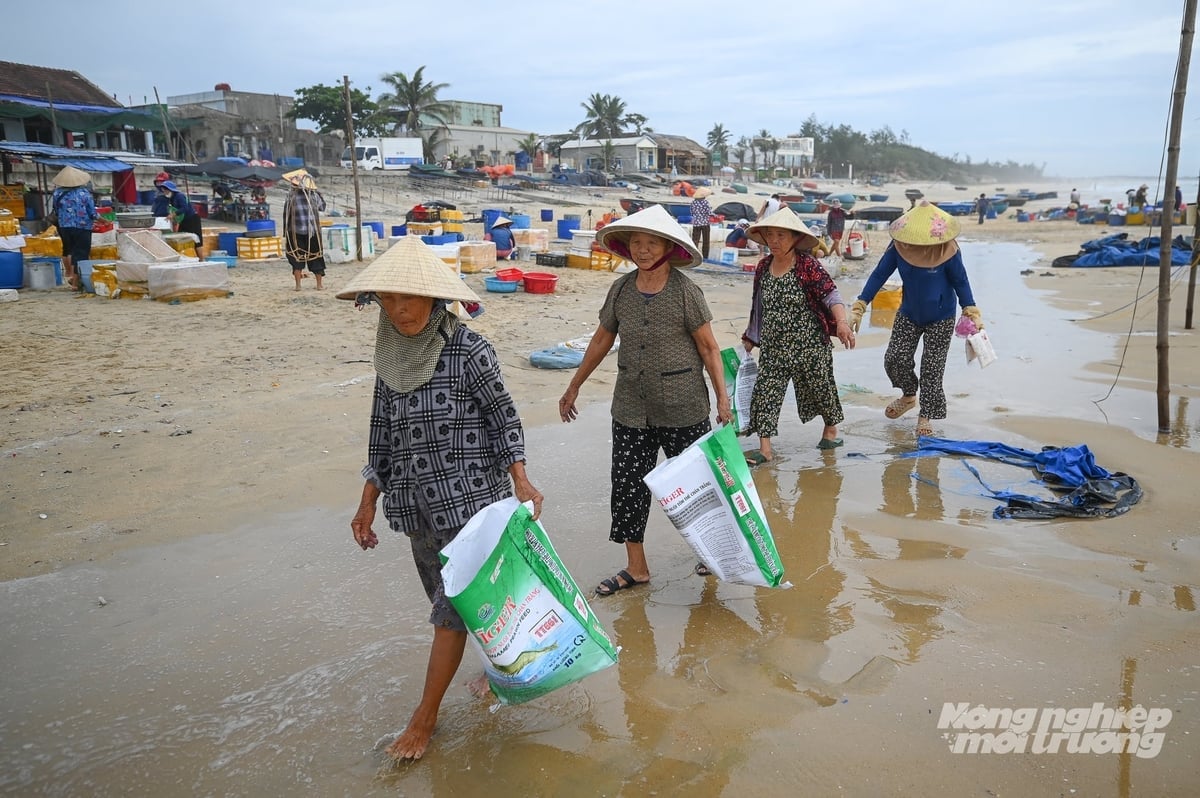
The people of Ha Loc have voluntarily cleaned up trash and protected the marine environment. Photo: Tung Dinh.
The piles of garbage had accumulated and were getting lower. Lacking the money to rent garbage trucks to transport the waste to the treatment facility, Ron went door-to-door asking for money. He accepted whatever people donated. The money he raised was used to clean up the garbage.
Seeing Ron struggling to clean up the trash alone, many people came to help, and then the organizations of Tam Tien commune (formerly) got involved. The commune launched a movement for all citizens to participate in environmental protection and beach cleaning. Policies on environmental protection and beach and residential area sanitation were integrated into the propaganda in village and commune meetings…
In 2022, the seawall in Ha Loc village was constructed, creating a new look and landscape for the nascent coastal tourist area. The environment became clean and beautiful again, and the number of tourists visiting the fishing village increased daily. Tam Tien beach and Ba Dau coral reef began to gain recognition on the tourism map of Quang Nam province.
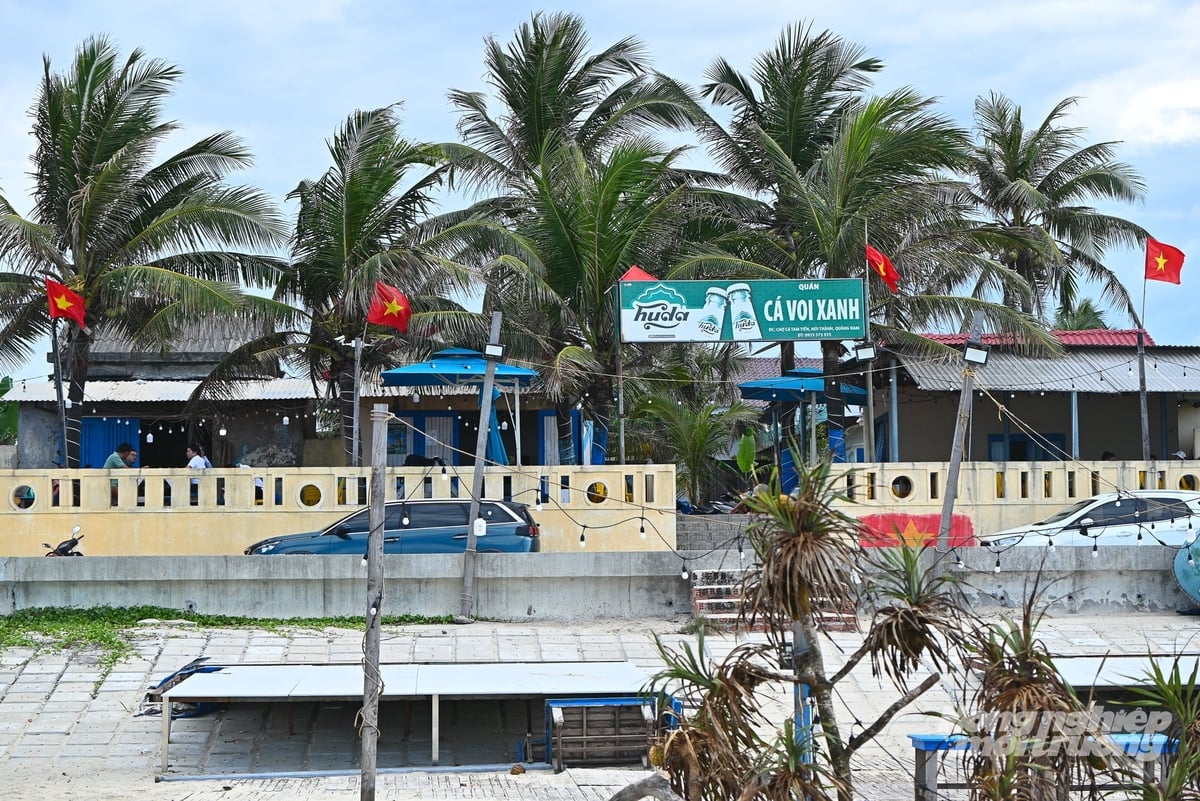
Vo Hong Ron is a pioneer in developing coastal tourism in Ha Loc. Photo: Tung Dinh.
Ron expanded the accommodation area and opened a restaurant called "Blue Whale" with a view of the Ba Dau coral reef. As the sun sets and the sun rises, fishing boats drift dreamily into the distance, the sea a deep blue, a fairytale-like sight. Many restaurants sprung up. In the village, many people built hotels and guesthouses to accommodate tourists. On the beach, scattered nighttime food services appeared, creating jobs and income for the fishing village. Currently, Ha Loc village has 20 accommodation establishments, capable of meeting the needs of hundreds of guests wishing to stay overnight.
The fishing village of Tam Tien is transforming itself with tourism. New livelihoods for the people in this coastal area are beginning to spread, no longer solely dependent on offshore fishing resources.
"I've noticed one thing: only when people have new, sustainable livelihoods do they understand the importance of environmental protection, and then they voluntarily implement it without needing any campaigning or reminders," Ron concluded.
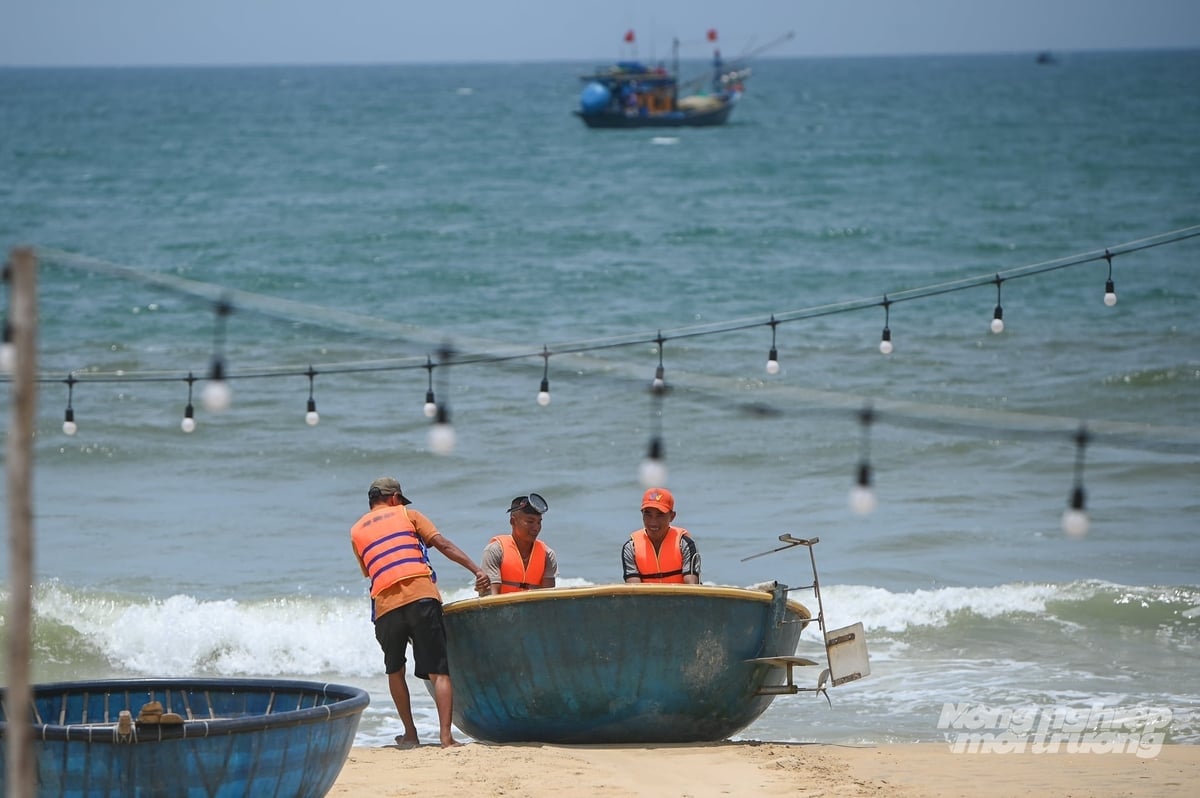
A patrol to protect the Ba Dau reef by a group of fishermen from Ha Loc village. Photo: Tung Dinh.
Preserving 64 hectares of fish spawning grounds on the Ba Dau coral reef.
Since ancient times, when people first settled this land, Tam Tien beach has possessed a coral reef covering approximately 20 hectares. This is also a natural fish spawning ground with a rich ecosystem and many species of high economic value.
According to Doan Van Linh, Vice Chairman of the Tam Xuan Commune People's Committee, the coral reef area southeast of Ha Loc village covers approximately 64 hectares, with an average coral cover of 30%. It consists of natural coastal reefs interspersed with submerged rocks and exposed rocks. The rugged terrain, with numerous crevices and rocky gaps, provides a habitat for many valuable species such as lobsters, groupers, and various types of sea snails, but it is also a vulnerable ecological zone.
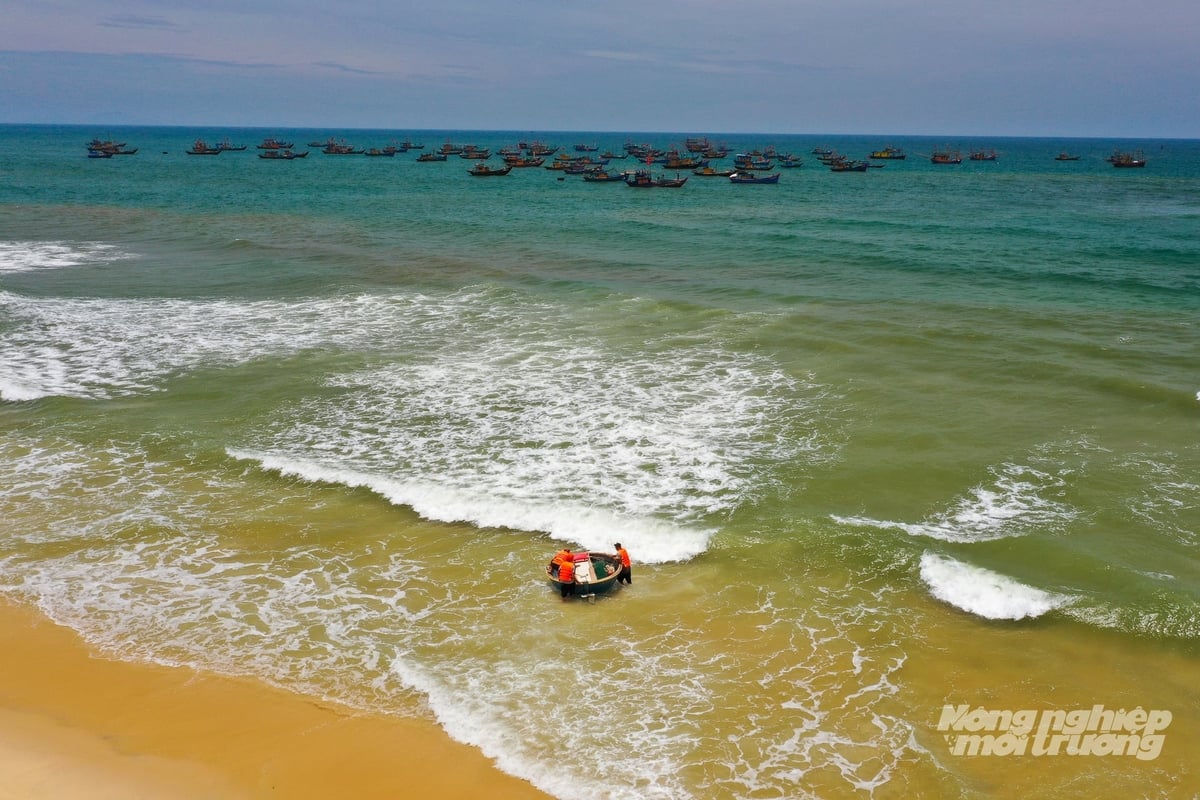
Once a week, the community-co-managed patrol of 64 hectares of water surface has been carried out consistently for the past five years. Photo: Tung Dinh.
Over a long period, local people have exploited and caught aquatic resources using various methods, including destructive ones such as trawling, using fine mesh nets, and fishing near the shore, seriously threatening coral reefs and marine ecosystems.
Mr. Nguyen Xuan Uy, Deputy Chief of the Office of the People's Committee of Tam Xuan commune (formerly Deputy Chairman of Tam Tien commune after the merger), said that during the period 2021-2023, the Center for Marine Biodiversity Conservation and Community Development conducted surveys of 6 coral reef sites in 3 provinces of Binh Dinh, Quang Nam and Khanh Hoa (formerly) including Bai Huong, Tam Tien, Nhon Ly, Nhon Hai, Ghenh Rang, and Ran Trao with the aim of building data on the current status of coral reefs and aquatic resources, thereby guiding and supporting the community in conservation.

Gifts from the sea for those who are dedicated to marine conservation in Tam Tien. Photo: Tung Dinh.


The results show that the coverage of living coral at the surveyed points is fairly good, but dead and broken coral are still present. Fish density in most coral reef monitoring points is low, and there are signs of overfishing. Benthic populations are low at all points, and economically valuable species such as lobsters and sea cucumbers are being overfished. Activities impacting coral reefs such as anchoring, crown-of-thorns snails, crown-of-thorns starfish, fishing nets, waste disposal, bleaching, etc., are still being recorded.
In 2021, Tam Xuan established a co-management model for the Ba Dau reef with the goal of protecting a 64-hectare ecological area encompassing the entire Ba Dau reef – a natural spawning ground for aquatic species. Furthermore, fishing and harvesting within the 64-hectare area were strictly prohibited, near-shore fishing was restricted, and fishermen were encouraged to participate in protecting the diversity of aquatic resources. The People's Committee of Nui Thanh District (formerly Quang Nam Province) issued a decision assigning the management of the 64 hectares of water surface in the Ba Dau reef area to Ha Loc village under a co-management model between the State and the people.

Tam Tien Fish Market - the heartbeat of Tam Xuan sea. Photo: Tung Dinh.
In October 2022, the Ba Dau Reef Co-management Team was established with over 40 members, divided into several groups such as patrol teams, communication teams, core teams, and self-governing teams. Nguyen Xuan Uy, Vice Chairman of the commune, served as the team leader. In 2025, the World Wide Fund for Nature (WWF-Vietnam) implemented the project “Promoting community participation in achieving the Global Biodiversity Framework and the National Biodiversity Strategy” (MiB-GBF Project), continuing its support and collaboration. The team has expanded to include over 40 members, comprising fishermen from Ha Loc village, village and commune authorities, and border guards. Vo Hong Ron is one of the three deputy team leaders.
“Once a month, the team conducts four patrols by motorboat, covering the entire 64 hectares of Ba Dau reef. The team reminds fishing vessels to comply with regulations against IUU (Illegal, Unreported, and Unregulated) fishing and not to fish in protected areas. They also periodically monitor and inspect the coral reefs in the area where the water meets the reefs, promptly detecting any abnormalities related to the coral and reporting them to relevant agencies and authorities for intervention,” Vo Hong Ron shared.
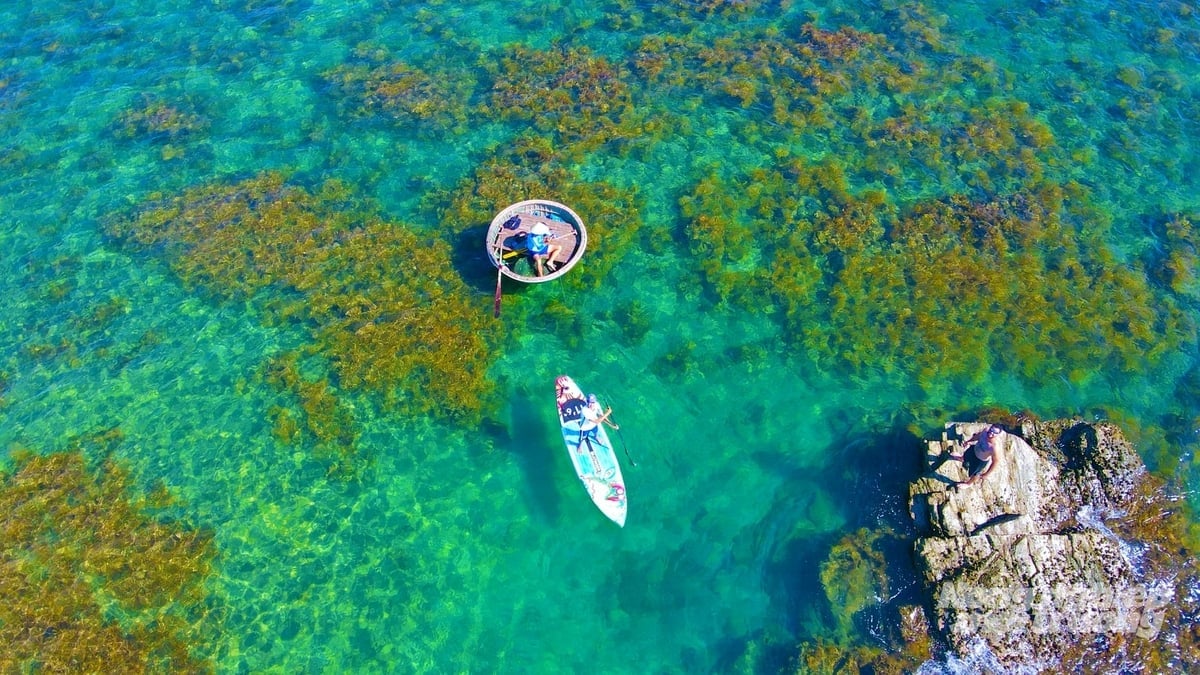
Tam Tien is stirring up tourism activity – a result of months of community efforts to protect the marine environment. Photo: Tung Dinh.
Through perseverance, dedication, and hard work over the past five years, the co-management model in Tam Xuan commune has played a crucial role in conserving the Ba Dau coral reef, creating sustainable livelihoods for local people, and gradually shifting from exploitation to community-based tourism. The Ba Dau reef has become the "heart" of Tam Tien beach, just as the fish market is the "breath" of Ha Loc fishing village.
We will need many more Vo Hong Ron-like figures. We will need many more community-based co-management models to ensure the preservation of the many Ba Dau reefs across Vietnam. Sustainable livelihoods can only be achieved when the environment is protected by the self-awareness and collective efforts of the community.
Source: https://nongnghiepmoitruong.vn/ron-va-ran-san-ho-ba-dau-d813429.html



![[Image] Schools organize meetings and introduce teaching models to students admitted to grade 10.](https://vphoto.vietnam.vn/thumb/1200x675/vietnam/resource/IMAGE/2026/06/25/1782368077271_ndo_br_z7970052192242-1ec8daeb77a6eed1a4e9f58c564ddd3e-jpg.webp)
![[Photo] General Secretary and President To Lam receives Palestinian Ambassador Saadi Salama](https://vphoto.vietnam.vn/thumb/1200x675/vietnam/resource/IMAGE/2026/06/25/1782365384740_a1-bnd-9423-8322-jpg.webp)
![[Image] Ho Chi Minh City: Ma Lang area, Chicken-Rice Market about to change its appearance](https://vphoto.vietnam.vn/thumb/1200x675/vietnam/resource/IMAGE/2026/06/25/1782377698627_ndo_br_m1-jpg.webp)