

While terraced rice fields in Northwest Vietnam impress with their massive scale and winding curves along high mountain slopes, in Gia Lai , this form is softer, smaller, and more approachable. The fields are usually located on gentle hillsides, nestled among forests and interspersed with the cultivated land of ethnic minority communities.
The landscape changes dramatically with the seasons; when the rice takes root, it's a vibrant green; when it ripens, the entire area is bathed in golden hues, with the terraced fields resembling successive "waves."
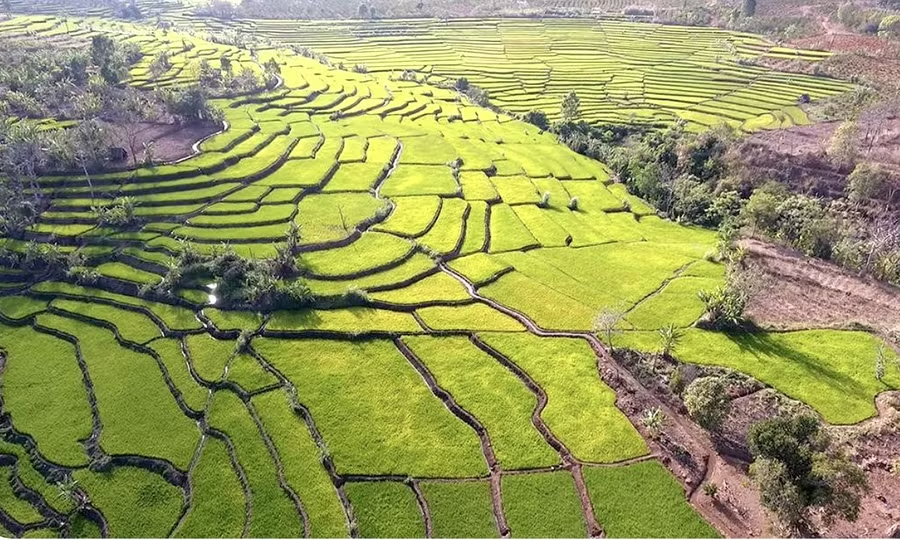
Dak To Pe terraced rice fields (Kdang commune) viewed from above. Photo: HD
Particularly noteworthy is the Dak To Pe terraced rice field (KDang commune), spanning over 50 hectares, with hundreds of interconnected rice paddies belonging to the Jrai people, winding around the mountainside. During the rice harvest season, the entire landscape resembles a long, golden silk ribbon.
Mr. Ksor Dưn (Kol village, KDang commune) shared: “I have 4 sao (approximately 0.4 hectares) of rice paddies here. Farming in terraced fields is harder, but it retains water better, and the rice grows better.”
Considered just as beautiful as the rice paddies in Northwest Vietnam, the 42-hectare terraced rice fields in Chu Se commune also make a strong and surprising impression on tourists.
The terraced rice fields wind from low to high, hugging the slopes; the lush green carpet of young rice sways in the wind, interspersed with small huts of the farmers.
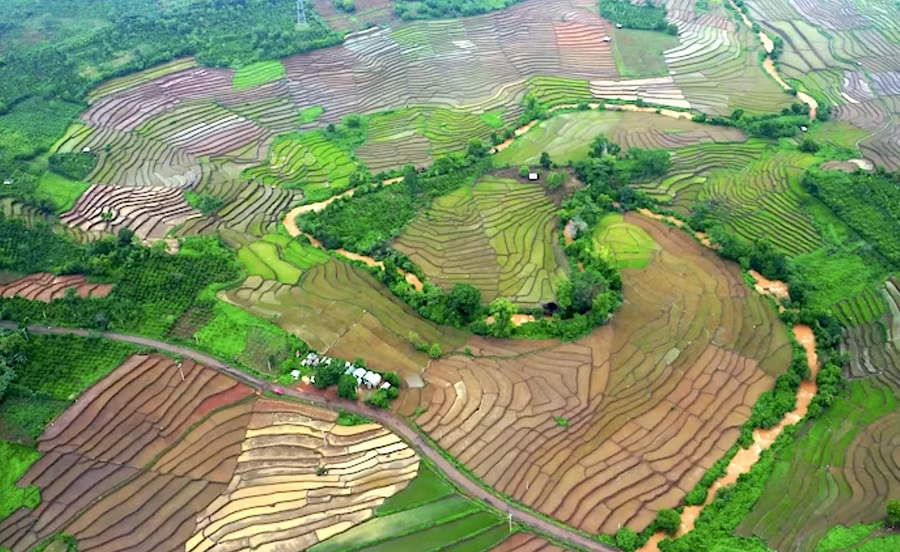
A view of the terraced rice fields in Chu Se commune. Photo: HD
"Previously, growing upland rice was very hard work, with good and bad harvests, and not enough rice to eat, especially during the lean season. Since the Ia Ring dam was built, people have switched to terraced rice farming, growing two crops a year more stably."
Greo Sek village has about 300 households, with Jrai people making up about 50%, and their livelihood mainly depends on rice cultivation. My family alone has nearly 1 hectare of rice fields; we're not rich, but we have enough to provide for our children's education," Siu Lanh recalled.
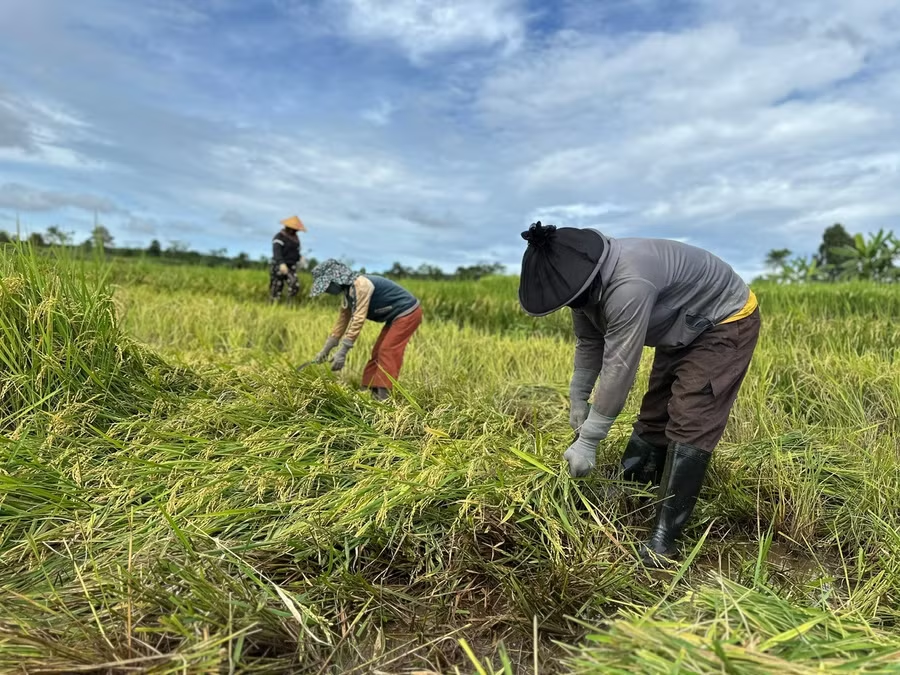
Farmers harvest rice in the terraced rice fields of Dak To Pe (KDang commune). Photo: HD
Beyond its scenic beauty, the terraced rice fields of Gia Lai are also associated with unique agricultural values.
In Kon Chiêng commune, over 400 hectares of Ba Chăm rice, a variety certified with the geographical indication "Mang Yang" and meeting OCOP 3-star product standards, are cultivated on terraced fields.
The long, white rice grains, with their sticky, fragrant texture, are considered the "heavenly gem" of the mountainous region. Production is organized through a cooperative model in Dak Troi Agriculture, Forestry and Services, which guarantees product distribution, provides support with bio-fertilizers and technical assistance, and creates a stable raw material supply area.
According to Mr. Nguyen Van Lan, Director of the Cooperative, the model of linking over 100 hectares has contributed to improving the lives of the people and shaping a sustainable production direction.
From being a form of farming adapted to the terrain, terraced rice fields in Gia Lai are gradually opening up a new direction for tourism . Many tourists express surprise when witnessing this scenery.
Mr. Nguyen Viet Cuong (Hanoi) shared after his visit to Dak To Pe: "I've been to Northwest Vietnam before, but I didn't think Gia Lai also had such beautiful terraced rice fields!"
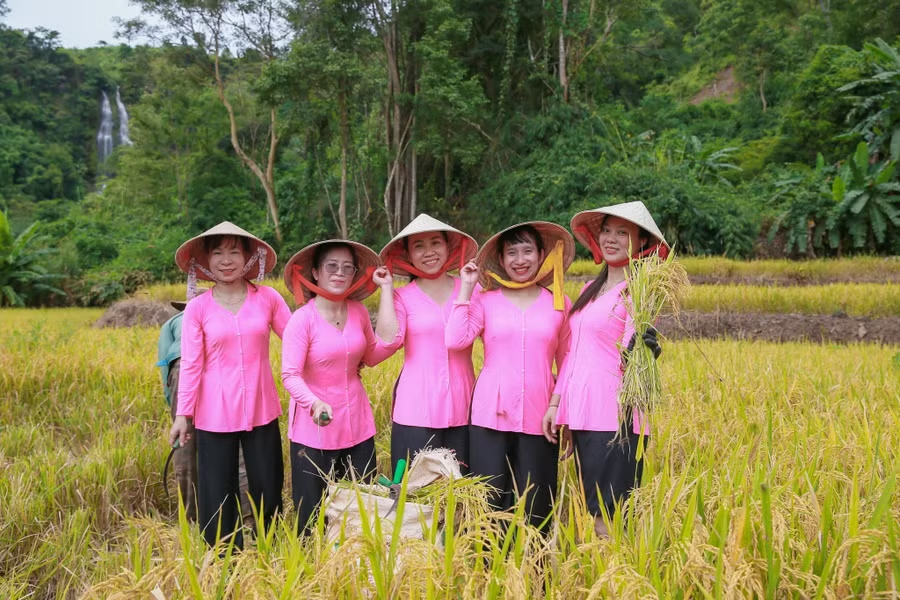
Tourists really enjoy the experience of harvesting rice in the Dak To Pe terraced fields (Kdang commune). Photo: HD
While many destinations have become urbanized and lost their natural beauty, the terraced rice fields of Gia Lai still retain their rustic charm. However, along with this potential come clear risks, as uncontrolled development could lead to landscape destruction, environmental pollution, and excessive commercialization.
Recognizing this, the local authorities have taken cautious steps. Ms. Le Thi Hue, Secretary of the Party Committee of KDang commune, said: The locality is developing a tourism development plan associated with the terraced rice fields and other landscapes, but requires systematic planning, thorough preparation, and step-by-step implementation to preserve the inherent beauty.
Quiet and unassuming, the terraced rice fields of Gia Lai are like a silent yet enduring invitation. Amidst the hustle and bustle of life, just one visit during the "golden season," gazing at the layers of fields stretching out under the afternoon sun, allows one to clearly feel time slowing down.
It's not just a landscape, but also a value created from labor, from adapting to nature, and from the ability to preserve what is most original.
Source: https://baoangiang.com.vn/ruong-bac-thang-giua-dai-ngan-a482116.html
![[Photo] The courage of new recruits of Brigade 144 on the training ground.](https://vphoto.vietnam.vn/thumb/1200x675/vietnam/resource/IMAGE/2026/05/27/1779881651341_anh-man-hinh-2026-05-27-luc-18-32-52.png)
![[Photo] The heat at the fireworks display site on the opening night of the Da Nang International Fireworks Festival 2026](https://vphoto.vietnam.vn/thumb/1200x675/vietnam/resource/IMAGE/2026/05/27/1779889741485_ndo_br_z7872039145157-fecaba5112f39e8352544099d7ef4738-5140-jpg.webp)




































![[Photo] The courage of new recruits of Brigade 144 on the training ground.](https://vphoto.vietnam.vn/thumb/402x226/vietnam/resource/IMAGE/2026/05/27/1779881651341_anh-man-hinh-2026-05-27-luc-18-32-52.png)

















Comment (0)