

APPLICABLE TO FIELDS WITH PRACTICAL APPLICATIONS
Dr. Nguyen Trung Nhan, Head of Training Department at Ho Chi Minh City University of Industry, said that previously, the university's bachelor's program had 140 credits for both technology and business management majors. However, currently, the bachelor's program is trained over 3.5 years with 133 credits, including the national defense and security module. Engineering and technology majors are 4.5 years with 150 credits leading to an engineering degree.
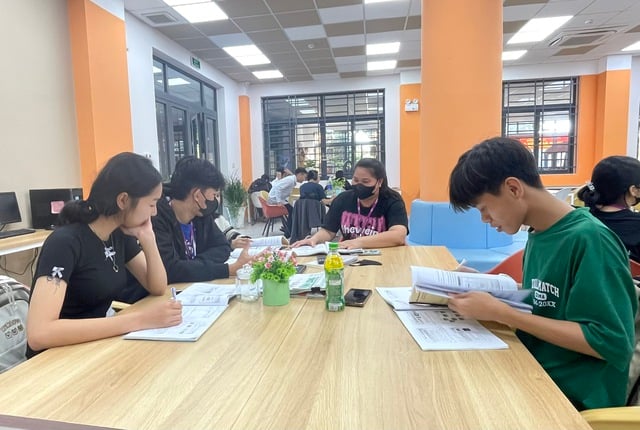
Shortening training time is a trend among many universities, especially private ones, helping students save time and enter the labor market sooner.
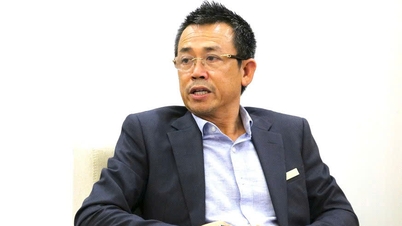
PHOTO: MY QUYEN
All undergraduate programs at Ho Chi Minh City University of Technology are taught over 3.5 years with 120 credits. Engineering programs are designed with 150 credits and are taught over 4 years; while specialized programs such as architecture, pharmacy, and veterinary medicine are designed to be taught over 4.5 years.
At Van Lang University, the duration of bachelor's and engineering programs varies depending on the field of study. For example, a bachelor's program with 120 credits (excluding physical education and national defense) lasts from 3.5 years (business, marketing, logistics and supply chain management, aeronautical engineering, etc.) to 4 years ( economic law, English language, graphic design, etc.). Similarly, engineering programs range from 4 years (thermal engineering, automotive technology, etc.) to 4.5 years with 150 credits (civil engineering, aeronautical engineering, etc.).
Gia Dinh University is one of the universities that designed a 120-credit bachelor's degree program over 3 years (8 semesters), implemented since 2017. Nguyen Tat Thanh University also has several majors offering 3-year, 120-credit bachelor's degrees, such as business administration, marketing, finance and banking, accounting, and international relations; the remaining majors are 3.5 years. For engineering degree programs, the study time is 4 years and 150 credits.
According to the National Education System Framework, the National Qualifications Framework of Vietnam, and Decree 99 of 2019 detailing and guiding the implementation of some articles of the Law amending and supplementing some articles of the Law on Higher Education, the duration of undergraduate training is 3-5 years, the minimum course load for bachelor's degrees is 120 credits, and for engineering degrees is 150 credits.
Dr. Vo Van Tuan, Vice Rector of Van Lang University, stated that the 3.5-year bachelor's degree program is applied to majors with a focus on applied knowledge, allowing students to complete their studies early and quickly enter the labor market. The 4-year program is applied to majors requiring a deeper theoretical foundation and longer practical training periods. Students will have three semesters per year, with a summer break of only 2-4 weeks, instead of the previous 2 semesters and 7-8 weeks of summer break.
The general curriculum will be less demanding, focusing more on specialized fields.
At Ho Chi Minh City University of Technology (HCMUT), the academic year is divided into four semesters, each lasting approximately 10 weeks. Ms. Nguyen Thi Xuan Dung, Director of the University's Communication Center, explains that dividing the year into smaller semesters reduces the number of courses per semester (approximately 9 credits/semester) while still ensuring students meet the credit requirements set by the Ministry. This allows students to be more proactive in course registration and better manage their learning process. Furthermore, it provides more time for advanced courses and retaking courses if needed, while also reducing financial burdens for students and parents.
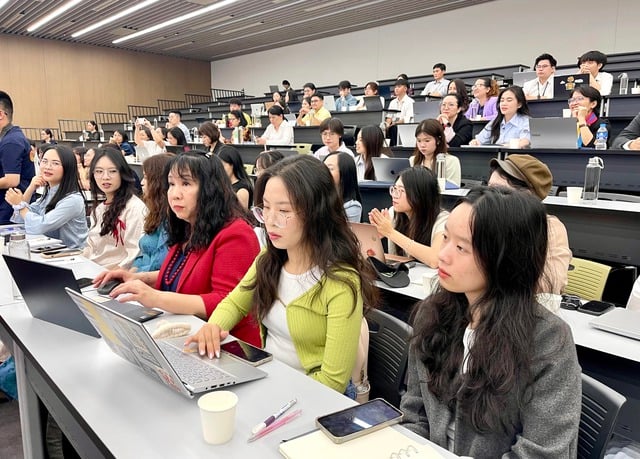
Students need to be equipped with strong self-learning skills when pursuing a shortened 3 or 3.5-year university program.
Photo: My Quyen
"On the other hand, with 4 semesters/academic year, the school still arranges a reasonable study plan to ensure students have time off for Tet holiday, summer vacation, and other holidays as prescribed by the state, and clearly announces the academic year's study plan from the beginning of the academic year, so students are very proactive in planning their studies and personal plans," shared Master Xuan Dung.
According to Master Trinh Huu Chung, Vice Rector of Gia Dinh University, shortening the training time while still ensuring compliance with the prescribed number of credits is a trend that universities around the world have been following for a long time.
"The school considers the practicalities to adjust the curriculum. Some general courses are designed to be less demanding, allowing students to focus on important specialized subjects. Instead of exams, some courses require students to complete essays or group assignments because exams would be very time-consuming, involving scheduling, planning, studying, and organizing exams. This design helps students save time and money and enter the job market sooner. Nearly 70% of students at the school graduate within the three-year timeframe," Master Chung informed.
The important thing is to provide training with sufficient knowledge, skills, and attitude.
Ms. Trinh Thu Thuy, Deputy Director of Ho Chi Minh City Education Investment Joint Stock Company, said that the company has recruited a number of graduates from 3-year programs in law and multimedia communication.
"The students meet the professional requirements of the job quite quickly, and their work attitude is very good. It seems that university students have recently had more opportunities to experience and engage with real-world situations, so many of them adapt easily to the job and are not taken aback," Ms. Thuy commented.
According to Ms. Thuy, employers are interested in professional knowledge, skills, and work attitude. "Therefore, the duration of 3 or 5 years is not important. What matters is that universities need to train students to meet these three factors. If a bachelor's degree is completed in 3 or 3.5 years, and the program duration is still sufficient, allowing students to intern and gain experience early on, and focusing on integrating additional skills and attitudes, then it is still better than a longer duration but with a program design that doesn't meet these requirements," Ms. Thuy shared.
TO LEARN EFFECTIVELY DURING A SHORT TRAINING PERIOD
According to Master Trinh Huu Chung, in order to implement a 3 or 3.5-year training program instead of 4 years for bachelor's degrees, and 4 or 4.5 years for engineering degrees, schools must have a trial period and the consent of the students. "Schools should design some courses that take students to businesses to gain practical experience in their future careers, aiming to inspire and motivate them to learn," Mr. Chung said.
Ms. Xuan Dung believes that shortening the training time for bachelor's and engineering degrees helps students avoid wasting time, graduate earlier, and enter the labor market sooner... "However, this also requires universities to have a plan to build a rigorous academic management system, design flexible training programs, and fully meet the requirements of academic knowledge and practical training time," Ms. Xuan Dung stated.
Speaking about the difficulties of shortening the training time, Dr. Vo Van Tuan said that the workload is more intense, the academic pressure is higher, especially in fields that focus on practical skills such as design, engineering, and health sciences… At the same time, students have limited time for extracurricular experiences, diverse internships, scientific research, and soft skills development.
"Therefore, students need to have a strong sense of responsibility towards their studies and equip themselves with high-level self-learning skills; otherwise, they may easily become exhausted, give up, or just study to get it over with," Dr. Tuan noted.
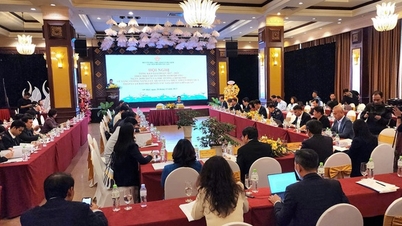
In early March, the Ho Chi Minh City University of Foreign Languages and Information Technology held a conference to evaluate the results of its first 3.5-year training program (2021). At the conference, alongside the advantages and consensus, representatives from various faculties and units highlighted certain pressures faced by lecturers in improving lecture quality and enhancing the application of English and technology in teaching. However, the majority agreed with the university's reform initiatives. Furthermore, opinions expressed at the conference suggested that students need to continuously improve their self-study skills, presentation and critical thinking abilities, and overcome the pressure of exams and the need to improve their foreign language proficiency.
Source: https://thanhnien.vn/rut-ngan-thoi-gian-dao-tao-dh-chuong-trinh-co-dap-ung-thuc-te-18525042021115387.htm


![[Photo] Prime Minister Pham Minh Chinh presides over a meeting on private sector economic development.](/_next/image?url=https%3A%2F%2Fvphoto.vietnam.vn%2Fthumb%2F1200x675%2Fvietnam%2Fresource%2FIMAGE%2F2025%2F12%2F20%2F1766237501876_thiet-ke-chua-co-ten-40-png.webp&w=3840&q=75)


















































































Comment (0)