

Recognizing the demand for green, environmentally friendly consumption, many new business models have emerged, utilizing local resources to create jobs for workers, increase income, and bring foreign currency back to their hometowns.

Loofah sponges are also used to create unique products.
Water hyacinth is getting a new lease on life.
Previously considered useless and eradicated in various ways, water hyacinth has recently begun to receive attention and is being given a new life cycle. Thuan Hung commune, Long My district, is one of the areas where many people rely on water hyacinth for their livelihood. To produce dried water hyacinth stalks for weaving, the villagers cut the stalks, dry them, and tie them into large bundles to deliver to the company. Typically, if the water hyacinth is of good quality, 12 kg of fresh stalks will yield 1 kg of dried product. Younger, less attractive stalks will yield about 13-14 kg of dried stalks.
Having been raising water hyacinths for sale for several years, Ms. Duong Thuy Hang said: "We rent the land where we raise the water hyacinths and hire workers to cut them. The average income per person is about 4-5 million VND/month."
Having just sold dried water hyacinth to traders a few days ago, Ms. Nguyen Thi Phuong from Long My district recounted: “A few days ago, I sold dried water hyacinth for 20,000 VND/kg. The income was quite good. Now, the water hyacinth is being affected by saltwater intrusion, and if we don't cut it in time, it will spoil. The wholesalers are still buying it to hold onto, but at a lower price, around 17,000-18,000 VND/kg. In a few months, when the market price goes up, they will sell it to us.”
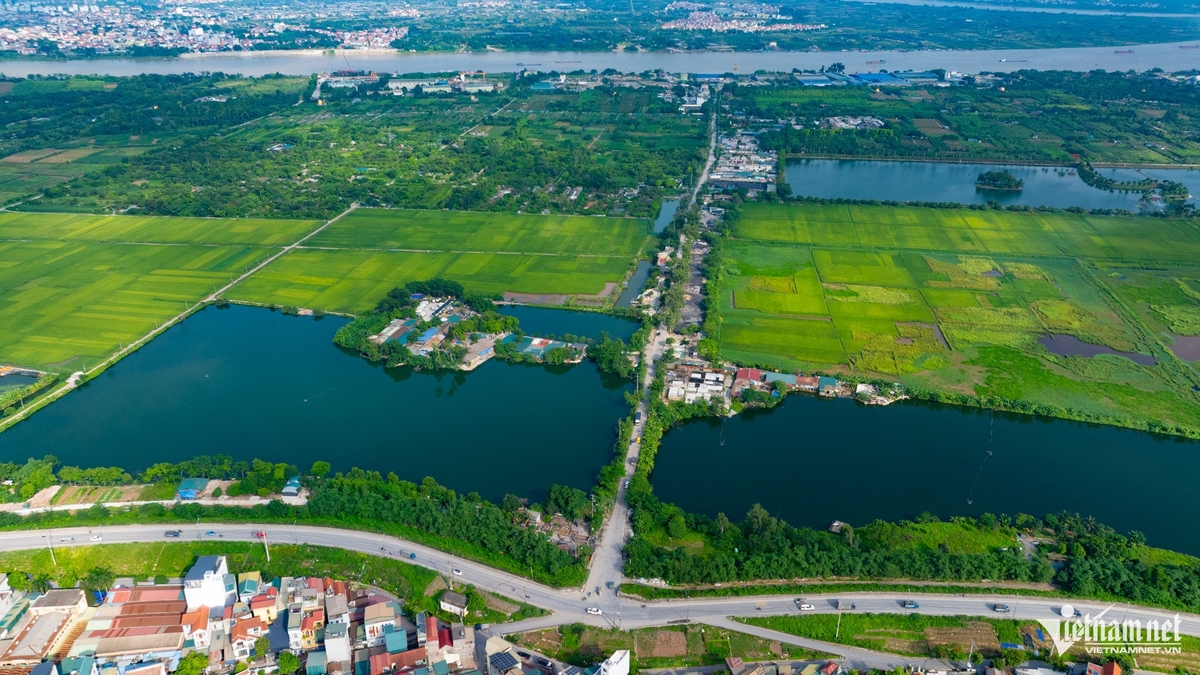
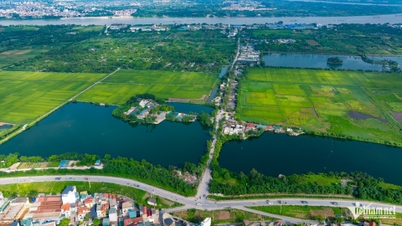
Hau Giang has several main rivers such as the Cai Lon River, Nuoc Duc River, and Nuoc Trong River, which run through Long My and Vi Thuy districts, Long My town, and Vi Thanh city... These rivers have a large amount of water hyacinth growing on them, thus creating a plentiful source of fiber from water hyacinth stems, providing a rich input material for production units.
Mr. Tran Quang Thoai, Director of the Quang Thoai Water Hyacinth Weaving Cooperative in Long My district, said that because of the Cai Lon River, local people utilize the river surface area to cultivate water hyacinth, then dry it and sell it to companies for the production of woven products. Besides the domestic market, the cooperative's products have also been exported to China since 2022, with a monthly output of 2,000-10,000 products depending on size.
Conquering the demanding market.
Giving a fresh look to traditional handicrafts to compete in demanding markets is the goal of Ecoka Joint Stock Company in Long My district. The company currently offers over 300 product lines made from environmentally friendly materials, and collaborates with more than 10 craft villages and cooperatives nationwide. The company's products are exported to Europe, America, and Canada.
Mr. Ha Anh Truong, Director of Ecoka Joint Stock Company, said: “We collaborate with cooperatives and households in the area. We coordinate in many different ways, such as product distribution or production at the company. Currently, the company has partnered with 12 cooperatives nationwide, and 8 cooperatives in Hau Giang.”
According to Mr. Truong, farmers utilize their free time to weave handicrafts from water hyacinth. Depending on their ability and the number of products they make, they can earn between 4 and 6 million VND per month, a relatively good income compared to rural areas. Currently, the unit is focusing on products based on orders from partners.
"Many customers will commission us to manufacture products based on existing designs, while others will order custom designs and then register them for exclusive rights. Nowadays, they prioritize biodegradable and environmentally friendly products. This is also the trend of the global market in the coming time," Mr. Ha Anh Truong added.
Not only water hyacinth but also loofah fibers are utilized to create unique products, winning over environmentally conscious customers. According to Mr. Do Dang Khoa, Director of Thao Minh, who built the Mr. Loofah brand, the company produces an average of 80,000 products per hectare of cultivated land. After harvesting, the dried loofah is cleaned, peeled, dried, and then shaped by a rolling machine before being molded into various product designs such as pet products, kitchen cleaning products, and cotton products... which are then exported to Japan and South Korea.
In addition, the company combines various agricultural by-products to create beautiful decorative products such as dried flowers and fruits. The next plan is to expand the market, develop existing markets, and open up new potential markets.
Mr. Do Dang Khoa shared: “Our company specializes in handicraft products. We focus on creating environmentally friendly products that are applicable to daily life, made from loofah fiber, an agricultural product very familiar to Vietnamese people. Mature loofahs are harvested, then processed through various stages and procedures to create product lines: loofah bath sponges, dishwashing sponges, and pet toys for export.”
Utilizing local resources to create products with diverse designs and environmentally friendly practices is a current trend aimed at meeting customer demands. This is also the approach many businesses and cooperatives are pursuing, creating sustainable value for local handicrafts and establishing a strong foothold in the global market.
Text and photos: MONG TOAN
Source








































































Comment (0)