

This information was provided to the public by the Ho Chi Minh City Center for Disease Control and Prevention.
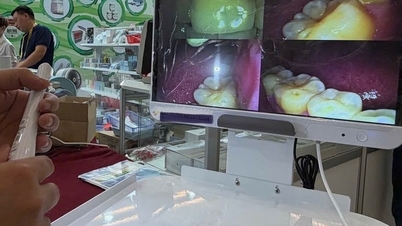
A 2019 survey by the World Health Organization (WHO) on oral health in Vietnamese children noted that 46.5% of children aged 1-9 years had cavities in their primary teeth, and 28% of children over 5 years old had cavities in their permanent teeth.
Reason
- A diet high in fat, sugar, and starch in snacks, combined with poor oral hygiene, creates conditions for bacteria, acids, and food plaque to thrive, causing enamel erosion and cavities.
- Using a hard toothbrush with excessive force and improper brushing techniques can cause tooth wear and expose the dentin, leading to cavities.
- When tooth decay first begins, failing to seek early treatment can lead to a more serious condition.
Common symptoms
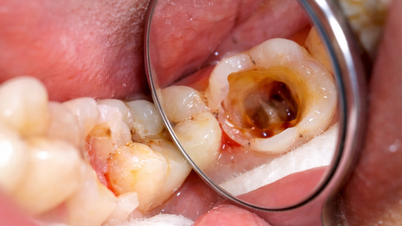
- Black spots appear on the surface of the teeth.
- Sharp, stabbing pains occur whenever eating or drinking, possibly accompanied by headaches.
- Swollen and bleeding gums, accompanied by bad breath.
Harmful effects
- It affects daily life (eating, sleeping) and study habits.
- It affects aesthetics.
- This can lead to other health problems (lymphadenitis, osteomyelitis, cellulitis, maxillary sinusitis, etc.).
Prevent
- Limit children's frequent snacking, especially on foods high in fat, sugar, and starch.
- Encourage children to eat foods rich in calcium and vitamins that are good for teeth, such as yogurt, cheese, apples, carrots, eggs, and fish.
Encourage children to brush their teeth with fluoride toothpaste.
Brush your teeth at least twice a day, ideally after each meal.
- Guide children to brush their teeth using the correct technique and moderate pressure, avoiding damage to the neck and roots of the teeth.
- Teach children to use dental floss or water flossers to clean between their teeth.
- Proactively take your children for regular dental check-ups every six months to detect and treat oral health problems early.
America and Italy
Source link

![[Photo] General Secretary and President To Lam presides over a meeting on assessing national development resources.](https://vphoto.vietnam.vn/thumb/1200x675/vietnam/resource/IMAGE/2026/05/20/1779253785852_a1-bnd-2943-8519-jpg.webp)


![[Photo] National Assembly Chairman Tran Thanh Man working with the Standing Committee of the Economic and Financial Committee](https://vphoto.vietnam.vn/thumb/1200x675/vietnam/resource/IMAGE/2026/05/20/1779249584387_ndo_br_1-jpg.webp)














































![[Workers' Month 2026] Spreading love on the Vinh - Dong Hoi frontline: Nearly 1 billion VND spent on caring for the lives of workers.](https://vphoto.vietnam.vn/thumb/402x226/vietnam/resource/IMAGE/2026/05/20/1779237885217_img_8650.jpeg)








































Comment (0)