

Tooth decay caused by plaque "trapped" during orthodontic treatment.
Dental caries remains one of the most common oral diseases, especially in children and adolescents, the primary target group for orthodontic treatment. Despite increasingly modern orthodontic techniques and continuous improvements in materials and appliances, the rate of dental caries and early carious lesions during orthodontic treatment remains high.
Numerous studies have shown that the incidence of white spot lesions around braces ranges from approximately 40-60%, particularly common in fixed orthodontic treatment. These lesions appear relatively early, usually within 6 months of starting treatment, but are difficult to detect with the naked eye without a thorough examination or the use of diagnostic tools.
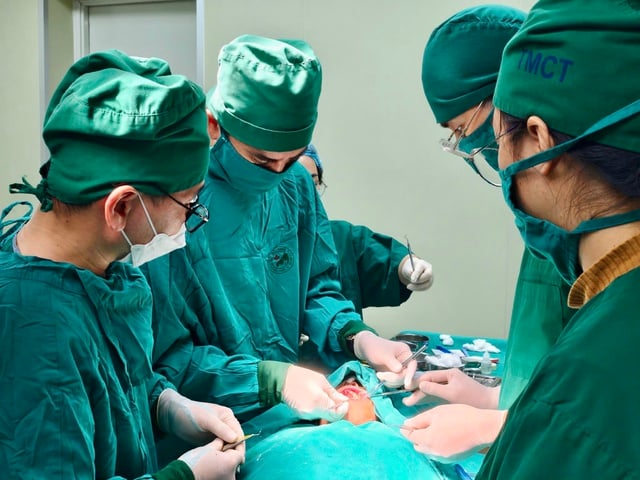
Patients should be assessed for cary-related risk before and during orthodontic treatment.
PHOTO: TL
Brackets, archwires, elastic bands, and attachments (appliances attached to the tooth surface to help teeth move during orthodontic treatment with clear aligners) are more difficult to clean, facilitating plaque buildup, especially at the neck of the teeth, around the brackets, or attachments. These areas are very difficult to clean with regular brushing, especially in children and uncooperative patients.
For clear aligners, although they are easy to remove and reinsert, if patients wear them while continuously eating or drinking sugary foods and beverages, the enclosed environment under the aligners can become a favorable factor for tooth decay.
When wearing orthodontic appliances, the oral environment and microbiome change. Many studies show an increase in acid-producing bacteria such as Streptococcus mutans and Lactobacillus during fixed orthodontic treatment. At the same time, plaque pH decreases, enamel demineralization accelerates, leading to the formation of early-stage caries around the braces.
Notably, poor oral hygiene during orthodontic treatment is the most important but often overlooked cause. Many patients do not brush their teeth properly or for long enough; do not use aids such as dental floss and interdental brushes; have a habit of snacking multiple times a day, consuming sugary and acidic drinks; and do not follow their doctor's preventative instructions.
Therefore, tooth decay in orthodontic patients is not an inevitable consequence of orthodontic appliances, but rather due to improper oral hygiene and failure to change bad habits that increase the risk of tooth decay, such as snacking and consuming sugary drinks.
Preventing dental caries in orthodontic patients.
In reality, there are quite a few cases where white spots are only discovered after braces are removed, affecting aesthetics and reducing the value of the orthodontic treatment results.
Preventive measures against tooth decay in orthodontics should be proactive, continuous, and individualized according to the risk of tooth decay.
Before orthodontic treatment, the dentist needs to systematically assess the risk of tooth decay; thoroughly treat cavities, enamel damage, and gingivitis; and instruct the patient and their family on proper oral hygiene. Orthodontics should only begin when the patient knows how to effectively control plaque. Skipping this stage is a common mistake that increases the risk of tooth decay throughout the orthodontic treatment process.
During treatment, a combination of measures is necessary: plaque control; enamel remineralization (using fluoride toothpaste as recommended by the dentist, applying fluoride varnish regularly, combining remineralizing materials, etc.); monitoring and early detection (regular check-ups based on the risk of tooth decay, early detection of white spot lesions for timely intervention); behavioral management (advising on a low-sugar and low-acid diet, reminding patients not to eat or drink while wearing orthodontic aligners, etc.).
After the orthodontic appliance is removed, continued monitoring, preventive measures, and early treatment of any remaining enamel damage are necessary to ensure long-term aesthetic and oral health results.
Managing dental caries in orthodontic patients is essentially managing the risk of caries; and in pediatric dentistry, it's about the child's habits and cooperation; increasing parental involvement in monitoring oral hygiene.
Source: https://thanhnien.vn/ngan-ngua-sau-rang-khi-chinh-nha-mac-cai-hoac-mang-trong-suot-185251216180555613.htm
![[Image] Leaked images ahead of the 2025 Community Action Awards gala.](/_next/image?url=https%3A%2F%2Fvphoto.vietnam.vn%2Fthumb%2F1200x675%2Fvietnam%2Fresource%2FIMAGE%2F2025%2F12%2F16%2F1765882828720_ndo_br_thiet-ke-chua-co-ten-45-png.webp&w=3840&q=75)
![[Photo] Prime Minister Pham Minh Chinh receives the Governor of Tochigi Province (Japan)](/_next/image?url=https%3A%2F%2Fvphoto.vietnam.vn%2Fthumb%2F1200x675%2Fvietnam%2Fresource%2FIMAGE%2F2025%2F12%2F16%2F1765892133176_dsc-8082-6425-jpg.webp&w=3840&q=75)
![[Live] 2025 Community Action Awards Gala](/_next/image?url=https%3A%2F%2Fvphoto.vietnam.vn%2Fthumb%2F1200x675%2Fvietnam%2Fresource%2FIMAGE%2F2025%2F12%2F16%2F1765899631650_ndo_tr_z7334013144784-9f9fe10a6d63584c85aff40f2957c250-jpg.webp&w=3840&q=75)


![[Photo] Prime Minister Pham Minh Chinh receives Lao Minister of Education and Sports Thongsalith Mangnormek](/_next/image?url=https%3A%2F%2Fvphoto.vietnam.vn%2Fthumb%2F1200x675%2Fvietnam%2Fresource%2FIMAGE%2F2025%2F12%2F16%2F1765876834721_dsc-7519-jpg.webp&w=3840&q=75)



























































![[Photo] Prime Minister Pham Minh Chinh attends the Vietnam Economic Forum 2025](https://vphoto.vietnam.vn/thumb/402x226/vietnam/resource/IMAGE/2025/12/16/1765893035503_ndo_br_dsc-8043-jpg.webp)





































Comment (0)