

Businesses proactively negotiate and share the burden with consumers.
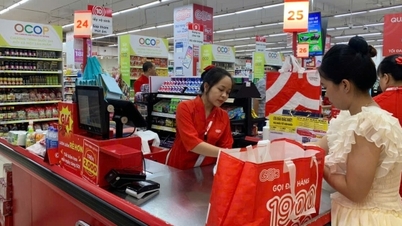
Speaking to a reporter from the Industry and Trade Newspaper, Mr. Tran Cong Hieu, Director of Co.opmart Vung Tau Supermarket, said that in the context of a volatile market leading to adjustments in many sectors, the supermarket has received several requests for price increases from suppliers due to pressure from input costs. With the goal of prioritizing customer interests, the supermarket has directly worked and negotiated with partners to minimize price increases.
For essential goods, fresh food, and necessities, the supermarket is persistently implementing solutions to control and maintain stable prices. "To secure resources for price stabilization, Co.opmart Vung Tau proactively reduces profit margins, optimizes operating costs, and strengthens its 'bulk purchasing' strategy. This solution optimizes transportation, reduces intermediary costs, and thus minimizes sudden price increases that cause market anxiety," Mr. Hieu said.
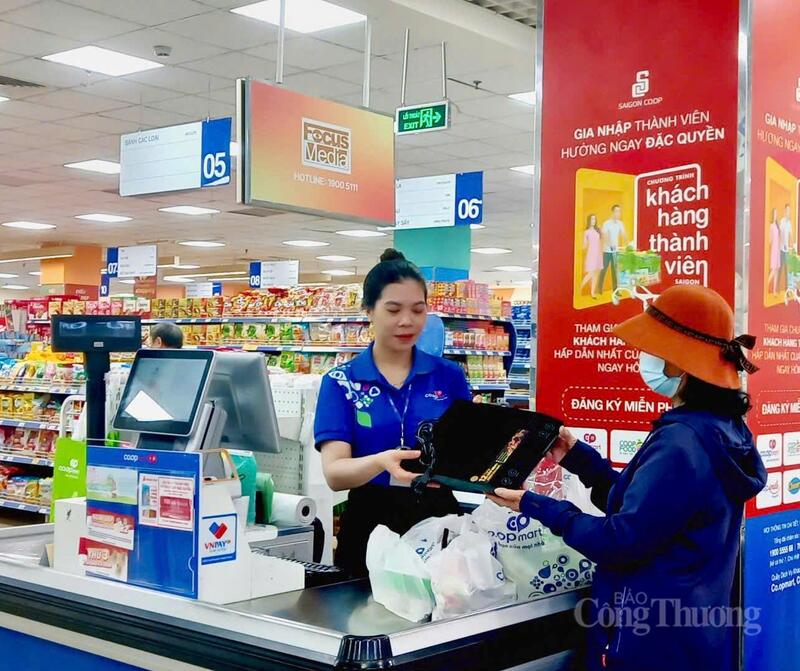
Retail businesses are proactively negotiating, keeping prices down, and sharing the burden with consumers.
According to Mr. Hieu, the supermarket also combines the promotion of online sales channels and mobile applications, which are seen as an "extended arm" to help customers save on travel costs and time. Through the online channel, promotional programs are implemented flexibly, contributing to keeping prices competitive and ensuring consumers' shopping baskets are secure amidst market fluctuations.
According to Ms. Nguyen Thi Bich Van, Director of Advertising and Communications at Central Retail Group, the company proactively secured its inventory and warehouse system before Tet (Lunar New Year). As a result, prices at the stores have not fluctuated significantly so far. Simultaneously, the company optimized logistics, effectively utilizing transportation routes by increasing cargo capacity and prioritizing partnerships with suppliers located near its stores.
In the short term, especially during the "golden period" of about three weeks, businesses are striving to implement measures to support consumers. In the long term, Central Retail expects regulatory policies from the State and the Ministry of Industry and Trade , such as the fuel price stabilization fund, to continue supporting businesses and thereby limit the impact on people's spending. "Given that input costs may fluctuate by 5-20% in many sectors, businesses are closely monitoring market developments to make appropriate adjustments in operations," Ms. Van shared.
According to an AEON representative, although the supplier has proposed a price adjustment, both sides are actively negotiating to maintain stable prices in the short term. At the same time, AEON is implementing various promotional programs and incentives such as "Good Prices Every Day" to support consumers.
Enhancing supply and demand connectivity helps mitigate the impact of price fluctuations.
Mr. Nguyen Minh Tam, Director of WinCommerce's product line, stated that the company has received numerous price increase proposals from manufacturers and distribution partners. With a system of over 4,700 retail stores nationwide, the company is particularly cautious about adjusting prices due to the direct impact on consumers. Despite efforts to negotiate with suppliers, price increases are unavoidable; it is expected that in the near future, the adjustment may range from 5% to 20%, depending on the product category.
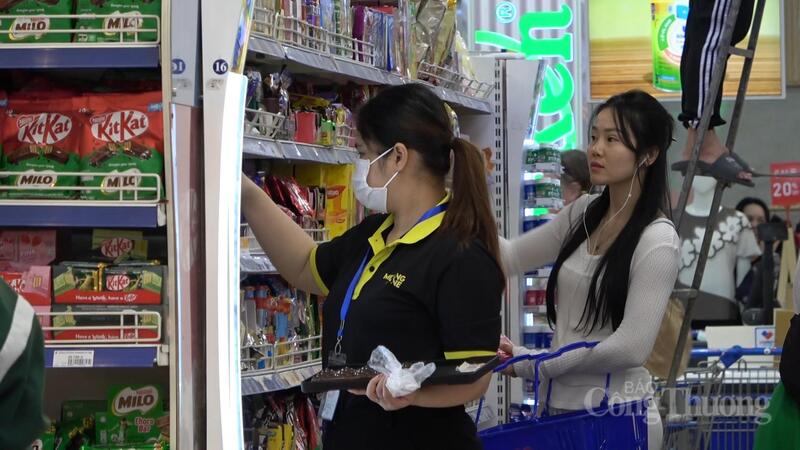
Retail businesses are being cautious in adjusting prices.
According to Mr. Tam, imported goods are currently increasing in price due to logistics costs and limited supply, while domestically produced goods are mainly increasing due to input costs. To reduce dependence on imported goods, he suggested increasing the use of domestically produced goods to reduce logistics costs. At the same time, local Departments of Industry and Trade and the Ministry of Industry and Trade need to strengthen the connection between domestic retailers and manufacturers. In addition, businesses proposed maintaining or considering reducing VAT on consumer goods to offset the increased costs, thereby supporting purchasing power and stimulating the market.
Mr. Nguyen Nguyen Phuong, Deputy Director of the Ho Chi Minh City Department of Industry and Trade, shared that the city's market stabilization program is still proving effective. However, in the context of rising input costs, maintaining prices is a major challenge for businesses. Adjusting prices too quickly could directly affect purchasing power, thereby negatively impacting production and distribution activities.
Therefore, the Department of Industry and Trade is orienting the implementation of comprehensive and flexible solutions. First, it encourages businesses to diversify their supply sources, especially increasing the participation of small and medium-sized enterprises. At the same time, it prioritizes cooperation with large enterprises that have the capacity to maintain stable production to increase output, thereby reducing costs and contributing to price stability.
Another solution is to boost promotional activities and stimulate consumer demand. The Department will support businesses in communication and promotion through programs such as the "Responsible Green Badge," thereby both supporting the consumption of goods and limiting pressure to increase prices in the context of weak purchasing power.
Representatives from the regulatory agency also stated that distribution systems need to continue cooperating in controlling price adjustments, extending the adjustment period to monitor market developments and avoid rapid price increases that negatively impact consumption. “We need to extend the adjustment period to monitor market developments and wait for signs of improvement, thereby overcoming this difficult period together. If prices increase too quickly, the consequences will be significant; when the market stabilizes, adjusting prices downward will be difficult, negatively impacting purchasing power and consumption,” Mr. Phuong said.
Mr. Phan Van Chinh, Deputy Director of the Department of Domestic Market Management and Development, stated that the Ministry of Industry and Trade always identifies the domestic market as a key target for businesses, not just a "support base." Boosting domestic consumption facilitates businesses in terms of payment, foreign exchange, logistics, and quality control.
In the current context, effectively exploiting the domestic market is becoming increasingly crucial to minimize the impact of transportation costs and external factors. Simultaneously, businesses still need to expand exports and effectively utilize free trade agreements (FTAs) to diversify their markets.
The Ministry has also strengthened connections with seafood, agricultural, textile, and footwear businesses, thereby supporting the increased use of domestic raw materials and goods, contributing to enhanced self-reliance in production and business.
Source: https://congthuong.vn/sieu-thi-vao-cuoc-giua-ap-luc-chi-phi-447955.html






























































































Comment (0)