

Returning to visit the riverbank, standing silently and gazing at the water at the confluence of the rivers, I was lost in a stream of memories. The Ngan Sau, Ngan Pho, and the La River, their clear, tranquil waters reflecting the clouds and sky of Ha Tinh, evoke a sense of longing and nostalgia...
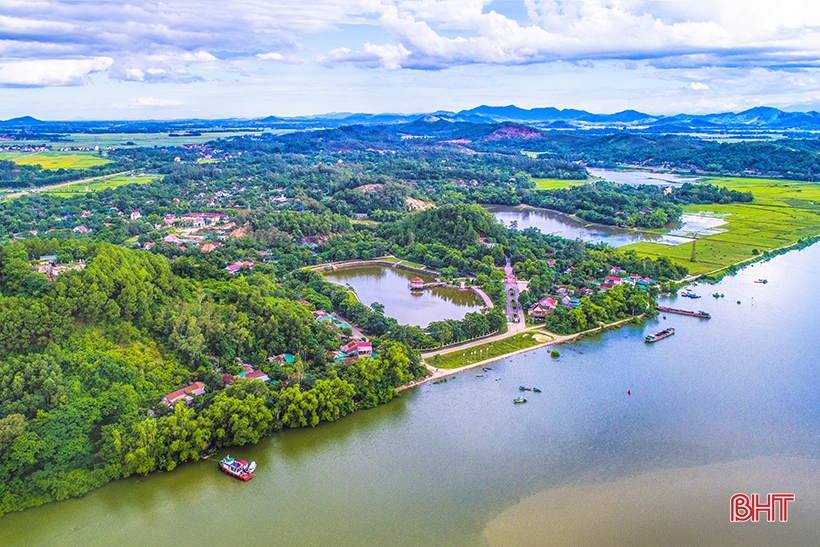
A view of Tam Soa wharf. Photo: Nguyen Thanh Hai
Time flows like water, settling the silt. There are places that, even if encountered only briefly, even if visited only briefly, still manage to leave an imprint, still retain a part of our soul. For me, the land whose name resonates so deeply is so dear, so gentle: Tam Soa Wharf!
I returned to the riverbank after 51 years of change. 51 years – a lifetime – yet the same mountains and rivers remain, the same vast expanse of clouds and water, the same shores and villages… I stood silently by the water's edge, letting my mind wander back to those distant years. Here is Tam Soa Wharf and Linh Cam Bridge! Back then, there was no bridge; crossing the river was done by ferry, braving the waves to carry artillery and transport soldiers to fight the enemy, silently enduring the bombing day and night. Not far downstream from the river junction was the ferry landing.
Night after night, the ferry crossing the La River was filled with the rustling of footsteps. Heavy columns of soldiers, laden with backpacks and ammunition, silently camouflaged, crossed the Van Ru ferry on the Lam River, traversing the fields of the "nine southern provinces" to Duc Truong (now Truong Son commune) and then to the La River. The La River flowed peacefully, its banks lush with grass. The sandy beach where the ferry crossed sloped gently, smooth and velvety in the night. The ferry landing was bustling, filled with the clanging of metal, shouts of greetings, and giggles, creating a symphony of a time when the nation was optimistic about battle. Voices from Nghe An, Thanh Hoa, Hanoi , and Thai Binh—compatriots meeting, inquiring about each other's lives and families. The bottom of the boat crunched against the sand, hurried footsteps, breathless sighs, quick handshakes, waving goodbyes, and fleeting smiles beneath hats vanished into the night.
That day, on duty on the battlefield, daily observing the enemy aircraft to support counter-attacks against them, I, a young and naive person, hadn't yet fully grasped the sacred spirit of the land. My heart was filled with the thought that I should dedicate my youth to the fight against the Americans, focusing solely on completing my mission. The battalion was assigned to protect the Linh Cam ferry crossing and the Tho Tuong railway bridge. These were two targets that the enemy concentrated their attacks on with extreme ferocity. Every day, on duty, I looked in all directions: to the east was the majestic Ngan Hong mountain range stretching endlessly; to the north was Dai Hue mountain, followed by Thien Nhan mountain; to the southwest was Giang Man mountain; and in the distance, the Ngan Truoi range shrouded in mist. A undulating mountain arc, on one side Nghe An , on the other Ha Tinh. A strategically important area, a narrow strip of land in the sun-drenched, windy central region, inhabited by steadfast, courageous young men from all over, determined to defend these vital transportation routes. Enemy planes, whenever they sneaked in from ships to attack, always circled and hid along this arc. Groups of planes hovered and hid in the clouds and mountains, ready to suddenly swoop down.
Artillery positions were scattered across the hills surrounding the ferry crossing. The cannons, their barrels bouncing and rotating under camouflage, adjusted their aim and direction. Artillerymen, their helmets gleaming, emerged from the camouflage-covered huts at every alarm. The battalion's command post was sometimes located on the dike by the river, sometimes in the middle of the Duc Phong field. Enemy aircraft flew from dawn till dusk. They flew horizontally and vertically, low and high, circling and attacking vehicles, bridges, ferries, and engaging the battlefield. They flew at cruising altitudes, dropping bombs; they dived and dropped bombs. They used lasers to guide bombs into the battlefield. Large bombs, cluster bombs... Bombs exploded on the hills, in the river, and on the battlefield... bombs rained down, the battlefield was shrouded in darkness, and comrades fell... In the drizzling afternoon, as the bodies of fallen comrades were laid to rest, the procession moved slowly and silently across the field, heads bowed, hearts overflowing with love and hatred.
We lived in the loving care of the women of this river-crossing region. Every time the battlefield opened fire, every time enemy bombs rained down, the villagers clung to the bamboo groves, watching anxiously. Many times, before the smoke from the bombs had even cleared, the women would rush to the battlefield to supply drinking water, treat the wounded, and bring the fallen to the rear. In the hazy battlefield, the artillerymen's faces, blackened by fire and smoke, swiftly cleaned shells, cleared the gun barrels, and replaced camouflage, ready for the next battle.
Returning to the riverbank, standing silently and gazing at the water at the confluence of the rivers, I was lost in a stream of memories. The Ngan Sau, Ngan Pho, and La rivers flowed with clear, calm water, reflecting the clouds and the mountains. The villages and riverbanks were lush with corn, sugarcane, peanuts, and beans—each season bringing its own produce. Duc Tho and Huong Son, two regions renowned for their beautiful women. The women of Huong Son and Duc Tho had fair skin and long hair; perhaps it was due to the cool, clear water from the headwaters, perhaps it was due to the fragrant scent of the rivers and mountains?
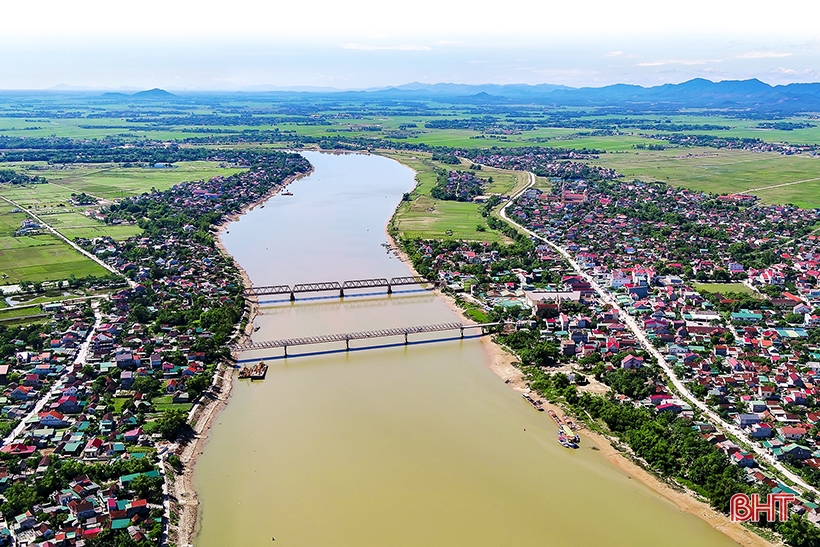
The banks of the La River. Photo: Huy Tung
Today, Duc Tho town is like a young man in his prime, full of vigor. The streets are straight, wide, and long. The intersections are bustling with people and vehicles, and the restaurants and supermarkets make me feel like I've wandered into a dream. Looking down from the new Tho Tuong bridge over the La River, the town center of the district today possesses a modern beauty. A beauty of the country's renewal era, full of vitality yet still dreamy, like the girl from the La River who, in the evenings, came down to the riverbank with her hair flowing, captivating us artillerymen of yesteryear.
I walked along Son Bang, Son Chau, Son Pho... I walked along the right bank of the La River but couldn't find where the command post used to be located. Now, everywhere I go, I see imposing buildings, sturdy concrete roads, and well-maintained flowerbeds and gardens. The La River dike has been widened and strengthened today.
It was along this very dike that day, after each battle, I had to move around in the dark, laying ropes down to the battlefields, my feet trudging through the fields and lakes. The mischievous girls of Duc Yen and Duc Phong often teased and tormented the communications and reconnaissance soldiers. The mothers and sisters lovingly offered us tea, peanut candy, persimmons, and oranges... The battalion's command post was on the dike, and that afternoon, Battalion Commander Tran Kha waved the flag. His angular, strong face, his fiery eyes, and his imposing figure had carved a monument into the sky – a monument to the courage and determination of the anti-aircraft artillery troops in fighting the enemy. I couldn't find the location of the command post in the middle of the field. Now, wherever I look, there are streets and roads. Wide roads, rows of trees, stretches of street...
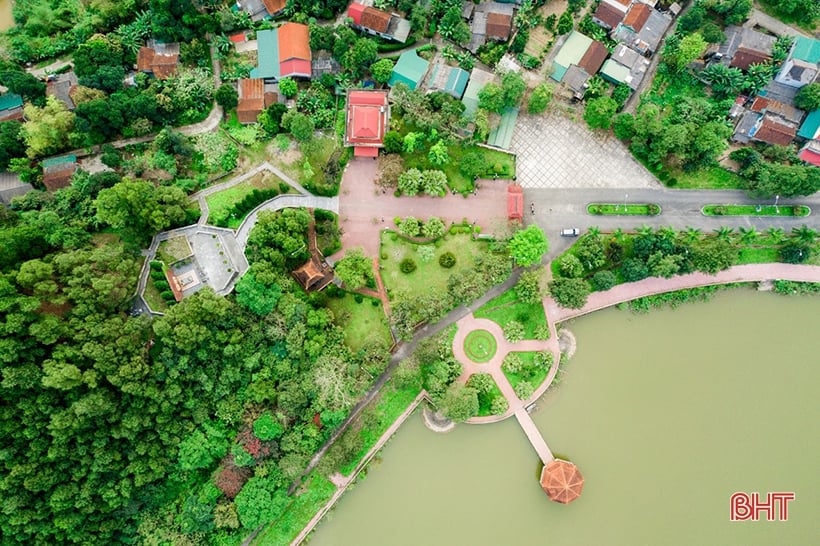
Panoramic view of Quan Hoi Hill and the tomb of the late General Secretary Tran Phu.
I visited the tomb of the great physician Hai Thuong Lan Ong. His tomb and memorial site are nestled amidst the peaceful forests and hills of Huong Son mountain. I then returned to the tomb of the late General Secretary Tran Phu. The land of Tung Anh - Duc Tho has given birth to an outstanding son. From the hilltop where the late General Secretary rests, the vast Tam Soa wharf stretches out before me.
Tam Soa Wharf, the confluence of the Ngan Sau and Ngan Pho rivers. The Ngan Pho River flows through Son Kim, Son Pho... of Huong Son, while the Ngan Sau River flows south from Ngan Truoi, passing through the Giang Man mountain range in Huong Khe. I was lost in thought, contemplating this legendary land of mountains and rivers, a land imbued with spiritual energy that has given birth to countless heroes who have brought glory to the country and homeland, a place where many illustrious families, such as the Dinh Nho and Nguyen Khac, converge.
At the river confluence, right here, that day we pulled our artillery out again, answering the call of the battlefield. Crossing the Linh Cam ferry, we marched through a rainy night. Son Bang, Son Chau, Son Pho... We left behind the sacred land still resounding with the sounds of artillery and bombs, we left behind Dong Loc Crossroads, Khe Giao, Lac Thien Crossroads, and countless village names, mountain names, and river names. We left behind countless familiar faces, countless loving eyes of mothers, sisters... and even the eyes of a beloved daughter...
"...Oh, no sky is as blue as the sky in Can Loc."
The greenish water is the same as the water from the La River.
"Anyone returning to Ha Tinh, our homeland, will remember those eyes... Oh... oh..., the girl from the La River, eyes as clear as jade, like drops of water from the La River, as precious as the sky of our homeland..."
It's been a long time since I left the La River, but this song still resonates within me. The La River, a soft, fragrant silken ribbon, remains forever in my memory. The La River, Ngan Sau, Ngan Pho, the confluence of rivers, imprinted with the vastness of clouds, mountains, and sky. The surface of the river confluence reflects the red glow of the setting sun, the red of bomb fire, the red of the parachute lights on nights when enemy planes circled and bombed the Linh Cam ferry crossing.
November 2023
Nguyen Ngoc Loi
Source

![[Photo] The General Secretary, President and his wife begin their state visit to the Philippines.](https://vphoto.vietnam.vn/thumb/1200x675/vietnam/resource/IMAGE/2026/05/31/1780230559452_anh-man-hinh-2026-05-31-luc-19-28-11.png)
![[Photo] Admire the coral "masterpiece" amidst the million-year-old heritage of Dak Lak province.](https://vphoto.vietnam.vn/thumb/1200x675/vietnam/resource/IMAGE/2026/05/31/1780221235105_anh-man-hinh-2026-05-31-luc-16-53-27.png)
![[Photo] Solemn bathing ceremony and Buddha procession in Hue](https://vphoto.vietnam.vn/thumb/1200x675/vietnam/resource/IMAGE/2026/05/31/1780228263543_1-jpg.webp)









![[Video] Sunset at Lap An Lagoon – Where the sun sets over the fishing nets](https://vphoto.vietnam.vn/thumb/340x192/vietnam/resource/IMAGE/2026/05/31/1780192137701_beach-landscape-sea-water-nature-grass-745871-pxhere-com.jpeg)







































![[Photo] Admire the coral "masterpiece" amidst the million-year-old heritage of Dak Lak province.](https://vphoto.vietnam.vn/thumb/402x226/vietnam/resource/IMAGE/2026/05/31/1780221235105_anh-man-hinh-2026-05-31-luc-16-53-27.png)

































Comment (0)