


Against the backdrop of the entire Party, people, and army's determination to successfully achieve the two centenary goals, ushering the country into an era of national progress, with science and technology as the foundation, innovation as the driving force, and digital transformation as the connection, as stipulated in Resolution 57, the mission of overseas Vietnamese , especially the overseas intellectual force, requires even greater efforts.
Brain drain
Looking at countries in the region and around the world , we can learn very profound lessons and gain valuable experience.
Since the early 1980s, China has had a policy of sending students to study in the West, but without any commitment or regulation regarding their return to serve after their studies.
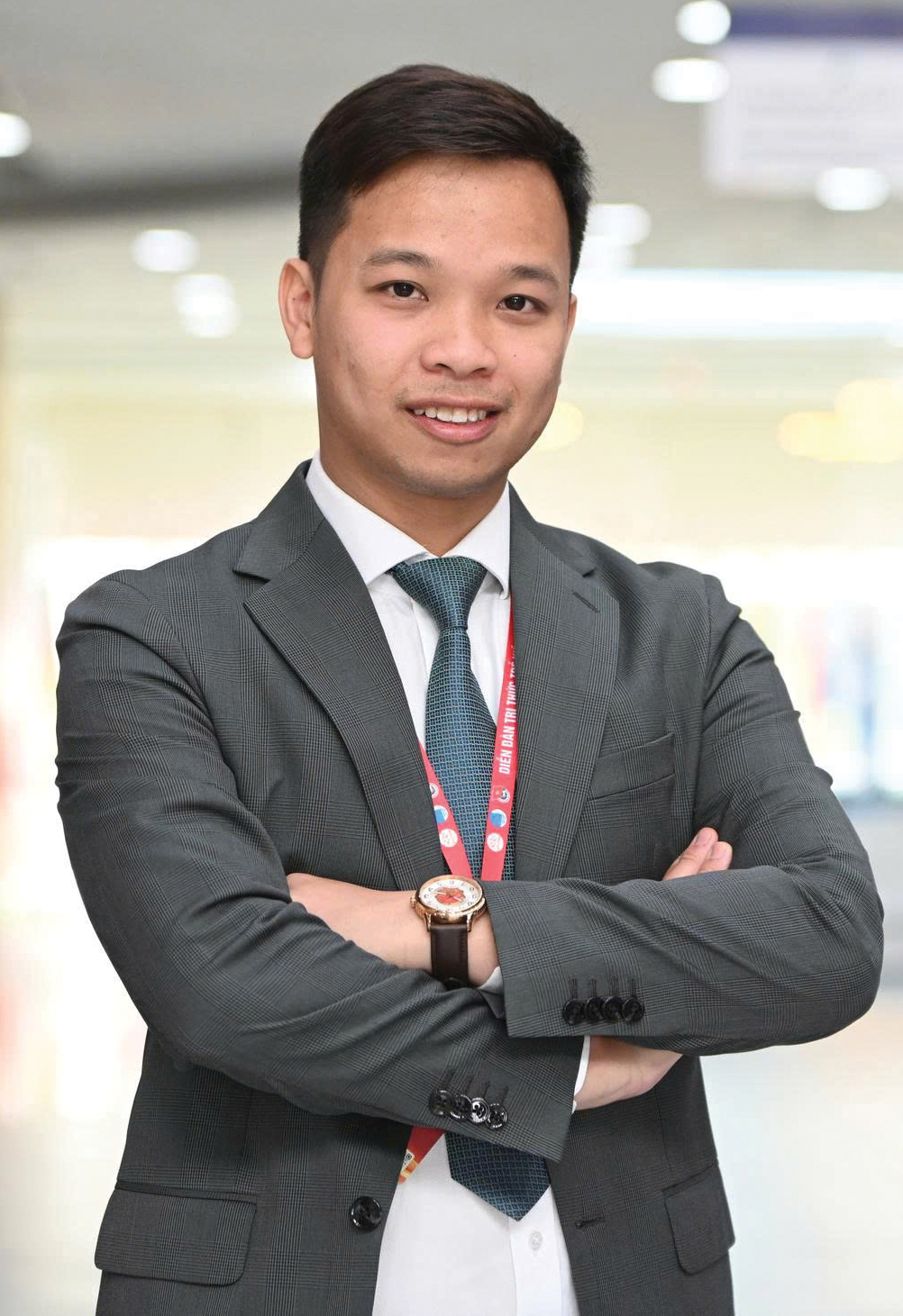
Assoc. Prof. Dr. Tran Le Hung
This showed that, at that time, China was very aware that its country lacked the attractiveness and suitability to absorb the best qualities of those sent abroad for study, and its capacity to do so was limited.
In other words, this country accepts that its best talents can go abroad to test their skills in a more suitable work environment to develop their abilities.
Nowadays, with China as a powerful nation with significant international influence, talented overseas Chinese are voluntarily returning to serve their country, and China calls them "sea turtles." Indeed, in recent years, this policy has yielded many positive results, with these "sea turtles" returning for short-term, long-term, or even permanent stays.
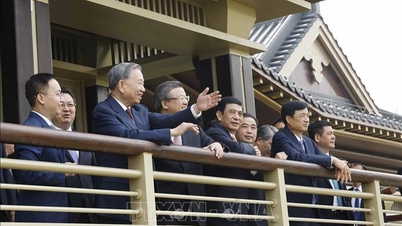
During his community outreach sessions on his travels, General Secretary To Lam has repeatedly mentioned the work related to Vietnamese people abroad and emphasized the encouragement and welcome of overseas Vietnamese to stay in their host countries to develop themselves and their careers while still contributing to the country.
These new perspectives suggest a concept of "brain circulation" in a more appropriate form for today's flat world. This concept can coexist with the two older concepts of "brain drain" and "brain gain".
With the concept of brain drain, there will no longer be winners and losers, but rather brainpower will be shared between nations, and the international community will be the beneficiary. With the Fourth Industrial Revolution and the rapid development of technology today, this concept is more easily implemented in practice with the help of advanced technological devices.
Brain drain also opens up new opportunities for overseas Vietnamese to participate, advise, and propose recommendations to the nation-building process. However, Vietnam also needs a specific mechanism and solutions to attract and fully utilize this intellectual resource.
Creating an environment for talented people.
First, it must be emphasized that each stage of a country's development requires a correct understanding of its talent needs.
We cannot make general, scattered calls for action; instead, we need to focus specifically on priority areas that will become the spearhead and backbone of national development, such as artificial intelligence, energy, high-speed rail, and nuclear power. A focused selection and allocation of resources will determine the country's ability to accelerate in the short term, maintain stability in the medium term, and ensure long-term sustainability.
Secondly, with Vietnamese intellectuals abroad considered a necessary internal resource for current development, shifting the mindset towards the free flow of intellectual capital, viewing intellectuals as cross-border assets, will lead to deeper, more substantive collaborations, shortening travel time and achieving higher efficiency. Contributions from afar, yet closely connected, also constitute a suitable form of patriotism for global citizens.
However, it is also necessary to strongly promote the identification and nurturing of Vietnamese talents abroad. This can be done through competitions and awards to find, honor, and create a networking community where talented individuals can thrive.
Awards need to be updated and adapted to each stage to create additional resources for the country when needed. In addition, efforts should be intensified to educate Vietnamese people abroad about ideals and patriotism.
Thirdly, for talented individuals who wish to return to their home country to work, a new ecosystem should be formed, providing a stable working environment and genuine contributions to comprehensively support researchers. In addition to developing the R&D model, the five-party ecosystem: universities - researchers - investors - businesses - the government is also a worthwhile initiative to consider.
This model will support a research product from the initial idea conception stage to its complete development, positive application to society, generating profit, and contributing to the development of national competitiveness through science and technology.
This smooth and efficient operation will provide peace of mind for scientists, helping them avoid distractions from their research work – which is their forte. In addition, a transparent, flexible, competitive, and risk-taking financial mechanism is also a plus point to foster innovation among the population and attract resources.
Finally, there also needs to be a mechanism for talented individuals to directly contribute ideas to the Party and the State, because valuable ideas, innovations, projects, and critical voices need to reach the right place. Obstacles at the intermediate level, procedural issues, or gaps in trust also reduce the motivation and desire of talented individuals to strive and contribute. When talented people live in an environment where they are truly respected, challenged, and recognized, they will surely return on their own, like "sea turtles," without needing to be called upon or attracted by special mechanisms.
General Secretary To Lam's call to attract, utilize, and retain talent is not only an invitation for overseas Vietnamese to return and contribute, but also an affirmation to the entire nation that we have a space where knowledge is honored, respected, and used for the right purposes.
Vietnam's strategic vision
Currently, Vietnam has specific policies and mechanisms to attract experts in key priority areas such as high-speed rail, nuclear power, artificial intelligence, and semiconductors.
Simultaneously, it has been expanded to include 11 strategic technology groups and 35 strategic technology product groups for the period 2025-2030, as issued under Decision No. 1131/QD-TTg dated June 12, 2025, by the Prime Minister.
This demonstrates the strategic vision and strong determination of the Party and the State in building a team of leading intellectuals and experts to lead the development of science and technology and the national digital transformation.
Source: https://tuoitre.vn/su-menh-cua-tri-thuc-kieu-bao-20260205160224981.htm
![[Photo] General Secretary and President To Lam presents the Politburo's Decision on personnel matters to 4 Party Committees directly under the Central Committee.](https://vphoto.vietnam.vn/thumb/1200x675/vietnam/resource/IMAGE/2026/04/13/1776077847172_a1-bnd-8005-950-jpg.webp)


![[Photo] General Secretary and President To Lam holds telephone conversation with Chairman of the Liberal Democratic Party of Japan and Prime Minister of Japan Takaichi Sanae](https://vphoto.vietnam.vn/thumb/1200x675/vietnam/resource/IMAGE/2026/04/13/1776077840503_a1-bnd-7942-6402-jpg.webp)
![[Image] Expediting land clearance at Alley 310 Nghi Tam to facilitate the construction of Tu Lien Bridge](https://vphoto.vietnam.vn/thumb/1200x675/vietnam/resource/IMAGE/2026/04/14/1776160406551_ndo_br_z7724148990408-9e5d4777e3c4504998b4286178b2e66e-jpg.webp)









![[Photo] Prime Minister Le Minh Hung and Prime Minister Robert Fico attend the Slovakia-Vietnam Business Forum](https://vphoto.vietnam.vn/thumb/1200x675/vietnam/resource/IMAGE/2026/04/13/1776075264359_ndo_br_dsc-6775-jpg.webp)










































Comment (0)