


Businesswoman Nguyen Thi Kim Oanh, founder of One River, has just returned to Super Chef Season 3; previously, she was a judge on MasterChef Vietnam Season 2. - Photo: Provided by the interviewee
Nguyen Thi Kim Oanh, a former sports beauty queen and the founder of Wrap&Roll – a restaurant model with a menu entirely of Vietnamese wraps – smiled brightly and invited everyone to embark on a journey of confluence of flavors at her recently opened restaurant.
One River and the Mekong River evoke strong emotions.
After years of interacting with staff from the Mekong Delta, visiting the region, and especially reading Brian Eyler's *The Last Days of the Mighty Mekong* and Tim Marshall's *Prisoners of Geography* , Kim Oanh began to think about a new culinary concept related to the Mekong River.
In her lingering memory, the beautiful woman's heart remained unchanged from that fading sunny day in Vinh Long . Then, sitting on a boat traveling through the century-old brick kiln kingdom of Mang Thit, sailing down to the Co Chien river junction, the enthusiastic boatman said, "Turn right, it won't be far before you reach the East Sea, miss..."
Thus, the inspiration for the nine branches of the Mekong River flowing into the sea, along with the Mekong Delta river ecosystem, "germinated" in my mind.


Western-style rolls and fish curry - Photo: Provided by the interviewee
But three years ago, the journey upstream to explore the lower reaches of one of the world's most magnificent rivers began.
The Mekong River (Mae Nam Khong), meaning "Mother Mekong" in Lao, is a river that brings life to every place it flows through and is a deeply shared cultural link among the three countries of Vietnam, Laos, and Cambodia. It has become an integral part of the One River initiative, with Laos as its starting point.
"One River developed based on personal curiosity and a desire to create something more meaningful than mere business, contributing to preserving the culinary heritage of a unique cultural region that is changing, or even disappearing, every day," Kim Oanh told Tuoi Tre newspaper .
And also because she was born with the element of water. Water fertilizes the land, giving rise to life. Water is flexible, vibrant, able to seep through narrow crevices and erode rocks... There is a strong connection to the wide river she is heading towards.
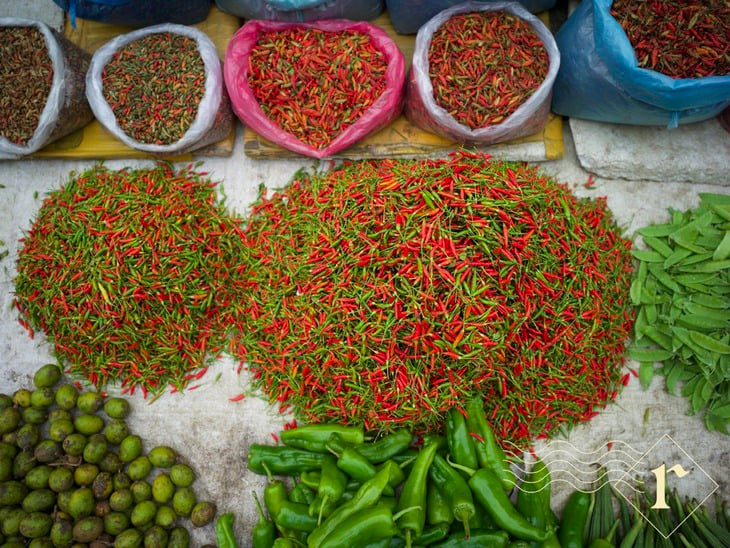
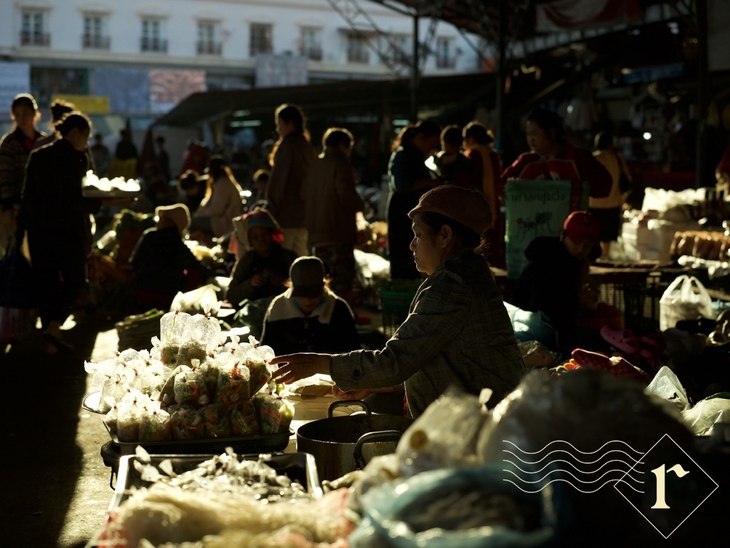

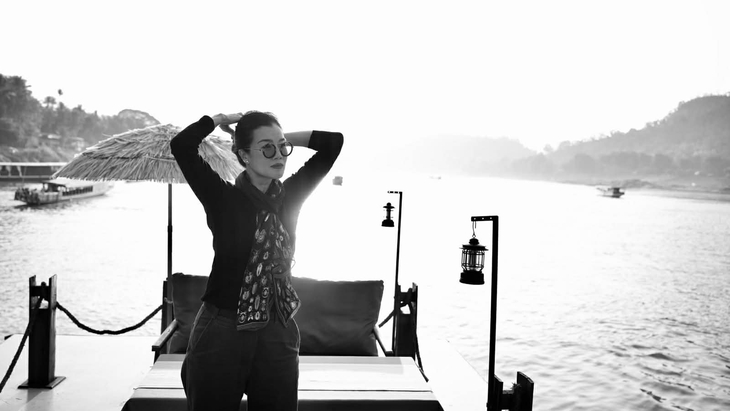
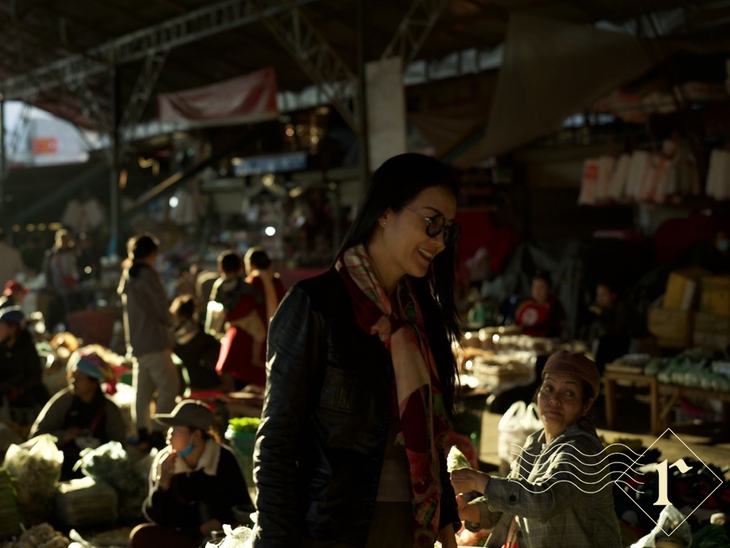
The Mekong River provides livelihoods for tens of millions of people in the countries it flows through - Photo: Provided by the author.
"Everyone has a story to tell about whatever they eat."
Starting from northern Laos with the ancient capital of Luang Prabang, then flowing downstream to Vientiane in central Laos, and finally turbulently down to the rocky rapids of Champasak in southern Laos, Nguyen Thi Kim Oanh discovered a unique Lao cuisine characterized by its rustic, down-to-earth, and natural elements, yet still largely unknown.
She spent a peaceful week in Luang Prabang, and it felt like living completely different days. Visiting temples, going to the market, taking cooking classes – so much fun!
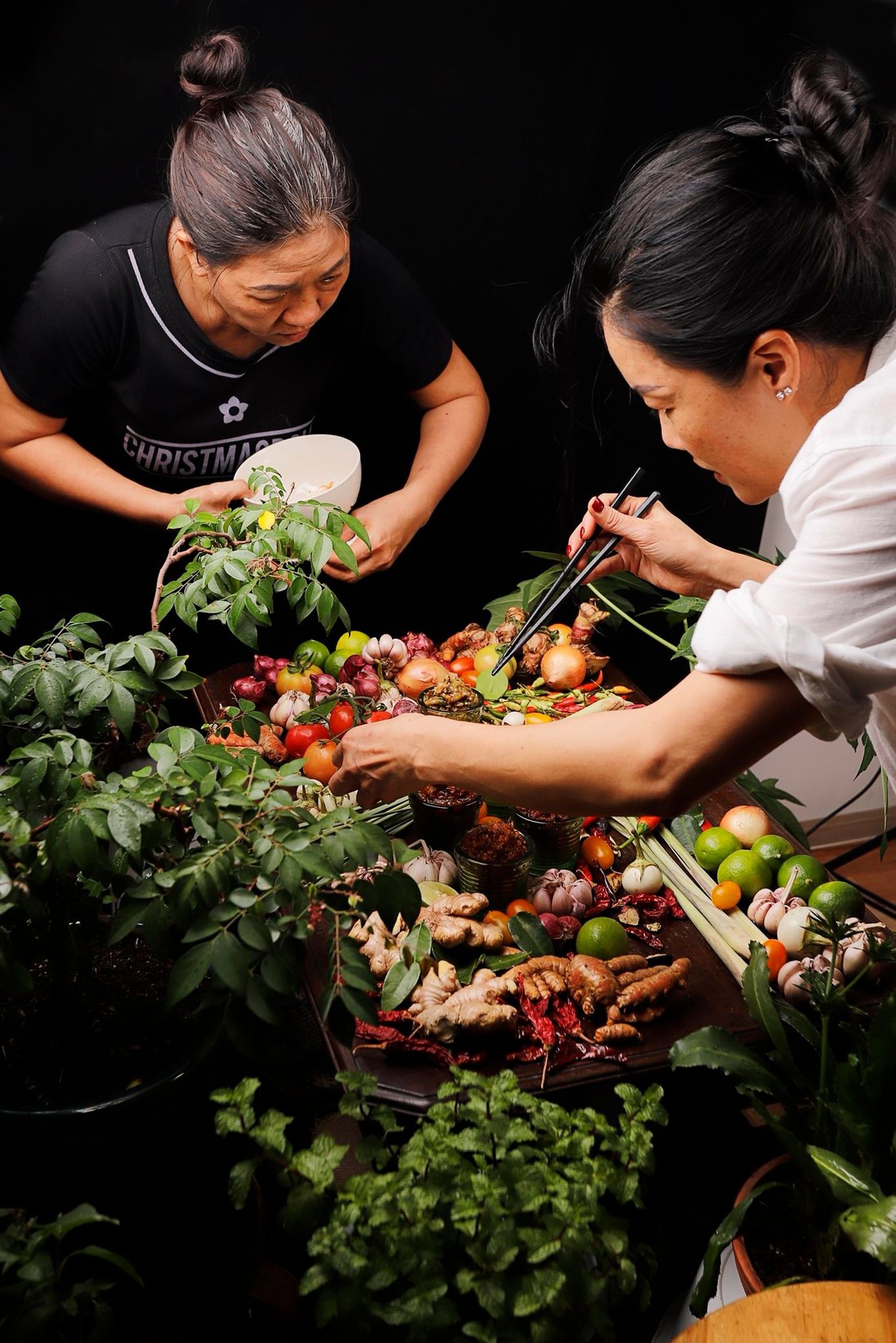
A day at One River - Photo: Provided by the interviewee
There, in the corners of the kitchen, Laotian women in traditional attire, one hand holding a pestle, the other a spoon, would talk about larb (also called lap), Tum Mak Hung papaya salad, Sai Oua sausage, and why Laotians often eat Khao Niew sticky rice...
Even the lessons on making jeow – a mixture of dried chili peppers, galangal, garlic, shallots, lemongrass, fish sauce, palm sugar, salt, and sliced boiled pork skin, all pounded in a stone mortar until thick and viscous, encompassing all the earthy flavors: spicy, sweet, salty, and umami – captivated the cultural "explorer".
And then, hearing the sound of the pestle and mortar making jeow always evokes a sense of "emotional resonance," calling family members home for dinner.
I still remember that evening we met in October, at the simple and humble dinner table. Ms. Oanh took a spoonful of white sticky rice, gently rolled it into a ball, and dipped it in the sauce – oh, it was enough to satisfy my cravings of many decades of life.
Further south in Cambodia lies a fertile region thanks to Tonle Sap Lake – the largest freshwater lake in Southeast Asia, and also the main source of water and fish for the Cambodian people.
Like other regional cuisines, Cambodian food balances sweet, bitter, sour, and salty flavors, but is significantly less spicy than Thai and Lao cuisine. It combines local ingredients with classic European cooking techniques, influenced by centuries of Indian traders who settled in the region in the 6th century, as well as French and Chinese immigrants.
She was impressed by the curry here. Instead of overwhelming the taste buds with chili, it offers a pleasant balance of salty, sweet, and fatty flavors. This dish allows the Khmer people to showcase their art of making kroeung (a mixture of spices including lemongrass, turmeric, garlic, shallots, galangal, kaffir lime leaves, etc.), and without kroeung, Khmer curry cannot take shape.

Prahok Khmer, Cambodian-style grilled meat - Photo: Provided by the interviewee
"Khmer curry is a dish that's both familiar and unique. Curry eaten with rice noodles and vegetables, we look at each other... Wow! It's so delicious," Ms. Oanh said, describing the fragrant, creamy coconut milk, thick with the sweet and refreshing taste of palm sugar simmered over a low heat, infused with fresh curry paste every day.
Chicken curry and pork rib curry are not uncommon in Vietnam, but not everyone has tried green fish curry.
"This dish is incredibly elaborate," the woman in front of me said, scooping a few spoonfuls of hot curry into a bowl. She revealed that to make it, the fish must be boiled, then mashed and simmered until thickened with lemongrass, fresh curry leaves, and various hand-ground spices. Only when you savor a few spoonfuls of this rich, fragrant curry will you truly understand the chef's dedication.
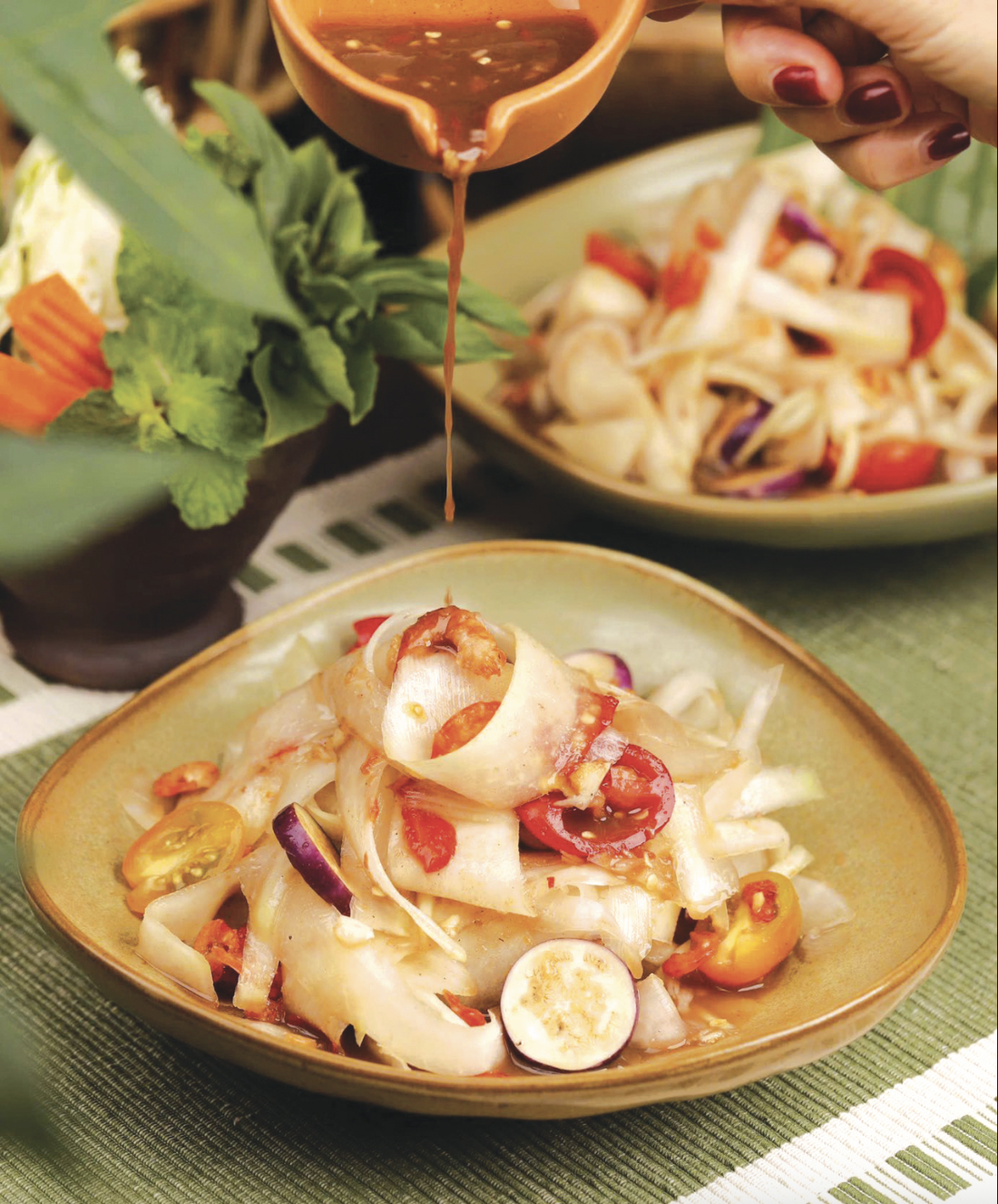
Tum Mak Hung, Laos - Photo: Provided by the interviewee
Hay prahok (fermented freshwater fish paste, usually made from snakehead fish) - the soul of Cambodian cuisine, Kim Oanh is completely smitten with. People may like it or not, because not everyone can tolerate that provocative smell and taste.
However, thanks to prahok, Cambodian cuisine stands out with its balance of sour, spicy, salty, and sweet flavors, but always has a unique fermented base, reflecting the cultural identity and lifestyle closely connected to the river.
More than just an ingredient, prahok is a symbol of the country's culinary heritage and vibrant spirit.
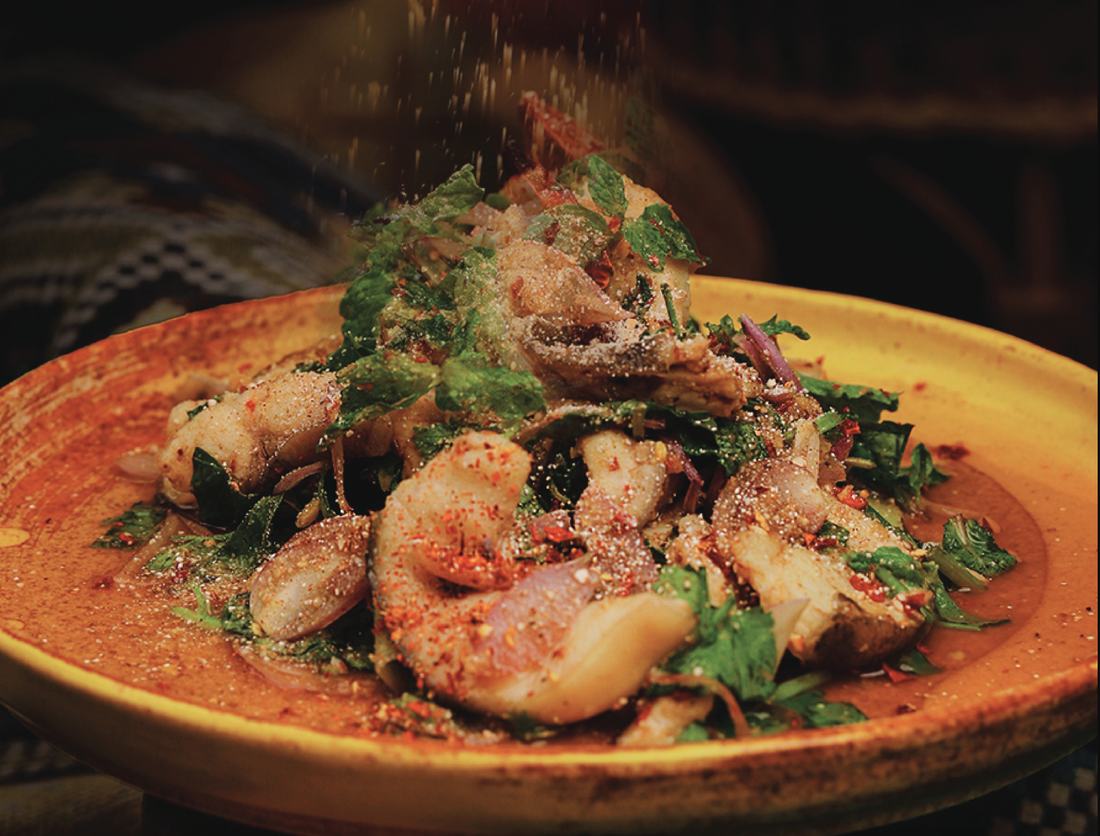
Mekong cuisine: We are so different yet so similar - Photo: Provided by the interviewee

A classic Laotian soup from Luang Prabang, Bayyanang leaf soup with homegrown vegetables - Photo: Provided by the author
Goodbye to larb, jeow, and Tum Mak Hung from Laos; and curry and prahok from Cambodia, as we journey along the culinary waterway to the Mekong Delta.
As Oanh explained, returning to the Mekong Delta – where interwoven rivers and canals connect villages and hamlets – and eagerly awaiting the flood season with its abundance of fresh fish and shrimp, promises delicious meals on the porch with fish, rice, and soup, filled with lively conversations. You'll also encounter Vietnamese spring rolls, with whatever you like, creating a fascinating three-legged confluence of flavors in the lower Mekong River basin.
This culinary "masterpiece" reflects the free-spirited, spontaneous, and personalized way of eating and the natural lifestyle of the Vietnamese people in the Southwestern region of Vietnam.
Having traveled between Laos, Cambodia, and Vietnam dozens of times over the past three years to research ingredients and cuisine, One River was born, Kim Oanh says, simply to tell the story of a broader and deeper geographical flow than what we see on the map.
There, everyone has a story to tell about whatever they eat. At the same time, you gain a deeper understanding of the profound connection between people and the river, and comprehend the stories told by nature itself.
"No wonder the Laotians call the river Mae Nam. Perhaps the river flowing to the riverbank is like a father, and the garden is like life?"
Days in Laos - Clip: One River
We are so different yet so similar?
The question arises when opening the One River menu. There, one glimpses a whole journey of searching, comparing, and secretly chuckling at the discovery of some little secret, ultimately leisurely enjoying the moment: we are clearly different, yet so similar.
We are Vietnamese, Laotian, and Cambodian, but we are also children of the same sacred river, the Mekong.
The vegetable platter is the beginning of the story. There you'll find a plate of vegetables dipped in Lao jeow or Cambodian prahok, or a variety of salads made with fresh herbs and vegetables from the gardens of the Southwestern Mekong Delta, such as young toad and anchovy salad, water hyacinth and shrimp salad, water spinach and fried shrimp salad, crab claw and stir-fried beef salad...
Everywhere you look, there are fresh, vibrant green vegetables, a refreshing sight that evokes memories of familiar gardens bathed in sunlight and rustling in the breeze by the river of your childhood, while you yourself grew up so quickly.

Along the Mekong River, almost every household has a papaya tree in their garden - Photo: NVC
While traveling along the Mekong River, she recalled that almost every household had a few papaya trees in their garden. People living along the river often ate fermented fish sauce, so the crunchy papaya was a delightful snack and also good for their health.
We can shred papaya into thick strips like in Laos, short, pointed strips like in Cambodia, or long, thin strips like in Vietnam to make salads such as Tum Mark Hung (Lao), Bok, L'hong (Khmer), or dried beef papaya salad from the Mekong Delta. Just one plant can yield vastly different flavors depending on how it's prepared. And it's up to you; eat whatever you want. Enjoy the meal.
Or try some sun-dried dishes that even a mother would love if scolded: Siem Reap sesame-coated pork, Pakse sun-dried beef, Vinh Long dried pineapple fish, or Khmer fish sauce chicken wings, crispy fried shrimp from the Mekong Delta, Lao Sai Krok Isan sausage...
From Laotian salads that tantalize all the senses to Cambodian curries that evoke images of lush green coconut groves and palm trees, to the abundance of Vietnamese wraps such as beef wrapped in betel leaves from An Giang, beef dipped in vinegar from Bac Lieu, crab spring rolls from Ca Mau, and duck pancakes from Can Tho...
Everywhere evokes memories and feelings of affection for the shared resources and culture of a single river.

Can Tho-style duck pancake, a very characteristic dish of the riverine garden culture of the Southwestern region of Vietnam - Photo: Provided by the interviewee.
Nguyen Thi Kim Oanh is telling a story that few people tell, and few people think about, even though sometimes, while eating here and there, someone might casually ask: "Hey, this dish looks so familiar! Why does this dish have something that's so similar to my hometown?"
"Familiarity" is an attribute of culture. It's a taste that evokes collective memories through the stomach. Food, genes, and culture—or cuisine—lead back to our roots, always ready to remind our children of the beauty that is fading day by day if we don't preserve it.
Source: https://tuoitre.vn/am-thuc-chung-mot-dong-song-20260204141200442.htm


![[Image] Checking the security conditions at the exam site, ready for the 10th grade exam.](https://vphoto.vietnam.vn/thumb/1200x675/vietnam/resource/IMAGE/2026/05/28/1779943458889_z7872507660648-d764421a26e8cd7b61d70d142a48a685-jpg.webp)
![[Photo] Life on both banks of the river returns to its bustling pace on the day the Long Bien Bridge opens to traffic.](https://vphoto.vietnam.vn/thumb/1200x675/vietnam/resource/IMAGE/2026/05/28/1779949763708_cau-long-bien-minh-duy-7-3610-jpg.webp)
![[Photo] The heat at the fireworks display site on the opening night of the Da Nang International Fireworks Festival 2026](https://vphoto.vietnam.vn/thumb/1200x675/vietnam/resource/IMAGE/2026/05/27/1779889741485_ndo_br_z7872039145157-fecaba5112f39e8352544099d7ef4738-5140-jpg.webp)









![The Quintessence of Northern Vietnam's Villages: [Part 2] The Famous Cassava Noodles of Kunming](https://vphoto.vietnam.vn/thumb/402x226/vietnam/resource/IMAGE/2026/05/28/1779937455892_3929-3144-mien-dong-15-nongnghiep-023138.jpeg)















































Comment (0)