


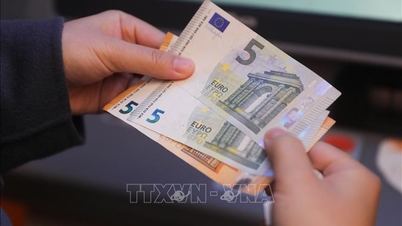
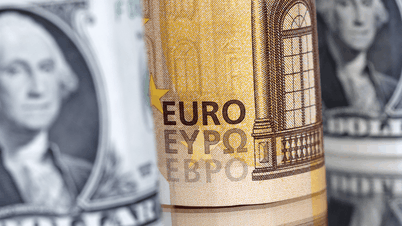
According to observations in the London financial market on January 28th (local time), the euro exchange rate surpassed the 1.20 USD mark. This is not only a psychological figure for traders but is also considered a "tolerance level," as previously stated by the Vice President of the European Central Bank (ECB), Luis de Guindos.
From a low point nearly equal to the USD, with 1 euro equaling 1 USD, a year ago, the euro has made an impressive breakthrough. Over the past year, the currency has appreciated by approximately 13% against the USD, recording its strongest growth since 2017.
Analysts point out that the euro's current strength largely stems from the weakening of the US dollar in response to actions by the Trump administration. Trade tensions with allies, disputes over Greenland, and criticisms of the Federal Reserve have eroded confidence in the greenback.
In addition, speculation that the US and Japan would intervene jointly to prevent the yen's decline also led to widespread selling of USD by investors. In Europe, efforts to strengthen regional security and long-term fiscal stimulus packages, particularly from Germany, significantly supported the euro's rise.
The strengthening of domestic currencies is posing a challenge for European export businesses. According to estimates by Goldman Sachs, companies in the STOXX 600 index derive 60% of their revenue from overseas, with the US market accounting for nearly 50%. Meanwhile, Barclays predicts that the euro's appreciation in 2025 will be the cause of approximately 50% of downward revisions to earnings per share (EPS) forecasts by businesses.
The ECB is closely monitoring these developments. Just last week, the euro rose by around 2%, its strongest weekly gain since April 2025, the date of the US "Liberation Day" tariffs that rattled markets. The euro's appreciation will put downward pressure on import prices, making it difficult for the ECB to achieve its 2% inflation target this year and in 2027.
Despite the euro's strong growth, experts believe it is unlikely to soon replace the USD as the number one currency in global reserves. Currently, the USD still accounts for nearly 60% of global foreign exchange reserves, while the euro accounts for only about 20%.
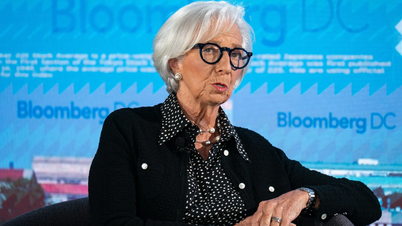
ECB President Christine Lagarde suggested that unpredictable US economic policies could open up opportunities for the euro to play a larger role, but this would require the European Union (EU) to complete its long-delayed financial structure.
According to a survey published on January 6th, the Eurozone economy slowed in December 2025, but still ended the year with its strongest fourth-quarter growth in over two years, thanks to steady expansion in the services sector offsetting a decline in manufacturing.
The Eurozone Purchasing Managers' Index (PMI) – published by Hamburg Commercial Bank (HCOB) and financial analytics firm S&P Global – fell to 51.5 points in December from a peak of 52.8 points in November and was lower than the preliminary estimate of 51.9 points. However, the score remained above the 50 threshold, indicating continued growth.
Maintaining a PMI above 50 points throughout 2025 means the Eurozone economy is sustaining continuous growth month after month, for the first time since 2019. The Q4 2025 PMI reached 52.3 points, the highest level since Q2 2023.
Survey data also showed that new orders in the Eurozone continued to increase for the fifth consecutive month, but at the slowest pace since September 2025. Notably, new manufacturing orders declined at a faster rate, while service businesses recorded lower revenue compared to the previous month. The business activity index for the services sector fell to 52.4 points in December, compared to 53.6 points in November (the highest in 2.5 years).
Another positive sign for the Eurozone economy is that the ECB announced in early January 2026 that bank lending to businesses in the Eurozone had accelerated significantly in November 2025, with a 3.1% increase compared to the same period the previous year, the highest since mid-2023.
Compared to October, when the increase reached 2.9%, the momentum of credit expansion for the business sector has shown signs of improvement. Credit to households also increased by 2.9%, marking the highest increase since Spring 2023, indicating a gradual recovery in borrowing demand within the economy.
According to experts, increased borrowing by businesses could be an early sign of increased investment, as the Eurozone economy seeks new drivers to escape a period of stagnant growth.
Nevertheless, the Eurozone's industry remains under considerable pressure from the external environment. High US tariffs and weakening demand from China are negatively impacting manufacturing prospects.
Cyrus de la Rubia, chief economist at Hamburg Commercial Bank, believes that demand for industrial products in the Eurozone is slowing, evidenced by a decrease in new orders, a decline in outstanding orders, and a prolonged inventory reduction process.
With Eurozone inflation remaining above its 2% target, the ECB continues to keep deposit rates unchanged at 2.0% for the second half of 2025, demonstrating a cautious stance in monetary policy management.
Source: https://baotintuc.vn/thi-truong-tien-te/su-tro-lai-cua-dong-euro-20260128205039047.htm





































































































Comment (0)