

A reporter from the Industry and Trade Newspaper had a discussion with Ms. Tran Thi Phuong Lan, President of the Vietnam Retailers Association, regarding this issue.
The domestic market still has significant growth potential.
- Madam, what are the potential and driving forces for boosting consumer spending growth in 2026?
Ms. Tran Thi Phuong Lan: 2026 will continue to be a year in which the retail industry faces many pressures as the global economy still harbors many unpredictable factors. Inflation, rising input costs, rapidly changing consumer trends, and increasingly fierce competition are creating numerous challenges for retail businesses.
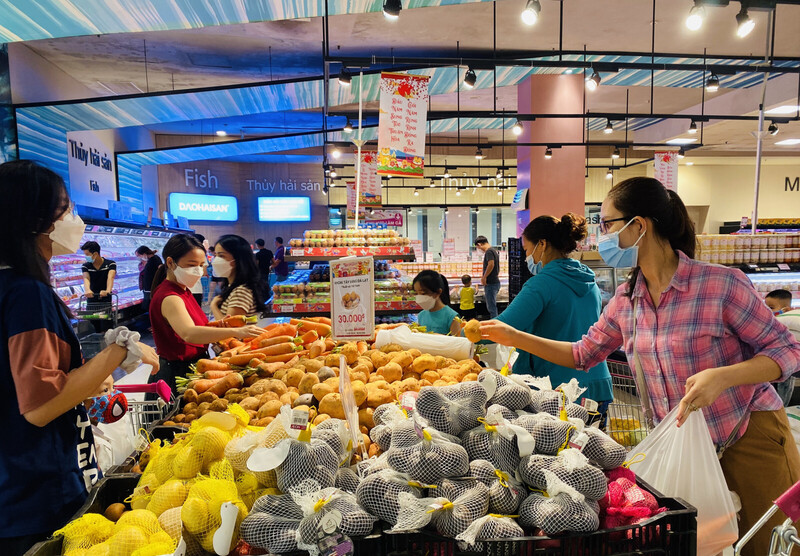
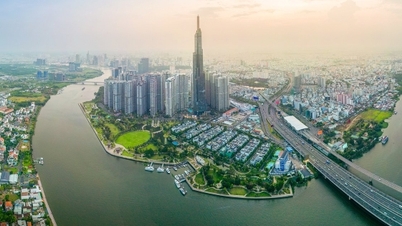
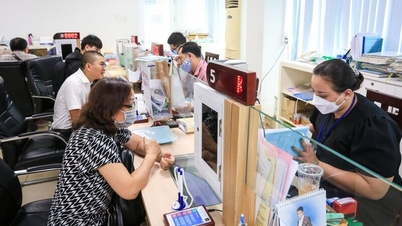
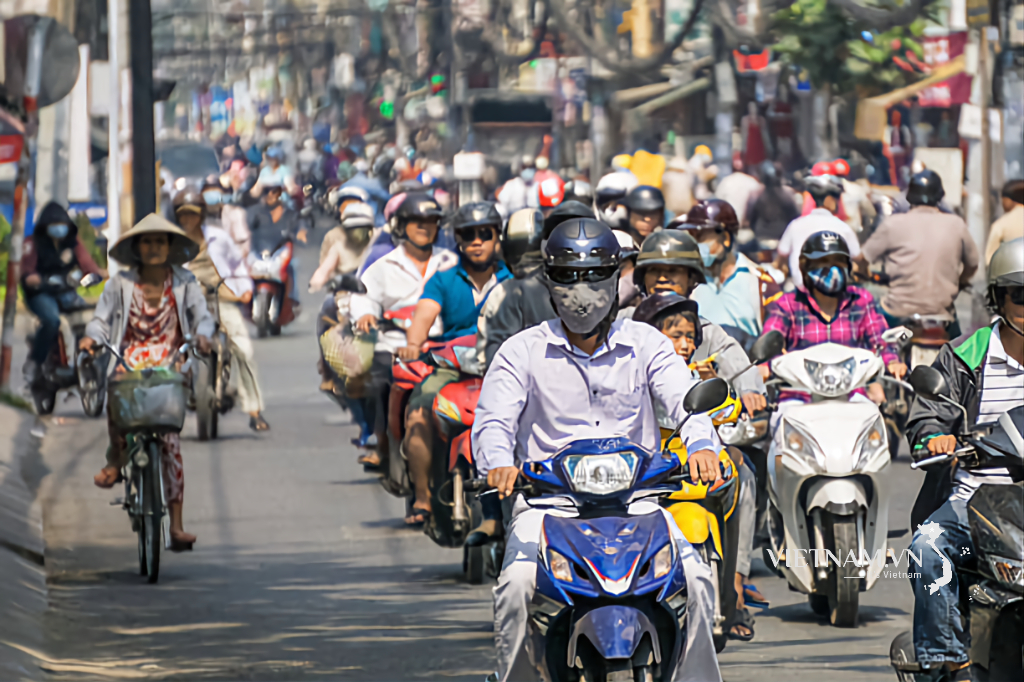
The government aims for a 13-15% increase in total retail sales of goods and consumer service revenue in 2026, with Hanoi striving for a 13.2% increase. (Illustrative image)
However, the Vietnamese domestic market still has enormous potential. With a population of nearly 110 million people, including over 10 million in Hanoi alone, it remains a crucial pillar of the economy.
The government aims for a 13-15% increase in total retail sales of goods and consumer service revenue in 2026, with Hanoi striving for a 13.2% increase. This is a high target, but entirely achievable if comprehensive solutions to stimulate demand and expand new consumer markets are implemented.
In recent years, Vietnam's retail sector has developed quite rapidly in both scale and distribution methods. Supermarkets, shopping malls, convenience stores, e-commerce, and modern logistics systems are increasingly developing, contributing to an effective connection between production and consumption.
In addition, the government has also issued many policies to promote the domestic market, stimulate consumer demand, and support businesses in developing their distribution systems. This is an important foundation for retail businesses to continue expanding their market in the future.
- In your opinion, what are the advantages and challenges facing the Hanoi retail market?
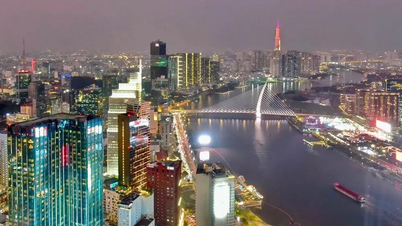
Ms. Tran Thi Phuong Lan: Hanoi has many advantages for developing trade, retail, and services. The city has a large population, high purchasing power, a rapidly increasing number of tourists, and strong investment in commercial infrastructure.
Currently, Hanoi's modern retail system accounts for a large share of the national market and is rapidly expanding into suburban areas and new residential zones. E-commerce has maintained a high growth rate over the past several years, creating an effective additional distribution channel for businesses.
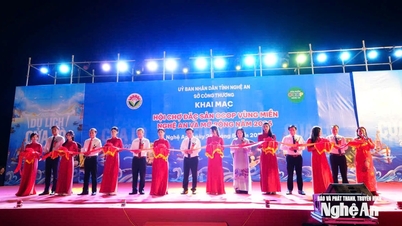
Another advantage is that Hanoi has a large number of craft villages with many OCOP products, regional specialties, and traditional handicrafts with high cultural value. These are not only sources of goods for consumption but also tourism products and experiences that can generate additional revenue for the service industry.
Furthermore, for many years, the city has maintained strong regional linkages, connecting local specialty products and OCOP (One Commune One Product) products to modern distribution systems. Retail businesses have also proactively implemented numerous promotional programs and experiential shopping initiatives to stimulate consumer demand.
However, the market still faces many challenges. Purchasing power has shown signs of slowing down at certain times due to rising fuel prices and living costs. Competitive pressure from e-commerce and modern retail models is increasing.
Furthermore, the development of centers for showcasing traditional craft products and OCOP (One Commune One Product) initiatives is slow; e-commerce development is uneven between urban and rural areas. The quality of tourism services is also inconsistent, while the average spending of international tourists in Hanoi remains significantly lower than in many other cities in the region.
You can't stimulate demand with promotions alone.
- Can you suggest key solutions to boost consumption and achieve retail growth targets in 2026?
Ms. Tran Thi Phuong Lan: The most important thing is to continue improving mechanisms and policies to create a favorable business environment for enterprises.
The association recommends continuing administrative procedure reforms, supporting businesses in accessing capital, business premises, and digital transformation; while maintaining stable policies on taxes, fees, and logistics to support consumption. Specifically, it is necessary to continue reducing VAT by 2% in 2026 and subsequent years; shortening the processing time for investment, construction, fire safety, retail outlet opening permits, and promotional program registration.
The Ministry of Industry and Trade also needs to finalize plans for developing outlet and duty-free shop models soon, and revise regulations related to market management and development.
However, stimulating consumer demand today cannot rely solely on promotions. Consumers are increasingly concerned about shopping experiences, service quality, and convenience. Therefore, retail businesses must change their approach, combining shopping with entertainment, culture, and tourism.
Hanoi needs to expand new consumer spaces such as pedestrian streets, night-time economy, food streets, and shopping centers combined with cultural experiences. This trend has proven effective in many countries and can help increase spending by tourists and residents alike.
Furthermore, it is necessary to strengthen the connection between tourism and retail systems, traditional craft villages, and cultural experience sites. When tourists come to Hanoi, if they only visit without creating a chain of shopping, dining, and entertainment experiences, it will be very difficult to increase service revenue.
Digital transformation will create new momentum for retail.
- What role will digital transformation play in retail growth in the coming period, Madam?
Ms. Tran Thi Phuong Lan: This will be a very important growth driver for the retail industry in the coming period.

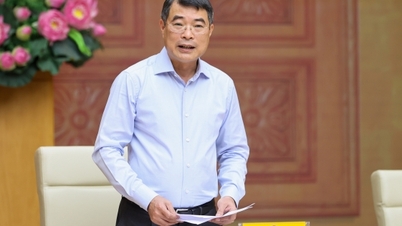
Ms. Tran Thi Phuong Lan, President of the Vietnam Retailers Association. Photo: Nguyen Hanh
Retail businesses now compete not only on price but also on technology, data, and the ability to personalize the customer experience. Therefore, the application of artificial intelligence, big data, cashless payments, and omnichannel retail will become inevitable trends.
Hanoi needs to support businesses in developing a smart logistics ecosystem, promote multi-channel retail models, and build e-commerce platforms specifically for OCOP products and traditional craft products.
In particular, traditional craft products and OCOP (One Commune One Product) products should be identified as one of the key drivers for stimulating domestic consumption. These are not only economic products but also cultural, tourism, and unique experiential products of the capital city.
When tourists visit craft villages, their spending will extend beyond shopping to include accommodation, food, transportation, and other experiential services. This can create "double growth," boosting both retail sales and tourism revenue.
Therefore, Hanoi needs to accelerate the development of OCOP product showrooms linked to tourism; support businesses in livestreaming sales, traceability, packaging design, and connecting with modern distribution systems.
Thank you, ma'am!
2026 will not only be a year of accelerated growth but also a period of restructuring the retail sector towards modernization, digitalization, and sustainable development. If solutions to stimulate consumer demand, digital transformation, high-quality tourism development, and improve the investment and business environment are implemented synchronously, Hanoi can completely maintain a total retail growth rate of 12-13%, while significantly increasing revenue from services and tourism. Through this, the capital city will continue to affirm its role as a major commercial and service center in the North and one of the important growth poles of the country.
Source: https://congthuong.vn/kich-cau-tieu-dung-can-tao-them-khong-gian-mua-sam-moi-458047.html
![[Image] Hanoi's urban life under the challenge of a "scorching hot" environment](https://vphoto.vietnam.vn/thumb/1200x675/vietnam/resource/IMAGE/2026/05/25/1779706979265_nang-nong-t5-2026-minh-duy-7-4636-jpg.webp)


![[Image] Close-up view of the interchange connecting the two expressways and Long Thanh Airport.](https://vphoto.vietnam.vn/thumb/1200x675/vietnam/resource/IMAGE/2026/05/25/1779703378210_ndo_br_z7863716673926-224453a31600126cce10622af6290afd-4549-jpg.webp)






































































Comment (0)