


The Crotale missile system is one of France's advanced Short-Range Air Defense (SHORAD) systems, developed by Thomson-Houston (now Thales Group).

Designed to counter threats such as cruise missiles, anti-ship missiles, helicopters, UAVs, and low-flying fighter jets, the Crotale missile has become one of the primary air defense systems for many countries.
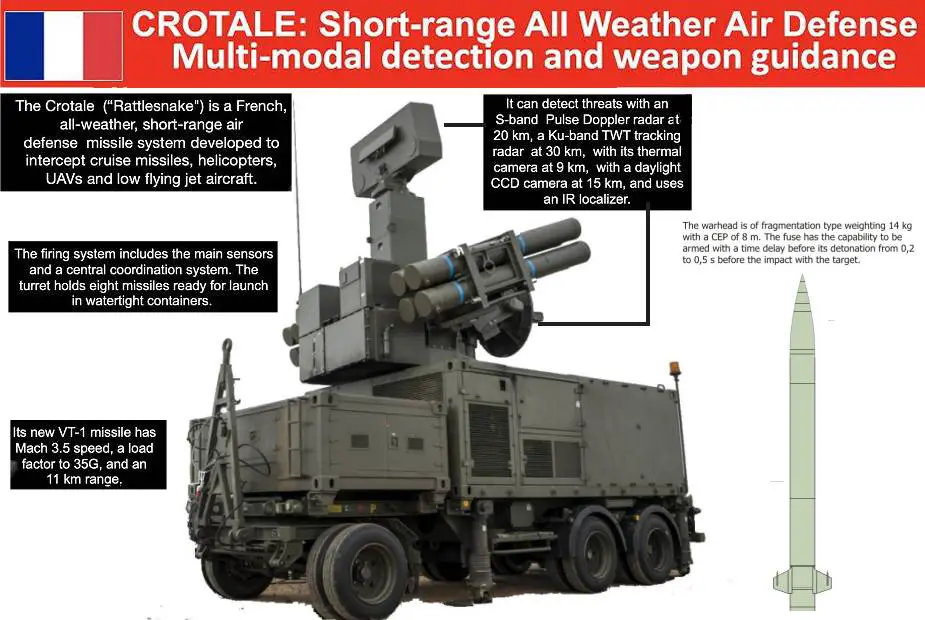
Based on information from Army Technology, Missilery.info, Topwar.ru, and Pvo.guns.ru, the main technological aspects of the Crotale missile system include its design, performance, maneuverability, and upgraded versions.
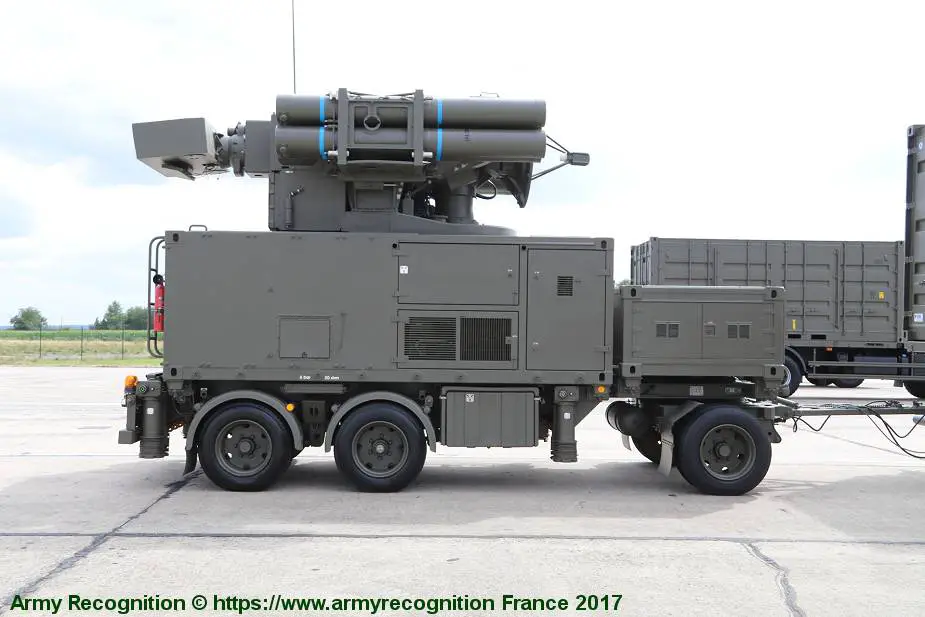
The Crotale missile system was developed starting in 1964 at the request of the South African armed forces, with the goal of creating a mobile, all-weather air defense system capable of destroying low-flying targets.

The project was undertaken by Thomson-Houston (now Thales Group), with 85% of the development costs funded by South Africa. Upon completion, the system was put into service in South Africa under the name 'Cactus' in 1971. However, the impressive performance of the Crotale missile convinced the French armed forces, leading to France adopting the system for its air force and navy.

The primary design objective of the Crotale missile is to provide a flexible short-range air defense system capable of protecting military units or critical infrastructure from airborne threats, particularly low-flying, highly maneuverable targets.
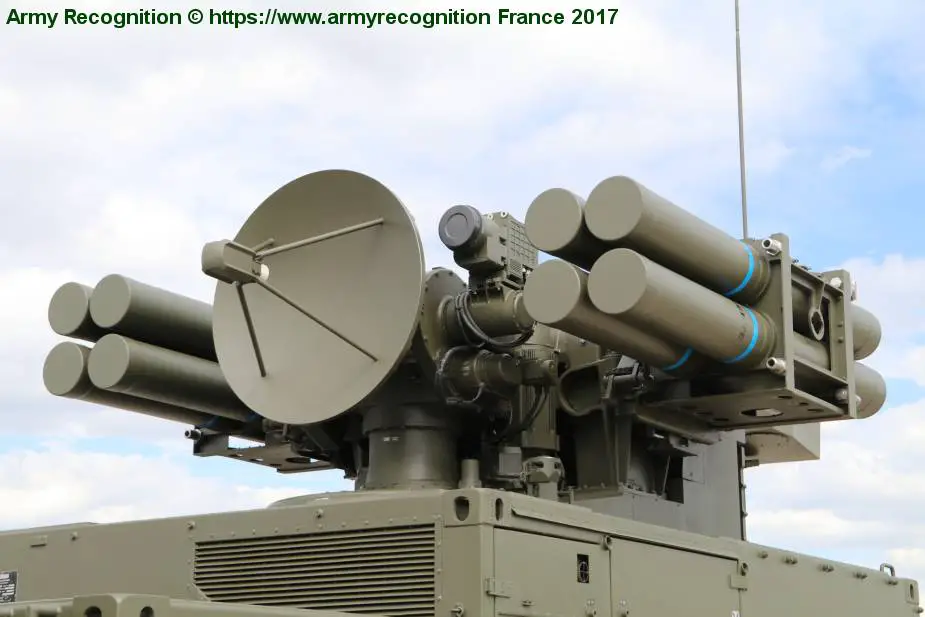
The Crotale missile system comprises two main components: an acquisition unit and a firing unit, deployed on mobile or fixed platforms. Crotale utilizes an S-band pulse Doppler radar with electronic counter-measures (ECCM) capabilities, enabling accurate detection and tracking of airborne targets.

This radar allows for rapid target detection within 6 seconds of detection to missile launch, demonstrating extremely fast response capabilities. The integrated IFF (Friend or Foe Identification) system helps distinguish between hostile and friendly targets, reducing the risk of friendly fire.

Crotale 's control center is capable of coordinating multiple launch units, typically including a target acquisition unit and two or three launch units. The fire control system is highly automated, allowing for the simultaneous engagement of multiple targets.

The Crotale EDIR (Ecartométrie Différentielle InfraRouge) missile uses infrared and radar guidance systems, allowing it to destroy low-flying targets such as anti-ship missiles and aircraft. The upgraded Crotale NG (Next Generation) version uses the VT-1 missile, with a range of 11 km (some versions use the Mk3 missile, extending the range to 16 km).

This missile boasts supersonic speed and high maneuverability, creating a no-escape zone of up to 15km for highly mobile targets. The VT-1 missile is designed to counter a wide range of targets, from tactical missiles, helicopters, and UAVs to aircraft using long-range attack weapons.

Crotale is deployed on 4x4 wheeled vehicles (such as Hotchkiss et Cie's P4R) or tracked platforms to increase the mobility of ground forces. This mobility allows the system to be quickly deployed and moved between locations.

Crotale Naval (naval version) is designed to protect warships with a displacement of over 2,000 tons, with the capability to destroy low-flying aircraft and anti-ship missiles. This system has been integrated into many types of warships of France and other nations.

The Crotale system has been widely used in the armed forces of many countries, including France, South Africa, Saudi Arabia, and more recently in the Ukraine conflict. A notable example is that in late 2022, Ukraine received two Crotale NG launchers from France, and the system recorded its first successful interception of a Russian missile in 2023. This demonstrates Crotale's adaptability in modern combat scenarios.


Source: https://khoahocdoisong.vn/suc-manh-ten-lua-ban-ha-moi-uav-phap-vien-tro-cho-ukraine-post2149043691.html

![[Image] Close-up view of the interchange connecting the two expressways and Long Thanh Airport.](https://vphoto.vietnam.vn/thumb/1200x675/vietnam/resource/IMAGE/2026/05/25/1779703378210_ndo_br_z7863716673926-224453a31600126cce10622af6290afd-4549-jpg.webp)


![[Image] Hanoi's urban life under the challenge of a "scorching hot" environment](https://vphoto.vietnam.vn/thumb/1200x675/vietnam/resource/IMAGE/2026/05/25/1779706979265_nang-nong-t5-2026-minh-duy-7-4636-jpg.webp)















![[GALLERY] A completely different iPhone for the 20th anniversary edition](https://vphoto.vietnam.vn/thumb/402x226/vietnam/resource/IMAGE/2026/05/25/1779686871893_212-jpg.webp)






































































Comment (0)