


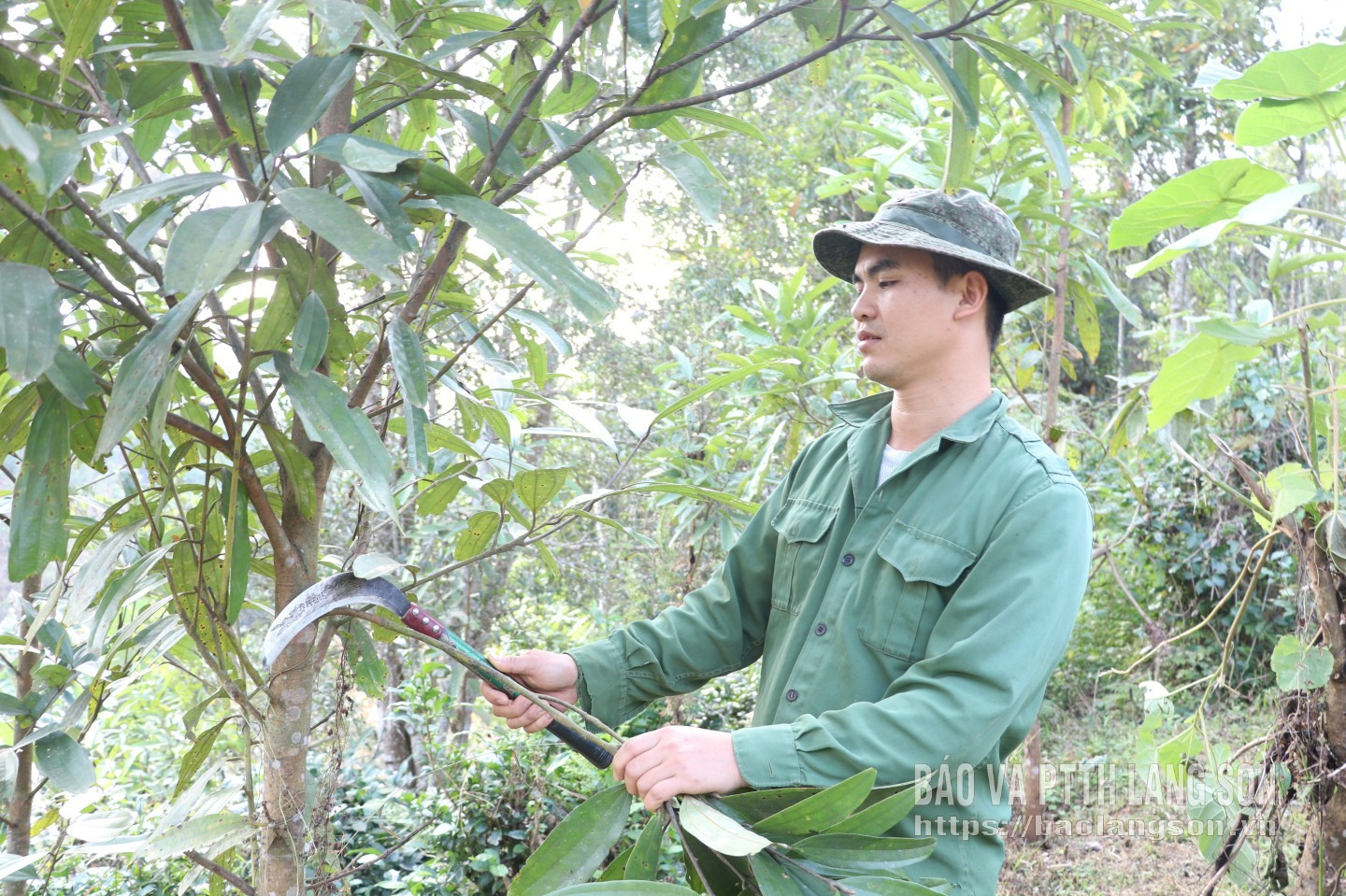
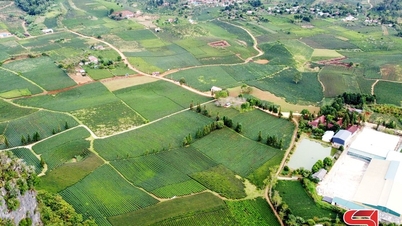
Tan Tri commune has over 11,200 hectares of forest land and over 1,130 hectares of agricultural land. This is a great advantage for the commune to develop production models such as: afforestation; fruit tree cultivation; livestock and poultry farming…
Ms. Duong Thi Thanh Thinh, Chairwoman of the Tan Tri Commune People's Committee, said: The commune has 24 villages, 2,492 households, with 11,145 inhabitants. The people in the villages mainly engage in agriculture and forestry. In recent years, recognizing that developing production and increasing people's income plays a crucial role in poverty reduction and building new rural areas, the commune's Party committee and government have implemented many comprehensive solutions. Accordingly, the commune has promoted the conversion of crop and livestock structures to suit the commune's natural conditions, especially forest planting, fruit tree cultivation, and animal husbandry; guided people to participate in training courses on the transfer of scientific and technical knowledge, and replicated effective economic models. Every year, the commune coordinates the organization of training courses to guide people on forest planting techniques and livestock and poultry farming.
In addition, to provide people with resources for investment and production development, the People's Committee of the commune has facilitated access to preferential loans from banks. To date, the total outstanding loan balance from entrusted funds with the Bac Son Branch of the Social Policy Bank has reached over 108 billion VND, with more than 1,400 borrowing households. These preferential loans have become an important "lever" helping many households confidently invest in forestry and livestock farming, gradually improving their living standards.
For example, the family of Mr. Nguyen Van Dong in Na Gheo village, thanks to interest-subsidized loans under Resolution 08 dated December 10, 2019, of the Provincial People's Council on special policies to encourage investment, development of cooperation, and linkages in the production and consumption of agricultural and rural products in the province during the 2020-2025 period, has built a pig farming model that yields high economic efficiency. Mr. Dong shared: "Previously, my family only raised pigs on a small scale. In 2022, thanks to a loan of 2.6 billion VND under Resolution 08, I invested in building a closed-system pig farm with a scale of over 2,000 m2 and invested in buying breeding stock. Currently, my family maintains 50 sows and more than 100 fattening pigs, so on average, I sell over 300 piglets to the market each year." I raised over 400 pigs for meat, generating an income of over 400 million VND. In addition, I borrowed preferential loans from the Social Policy Bank to invest in planting 1.5 hectares of anise, which is expected to yield economic benefits in the near future.
Simultaneously, the Party Committee and the local government of Tan Tri commune have also leveraged resources from poverty reduction programs and projects to support production development. Specifically, from 2021 to the present, using funds from national target programs, the commune's People's Committee has implemented 19 livestock and crop farming projects with a total investment of over 6.9 billion VND, involving 569 poor, near-poor, and newly-escaped-poverty households. These projects were implemented correctly, targeting the right beneficiaries and meeting their needs, helping people expand production and increasing their income by 30-60 million VND per household per year.
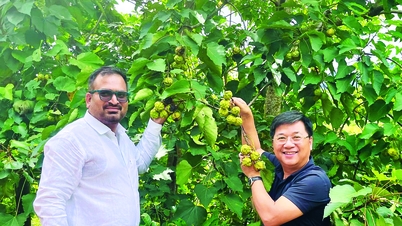
Thanks to systematic approaches, many economic models providing stable income for people have been established and developed in the commune, such as: acacia, cinnamon, and eucalyptus forest planting (over 9,200 hectares), fruit tree cultivation such as Dien pomelo and Canh sweet orange (33.4 hectares), pig farming (over 1,200 pigs), poultry farming such as chickens and ducks (over 60,000 birds); tobacco cultivation (65.5 hectares)... In addition, 13 effective cooperatives have been established in the commune, contributing to linking production and product consumption, creating more jobs and income for local workers.
Efforts to promote the development of production models have yielded positive results for the commune. Currently, the average per capita income in the commune reaches 43 million VND/person/year, an increase of over 10 million VND/person/year compared to 2020; by 2025, the poverty rate in the commune will be 12.8%, a decrease of 24.7% compared to 2020.
It can be affirmed that the above achievements have made a significant contribution to gradually fulfilling the criteria for poverty reduction and income improvement in the construction of new rural areas, creating a solid foundation for the commune's sustainable socio-economic development in the future.
Source: https://baolangson.vn/tan-tri-khai-thac-loi-the-phat-trien-san-xuat-5070922.html
![[Photo] Prime Minister Pham Minh Chinh presides over a meeting to assess the situation during the Lunar New Year holiday.](https://vphoto.vietnam.vn/thumb/1200x675/vietnam/resource/IMAGE/2026/02/22/1771768925196_ndo_br_dsc-6283-jpg.webp)




























































Comment (0)