

Negative credit growth
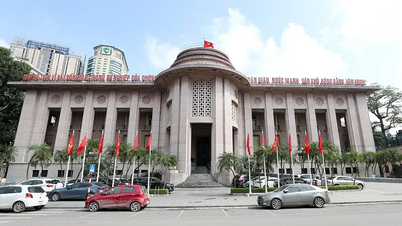
According to the State Bank of Vietnam's Nghe An branch: entering 2024, the Vietnamese economy faces many difficulties and challenges. The economic recovery in the first months of the year has been slow. In addition, the first two months coincided with the Lunar New Year holiday, and customer sentiment and economic activities were not yet vibrant… leading to weak capital absorption by the economy, resulting in negative credit growth nationwide in January 2024.
As of January 31, 2024, credit to the national economy decreased by 0.6% compared to 2023. Credit in Nghe An province reached VND 296,505 billion, an increase of 0.2% compared to the beginning of the year. The corresponding figures for the same period in 2021, 2022, and 2023 were -0.7%, 2.1%, and -0.4%, respectively.
According to an analysis report by Rong Viet Securities Company (VDSC), citing the State Bank of Vietnam's report, credit growth across the entire economy was negative in the first two months of 2024. Specifically, it was -0.6% by the end of January and -1.0% by February 16th. Some large banks experienced even sharper declines in credit growth, such as Vietcombank (-2.3% compared to the end of 2023), BIDV (-1.3%), and Military Commercial Bank (MB) (-0.7%).

The current state of the money market is due to the economy's limited capacity to absorb capital, particularly the very limited borrowing demand from businesses and individuals in the early months of the year. Even now, despite sharply reduced interest rates at their lowest levels of 5.0-5.3% per year, businesses are still reluctant to borrow capital to implement production and business projects.
Mr. Tran Anh Son, Chairman of the Association of Outstanding Businesses in Nghe An Province, shared: Due to the impact of the global economic recession, export orders have been cut. From textiles to cement, paving stones, and fine art wood products, businesses in the area are unable to sell their products. In recent years, it seems that every manufacturing and business enterprise is facing difficulties, which has discouraged entrepreneurs. Therefore, even though lending interest rates have decreased significantly, many businesses are reluctant to borrow capital because they haven't achieved anything yet. Mr. Son also believes that, given the current context, even if interest rates were to decrease further, not many businesses would borrow capital.

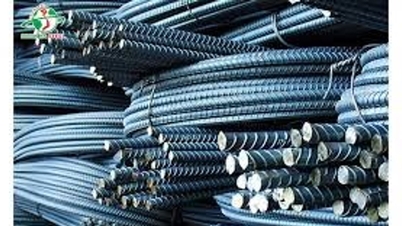
Meanwhile, in a conversation with us, a representative of a large construction materials manufacturing company in the area also stated: Unlike before, when the factory's capacity was small, even during periods of slow sales, production could still be maintained because there was warehouse space. Now, with a large capacity, production can only continue for a short time before the warehouses become full. Among the solutions, the company is forced to stop production and put workers on unpaid leave because the more it produces, the more losses it incurs. Faced with this difficult situation, banks are willing to lend, but the company is hesitant to borrow…
From the banks' perspective, although deposit and lending interest rates have decreased, the demand for loans remains low, resulting in a significant amount of idle funds. To boost credit growth, banks are eager to attract borrowers.

Representatives from the State Bank of Vietnam's Nghe An branch also confirmed: Nearly a year ago, borrowing from banks was difficult, but now the liquidity of commercial banks in the area has improved significantly, although borrowers remain limited. In fact, to increase growth and meet repayment needs, banks have adjusted interbank lending interest rates at certain times; and simultaneously increased interest rates for some loan terms. However, this is only a solution to compensate for localized liquidity shortages at some banks before and after Tet (Lunar New Year), while overall repayment capacity remains quite secure.
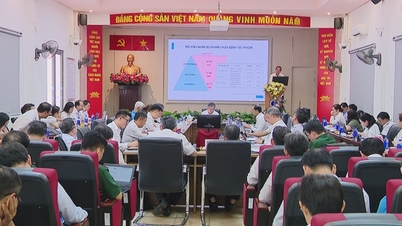
Mr. Trinh Duong Chinh, Director of Nam A Bank's Nghe An branch, added: "Every year, each system assigns credit growth targets (including both lending and deposits) to its branches, but in the first two months of the year, the entire industry experienced negative growth, putting commercial banks under a lot of pressure. Ineffective business will affect the credit growth targets of the entire system and the economy."
Investigations at commercial banks in the area, from Vietinbank and Vietcombank to Sacombank, Vietbank, and Ban Viet Bank, all confirmed that the number of customers and loan agreements, as well as deposits, have decreased compared to the same period last year. Previously, customers had to approach banks directly to apply for loans and disbursements; this year, banks have to conduct on-site surveys to find customers and provide loan advice.
Credit growth does not necessarily come with increased risk.
A representative from a joint-stock commercial bank in Vinh City also explained: The low, or even negative, growth rate of both deposits and loans puts banks in a dilemma. If lending conditions are too strict, customers will not borrow and growth targets will not be met; on the other hand, loosening lending conditions and making loans too easy risks losses. Non-performing loans are increasing . This expert analyzed that, in one way or another, outstanding loans in the land and real estate construction sector often account for up to 60% of the total outstanding loans at commercial banks. Therefore, while tightening real estate lending currently helps ensure the safety of the system, the consequences are... The real estate market is frozen and significantly less active.




![[Image] Close-up view of the interchange connecting the two expressways and Long Thanh Airport.](https://vphoto.vietnam.vn/thumb/1200x675/vietnam/resource/IMAGE/2026/05/25/1779703378210_ndo_br_z7863716673926-224453a31600126cce10622af6290afd-4549-jpg.webp)


![[Image] Hanoi's urban life under the challenge of a "scorching hot" environment](https://vphoto.vietnam.vn/thumb/1200x675/vietnam/resource/IMAGE/2026/05/25/1779706979265_nang-nong-t5-2026-minh-duy-7-4636-jpg.webp)






























































































Comment (0)