

From a "miracle" in poverty eradication to the aspiration of becoming an ecotourism hub .
In the final days of 2025, the golden sunlight poured down like honey on the harvested terraced rice fields of Binh Lieu. The dry winter season arrived, bringing with it the crispness but also the vibrant beauty of the border highlands. Returning to Binh Lieu commune more than five years after Resolution 06 came into effect, the most noticeable changes were not only the improved infrastructure but also the renewed enthusiasm for work and the fundamentally changed economic mindset of the Tay, Dao, and San Chi people living there.
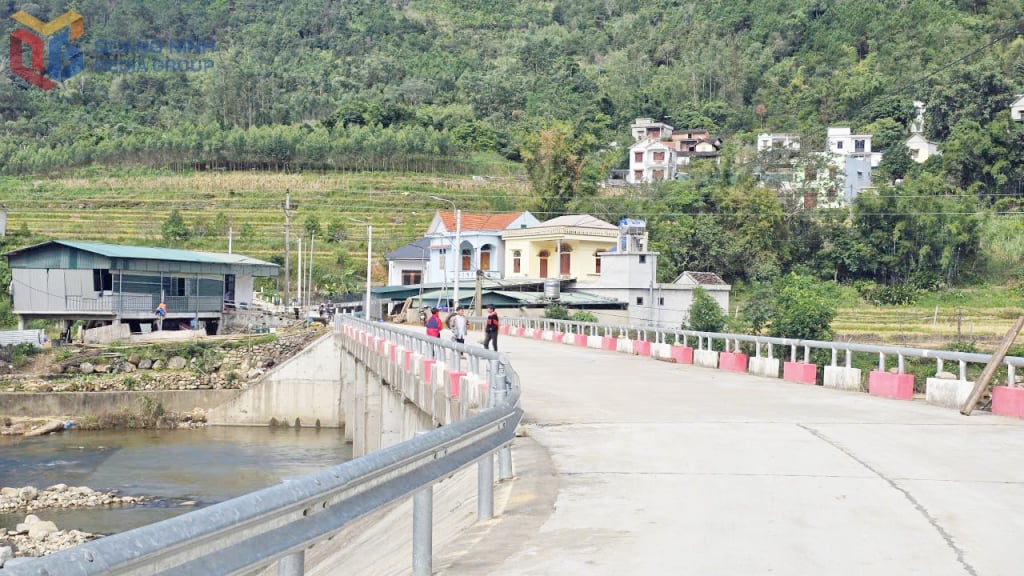
On the smooth, wide concrete road leading us to Na Ech village, Binh Lieu commune, the car glided along comfortably. On both sides of the road, vast stretches of cinnamon and cassia forests were flourishing. Few would imagine that, more than five years ago, the trade of goods here was a nightmare for the locals every time the rainy season and floods arrived.
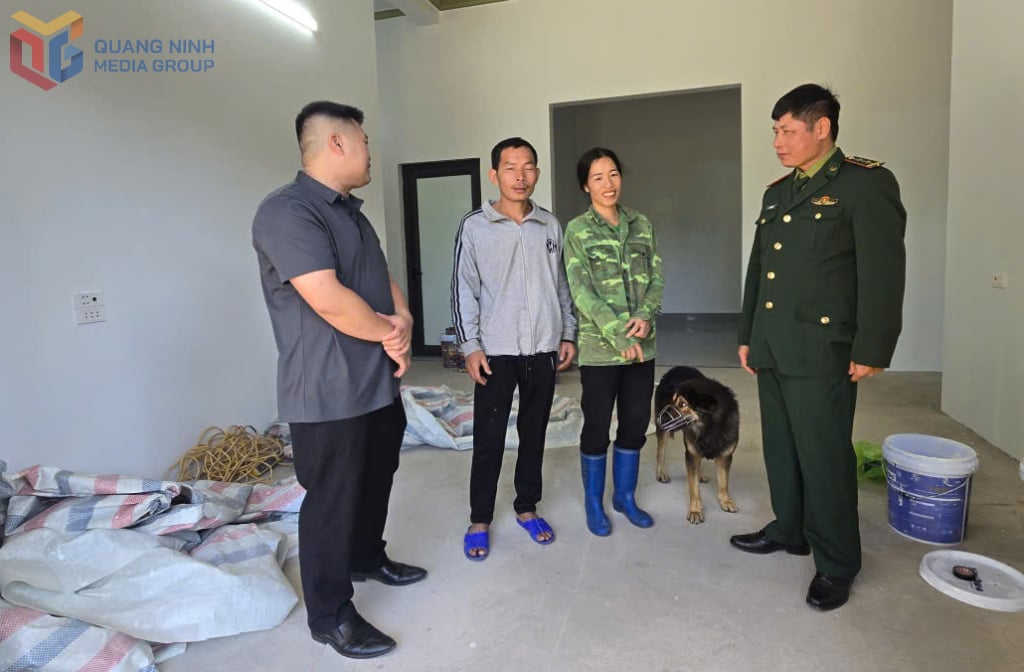
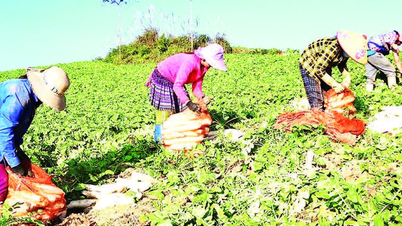
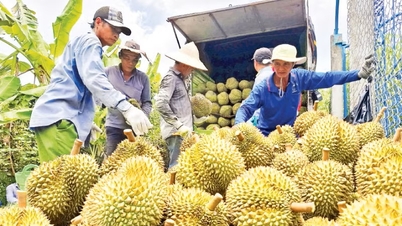
Stopping at the home of Mr. Tran A Chiu, a typical San Chi ethnic minority household excelling in economic activities in Na Ech village, we were amazed by his spacious house and large-scale economic model. While quickly directing a team of workers loading goods onto a truck, Mr. Chiu enthusiastically shared: “Before, it was difficult for people to sell their cassava roots and vermicelli because the roads were muddy and traders would force down prices. Since the province issued Resolution 06, and the local Party committee and government implemented road construction and brought electricity to our village, the lives of my family and other villagers have changed completely.”
In implementing Resolution 06, the transportation infrastructure in Na Ech in particular and Binh Lieu commune in general has been comprehensively invested in. Main roads have been widened, connecting villages and communes, making travel more convenient. Seizing this opportunity, Mr. Chiu's family boldly borrowed capital to expand their agricultural and forestry product purchasing business, combining it with livestock farming and reforestation.
“The upgraded roads are smooth and wide, allowing trucks to reach our yards for purchasing. Thanks to this, our agricultural products fetch higher prices. Currently, my family's processing and purchasing facility provides regular employment for six local workers with stable incomes. The improved transportation infrastructure has created a favorable environment for us to prosper and become wealthy right on our ancestral land,” Mr. Chiu confided.
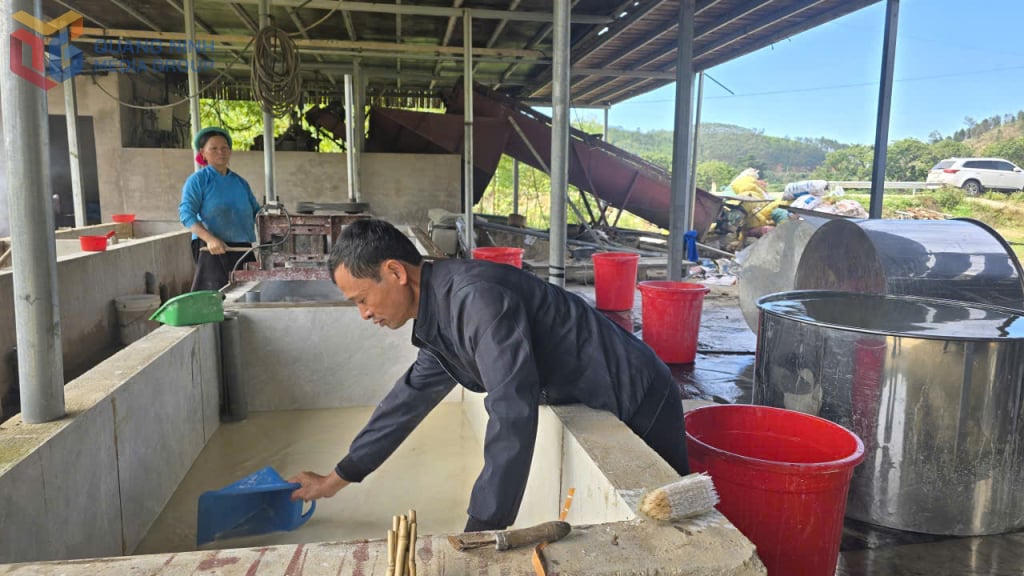
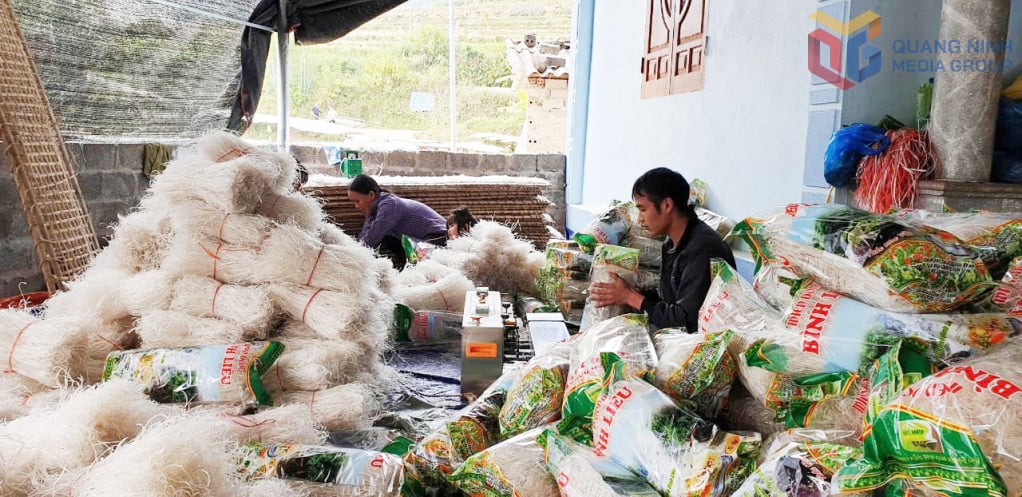
Walking around Binh Lieu commune these days, the atmosphere of labor and production is more vibrant than ever. In the traditional vermicelli-making villages, the sounds of flour milling machines and lively laughter fill the drying yards. The pristine white, chewy vermicelli sheets, under the winter sun, resemble silken ribbons, weaving a picture of prosperity for the highlands. The mindset of commodity production and OCOP product consumption linkages has taken deep root in the people's consciousness, gradually replacing the previous small-scale, self-sufficient farming practices.
For Resolution 06 to truly be implemented, the role of grassroots officials is extremely important. In a conversation with us, Mr. Tran A Dau, Party Secretary and Head of Na Ech village, couldn't hide his pride: “The impact of Resolution 06 on our village is enormous. It's not just about the new roads, schools, and health stations; more importantly, the policies supporting production and housing have helped people settle down and prosper. As the village head, I clearly see the enthusiasm and trust of the people in the Party and the State. Now, in village meetings, people no longer discuss hunger and poverty, but rather talk about what crops to plant, what livestock to raise, and how to develop community tourism to become wealthier.”
The positive transformation at the village level is vivid evidence of the decisive leadership of the local Party committee and government. Mr. Nguyen The Minh, Secretary of the Party Committee of Binh Lieu commune, said: “After 5 years of implementing Resolution 06, Binh Lieu has achieved very positive results. We recognize this as the foundation, but the road ahead still presents many challenges for sustainable development. The key solution for the Party Committee and the commune government in the coming time is to continue promoting the shift in economic structure, focusing on tourism, services, and high-tech agriculture as the spearhead. We will concentrate maximum resources to complete the infrastructure connecting tourist destinations, while also focusing on preserving local culture such as Then singing and Soong Co to create unique tourism products. In addition, vocational training and job creation for rural laborers, especially ethnic minority youth, will be a top priority so that people can truly be masters of their own land.”
Accordingly, one of the solutions proposed by Binh Lieu commune is to focus on awakening the "sleeping princess in the forest" of Khe Van waterfall. As part of the sustainable tourism development strategy, based on nature and culture in accordance with Resolution 06, the Khe Van Waterfall Eco-tourism and Scenic Area Project in Binh Lieu commune is becoming an important highlight, promising to create a major boost for the local tourism industry.
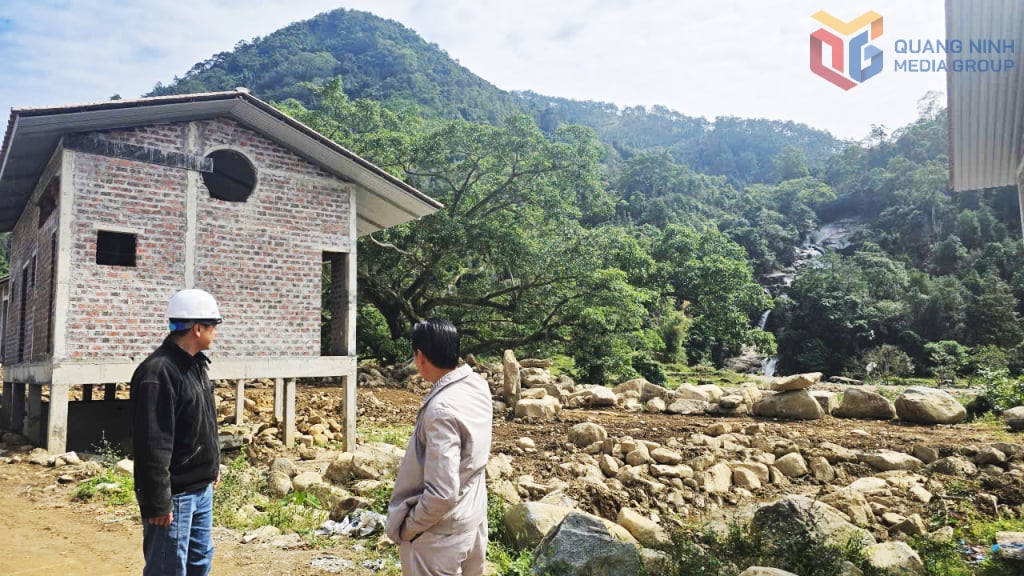
Visiting the project site these days, we observed an extremely urgent and enthusiastic work atmosphere. Dozens of workers, along with numerous machines and equipment, are racing against time to ensure the project's progress. This project, invested by Long Hai Import-Export Trading Service Joint Stock Company, is scheduled to officially commence in early 2025.
The Khe Van Waterfall Ecotourism Project is not simply about building resort facilities, but is also envisioned as part of an effort to preserve, enhance, and promote the value of this provincial-level scenic spot. The project aims to develop sustainable ecotourism, minimize the impact on the natural environment, and simultaneously celebrate the majestic beauty of the three-tiered waterfall, the most famous in Quang Ninh province.
Currently, the overall progress has reached over 65% of the work volume. Core items such as the administrative building, the stream-side walking paths, the hillside bungalows, and the wastewater treatment system are gradually completing their structural work and entering the detailed finishing phase. The project is designed and built to 3-star standards, promising to provide comfortable experiences while remaining close to nature.
Mr. Do Hung Tien, Chairman of the Board of Directors of Long Hai Import-Export Trading Service Joint Stock Company, shared: “We are fully aware of our responsibility when investing in a precious natural heritage like Khe Van. Therefore, the investor and construction units are putting all their efforts into working three shifts continuously to ensure the project is completed and put into operation in June 2026. We expect that, once operational, this will be an unmissable destination for tourists visiting Binh Lieu.”
According to Mr. Tien, the project's product strategy is clear and diverse. The main tourism products after the project becomes operational will include two main types: Firstly, high-end eco-tourism accommodation and resort services, where tourists can immerse themselves in nature, listen to the sound of flowing streams, and enjoy the fresh air of the border mountains and forests. Secondly, experiential tours connecting Khe Van with other famous tourist destinations in Binh Lieu such as the "Dinosaur's Backbone," sacred border markers, and especially experiencing the rich cultural customs and traditions of the local Tay, Dao, and San Chi people.
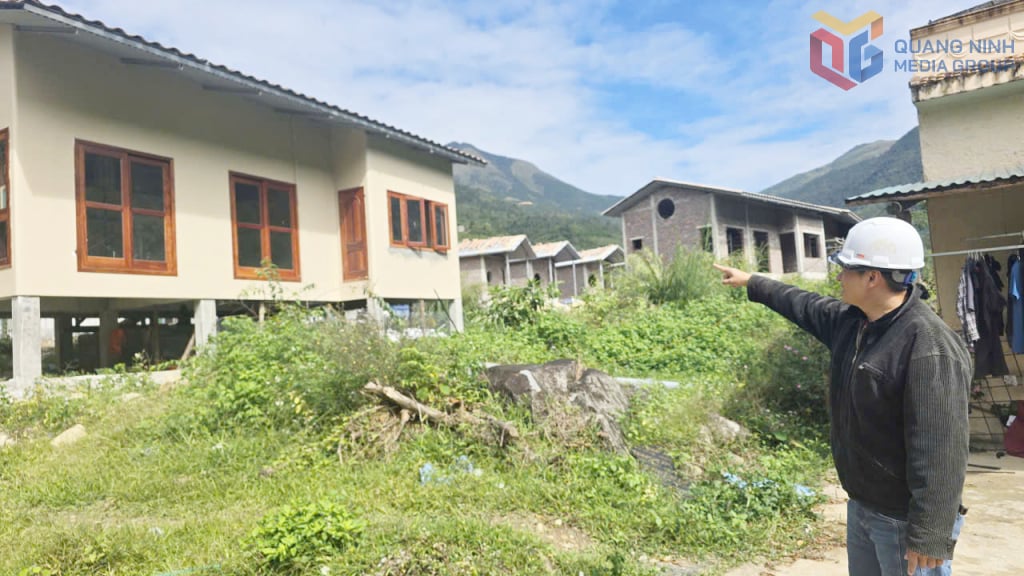
“Our target customer base is very broad, focusing on both the budget segment seeking adventurous experiences and the high-end segment looking for private, luxurious relaxation. We believe that the establishment of this tourist area will contribute to effectively exploiting the potential and advantages of eco-tourism and cultural tourism in Binh Lieu commune in particular and Binh Lieu district in general, creating more jobs and livelihoods for local people,” Mr. Do Hung Tien affirmed.
The socio-economic landscape of Binh Lieu is being painted with bright colors. From concrete roads connecting villages, effective household economic models like that of Mr. Tran A Chiu, to large-scale tourism projects like Khe Van, all are clear evidence of the vibrant energy of Resolution 06. It is the culmination of the Party's will and the people's aspirations to overcome poverty and become wealthy, a testament to the spirit of the ethnic minorities in this border region of the Fatherland.
Continuing the journey of building happiness in border and island areas.
Leaving Binh Lieu with strong impressions of its dramatic transformation, and looking broadly across the province, it can be affirmed that the five years of implementing Resolution 06-NQ/TU have been five years of Quang Ninh carrying out a "revolution" in thinking and action for ethnic minority, mountainous, border, and island areas. Beyond dry statistics, the achievements are thousands of happy smiles in new homes, electricity illuminating remote islands, and the unwavering faith of the people in the Party's leadership.
Looking back over the past five years (2021-2025), Quang Ninh has allocated unprecedented resources to invest in this region. With the principle of "using public investment to drive investment," the province has mobilized a total of over 120,000 billion VND. Remarkably, state budget capital only played a "seed capital" role (accounting for approximately 16%), but it strongly activated socialized resources and policy credit (accounting for up to 84%). Thus, for every VND of state budget investment, Quang Ninh has mobilized over 5 VND of non-state budget investment, contributing to improving the quality of life for people in ethnic minority, mountainous, border, and island areas, in accordance with Resolution No. 06-NQ/TU. This is an innovative and groundbreaking approach, demonstrating the province's modern governance thinking.
The results achieved are the most convincing evidence. By the end of 2024, the average per capita income in ethnic minority, mountainous, border, and island communes had reached an impressive figure of 83.79 million VND/person/year, an increase of more than 40 million VND compared to 2020. The gap between rich and poor and regional disparities have narrowed significantly.
Transportation infrastructure – the "lifeblood" of the economy – has been invested in comprehensively. 100% of communes in ethnic minority and mountainous areas have concrete/asphalt roads leading to their centers; 100% of main village roads have been hardened. Key routes connecting lowlands with highlands, and linking the Hoành Mô and Bắc Phong Sinh border gates with the Vân Đồn - Móng Cái expressway, have opened doors to trade, transforming previously remote areas into gateways for integration.
In education and healthcare, Quang Ninh has made fundamental changes. The province is a leader nationwide in strengthening school infrastructure and bringing high-quality healthcare to the grassroots level. 100% of ethnic minority people have access to information infrastructure; 100% of households have access to the national power grid and clean water. Notably, Quang Ninh completed the National Target Program for Sustainable Poverty Reduction for the 2021-2025 period three years ahead of schedule, transitioning to the province's new multidimensional poverty standard, which is higher than the national average. To date, the entire province has virtually no poor households according to the central government's criteria, a remarkable achievement that few other localities have accomplished.
However, the journey to improve the lives of ethnic minorities, people in mountainous and border areas has never stopped. Entering a new phase, Quang Ninh province is determined to continue implementing Resolution 06 with a new mindset and higher resolve, aiming to create even stronger breakthroughs.
By 2030, Quang Ninh aims to ensure that the average per capita income of people in ethnic minority, mountainous, border, and island areas is at least half of the province's overall average income. 100% of communes in these areas will achieve advanced new rural development standards. These are challenging but entirely achievable goals given the foundation already built.
Discussing future directions, a leader from the Provincial Department of Ethnic Minorities and Religions emphasized: “We will shift strongly from a ‘support’ mindset to an ‘investment in development’ mindset. Instead of giving people a fish, we will advise the province to focus on supporting them with a ‘fishing rod’ and guiding them on how to fish. Specifically, we will focus on three breakthrough areas: Developing interconnected strategic infrastructure; Improving the quality of human resources and providing vocational training for young ethnic minority workers; and Developing sustainable community and cultural tourism.”
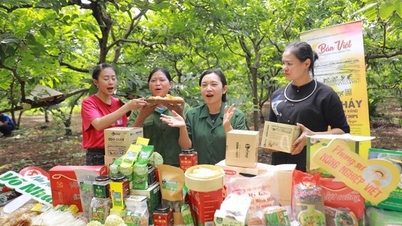
The provincial Department of Agriculture and Environment will also continue to restructure production, plan areas for growing large timber trees, medicinal plants, and high-value fruit trees linked to deep processing industries. It will promote the One Commune One Product (OCOP) program, bring mountainous agricultural products to e-commerce platforms, and transform local products into high-value-added goods.”
In particular, cultural issues will be given due importance. Accordingly, Resolution 06 will be closely integrated with Resolution 17-NQ/TU of the Provincial Party Committee on building and promoting the cultural values and human strength of Quang Ninh. The cultural villages of the Tay, Dao, San Chi ethnic groups, etc., will not only be places to preserve memories, but will also become "living museums," unique tourism products that attract tourists and create sustainable livelihoods for the people.
Besides economic development, ensuring national defense and security in border and island areas remains a crucial and ongoing task. The strong foundation of public support will continue to be strengthened through improving the material and spiritual lives of the people. Each border resident will truly be a "living landmark" protecting the sacred sovereignty of the Fatherland.
With the special attention of the Provincial Party Committee, the Provincial People's Council, and the Provincial People's Committee, the involvement of the entire political system, and the aspiration of the ethnic minority people, it is believed that in the next phase, the ethnic minority, mountainous, border, and island areas of Quang Ninh will continue to make leaps forward. Resolution 06 will continue to be a guiding light, realizing the aspiration for a prosperous, peaceful, and happy border region, contributing to building a more prosperous, civilized, and modern Quang Ninh.
Source: https://baoquangninh.vn/tao-but-pha-moi-cho-nhung-vung-dat-gian-kho-3385835.html



























































Comment (0)