

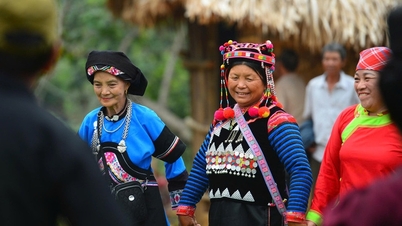
Tay Ninh province currently has 17 ethnic minority groups living there, comprising 13,594 households and over 36,900 people, accounting for approximately 1.13% of the province's total population.
In the process of building new rural areas and improving the quality of human resources in border regions, Vietnamese language classes for ethnic minority children before entering first grade in Tay Ninh are being implemented to remove language barriers, create equal opportunities for access to knowledge for ethnic minority children, and contribute to the formation of a new generation of citizens who are knowledgeable while preserving their ethnic cultural identity.
Each lecture "transfers" between two languages.
In Ward 12, Tan Ninh commune, where a large number of Cham people live, the mother tongue is still present in every aspect of daily life, from family meals to traditional rituals.
National languages are not only a means of communication but also a thread that preserves the cultural essence through generations. This strong bond inadvertently creates distinct "linguistic subregions." Many children grow up in an environment where only their mother tongue is spoken, so when they enter first grade, Vietnamese becomes a completely unfamiliar world .
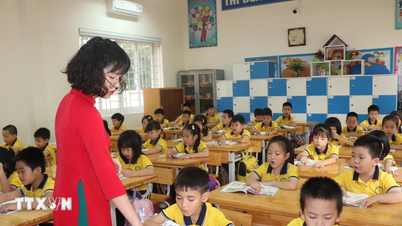
In the small classroom of Le Van Tam Primary School, behind the sounds of children reciting their lessons lies the extraordinary perseverance of the teacher as each lesson must "translate" into two languages.
Ms. Thi Saly Has, a Cham ethnic teacher at Le Van Tam Primary School in Tan Ninh Ward, believes these classes serve as a bridge between the mother tongue and the common Vietnamese language. For her, teaching is not simply about imparting knowledge, but also a journey of "language transition."
"If I only spoke Vietnamese, the children wouldn't understand. I had to use the Cham language to explain, and then guide them back to the common language," Saly Has shared.
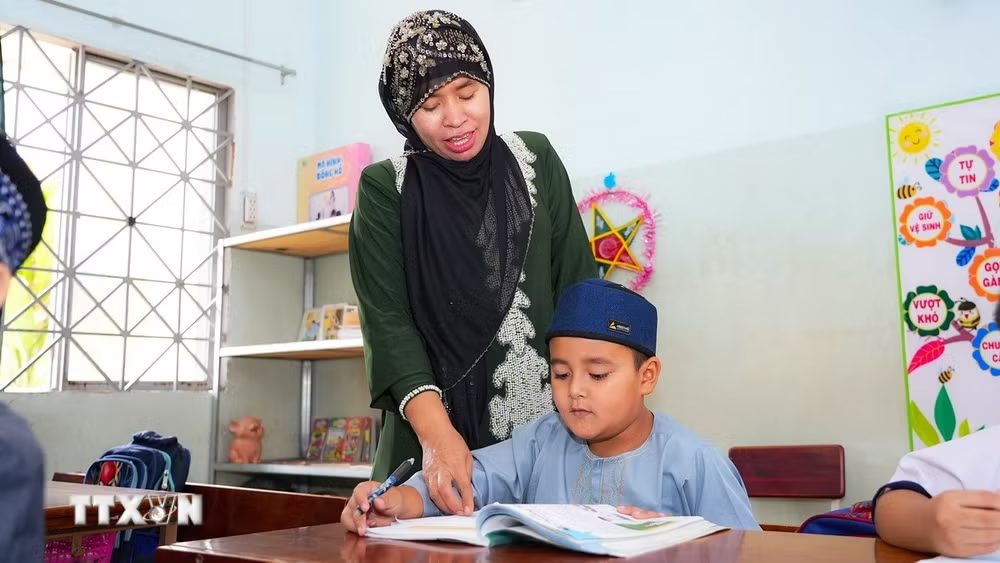
According to Ms. Thi Saly Has, there are words that seem very simple, but teachers have to spend a lot of time explaining them. Therefore, each lesson is not only longer but also requires more patience and dedication than a regular classroom. In return, the students' progress is evident every day. From being shy and hesitant to communicate, they gradually become more confident in their studies and daily lives.
Abu Bakar, a student in class 1C at Le Van Tam Primary School, Tan Ninh Ward, happily showed off his Vietnamese writing and said: “I like learning Vietnamese. The teacher teaches in an easy-to-understand way, and she explains the difficult parts in my own words. Now I'm not afraid anymore.” This joy isn't just about knowing how to read and write. It's also about the moment when children begin to confidently integrate with their friends and feel a sense of belonging in their school environment.
According to statistics for the 2025-2026 school year, Tay Ninh province has 4,693 primary school students from ethnic minority groups, of which more than 1,000 are preparing to enter first grade.
Students are scattered across 78 out of 96 communes and wards, living in mixed Khmer, Cham, and Chinese communities. This makes organizing centralized classes very difficult. In reality, even though most children have completed preschool, the language barrier remains a major obstacle. Many children are not yet proficient in Vietnamese, leading to difficulties in understanding lessons, communicating, and integrating into the learning environment.
Ms. Truong Hoang Thanh Thao, Principal of Le Van Tam Primary School, believes that popularizing Vietnamese language skills for children before entering first grade is not only about supplementing knowledge but also about filling the foundational gap. Many children have never been exposed to Vietnamese in a systematic way. Entering first grade is like entering a completely new environment. Without understanding the language, they easily lose confidence and struggle to grasp the lessons.
If this barrier is not removed early, the children's educational journey will face many obstacles. Furthermore, it will directly affect the quality of human resources in ethnic minority areas in the future.
Empowering knowledge – paving the way for the future.
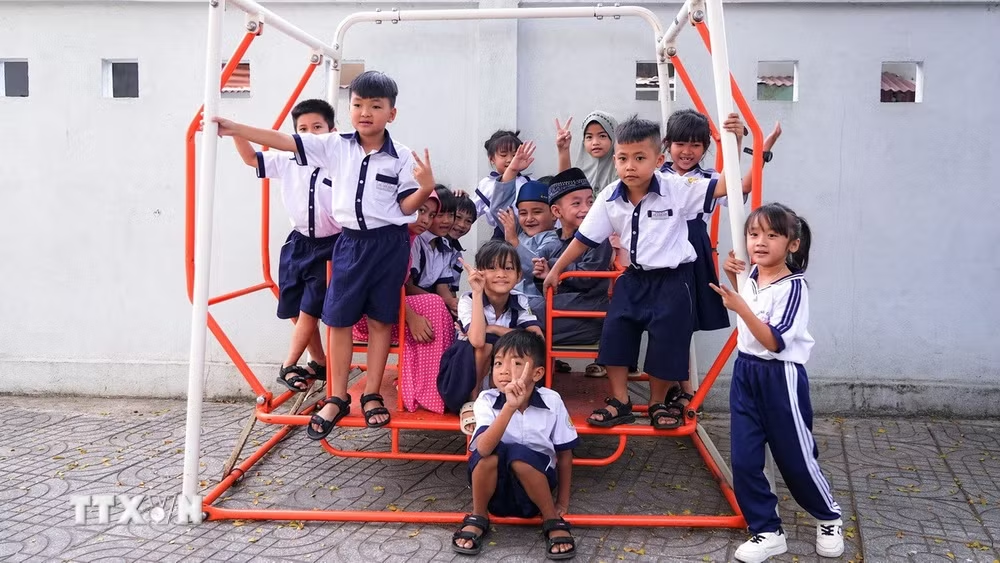
Based on local realities, the Department of Education and Training of Tay Ninh province has implemented a policy of teaching and learning Vietnamese to ethnic minority children before entering first grade, aiming to create conditions for ethnic minority children to learn and practice Vietnamese skills appropriate to their age. This helps them prepare well in terms of language, mindset, and learning skills, contributing to improving the overall quality of education.
According to Mr. Bui Tuan Hai, Deputy Director of the Department of Education and Training of Tay Ninh province, without timely support from the beginning, ethnic minority children are very likely to face difficulties when entering first grade, especially in using Vietnamese - an important tool for acquiring knowledge. This not only affects initial learning outcomes but also has a long-term impact on the child's overall development.
A notable aspect of the program is that it doesn't adopt a traditional "literacy teaching" approach, but rather prioritizes methods suitable for the age group. Children are introduced to Vietnamese through listening, speaking, communication, and play activities.
The program is designed with 18 relatable themes such as: Getting acquainted with Vietnamese, Me and my family, Me and my friends, Me and my village, Me and nature… Through these, children gradually develop confidence in using standard Vietnamese.
"Language is not only a learning tool but also a cultural bridge. When students understand and use Vietnamese well, they will be more confident while still preserving their national identity," Mr. Bui Tuan Hai emphasized.
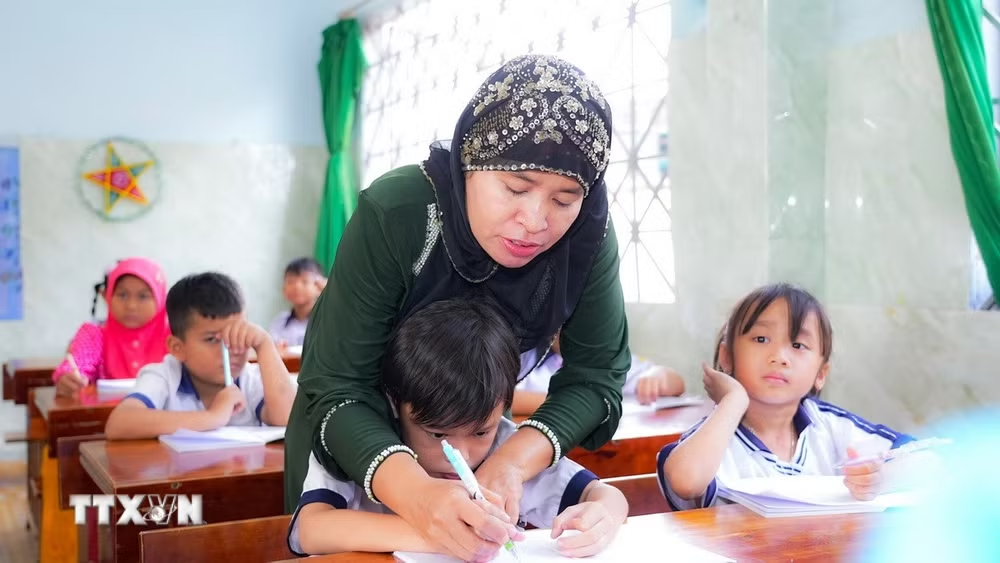
In parallel, the education sector pays special attention to the teaching staff, prioritizing the selection of those with professional competence and a deep understanding of local culture.
The program goes beyond mere policy; it is being concretized with clearly defined resources. For the period 2025-2029, the province's total budget for implementing the program is projected to exceed 3 billion VND.
Each student participating in the summer course, which lasts up to one month, receives full support with materials such as Vietnamese language preparation books, coloring books, pens, small whiteboards, etc. The average support is approximately 757,865 VND per student, including tuition fees, materials, and learning supplies.
For teachers, the province pays a maximum of 80 teaching hours per month during the summer, at an average rate of 150,000 VND per hour. This is considered an important incentive for teachers to feel secure and committed to the cause of "imparting knowledge" in the border region.
It is expected that 39 classes will be organized in areas with a large number of ethnic minority students such as Tan Dong, Tan Thanh, My Hanh, Duc Hoa, Tan Ninh… supporting 815 children to have sufficient language skills before entering first grade. In sparsely populated areas, a combined learning model will be implemented flexibly to ensure that no child is left behind.
According to Ms. Bui Thi Ha, Deputy Head of the Culture and Social Affairs Department of Tan Ninh Ward, the Department of Education and Training has a specific plan to guide schools in implementing the program. In areas with a large ethnic minority population like Tan Ninh Ward, Le Van Tam Primary School has received investment in facilities and has the resources ready to organize Vietnamese language preparation classes for children.
However, according to Ms. Ha, for this journey to be truly sustainable, the key issue remains the teaching staff. Teaching ethnic minority students requires much more time, perseverance, and dedication than teaching in a regular classroom.
"Based on the reality of having 10 primary schools in the area, we propose that the Party and the State pay more attention to the policies and benefits for teachers who directly teach in ethnic minority areas. This is not only a recognition but also an incentive for teachers to feel secure and stay in their positions for the long term," Ms. Ha shared.
From a broader perspective, the Vietnamese language program for ethnic minority children not only impacts the students but also spreads to individual families and communities. The songs, stories, and handwriting that the children bring home will become a "catalyst" for cultural exchange within the family.
Vietnamese is gradually becoming a connecting bridge, while the mother tongue is preserved as the root. Along with that, when children are well-prepared linguistically, their opportunities for learning, accessing science, technology, and engineering in the future will be much broader.
From simple written words, a greater journey is unfolding – a journey of knowledge, integration, and aspiration for progress, while preserving the national cultural identity.
Source: https://www.vietnamplus.vn/tao-co-hoi-tiep-can-tri-thuc-cong-bang-cho-tre-em-dan-toc-thieu-so-post1109232.vnp

























































































Comment (0)