

Reduce stress, create a new look.
The model of urban clusters and satellite cities is not new to the world ; capitals like Paris (France), Washington (USA), and London (UK) have already adopted this model, reducing pressure and preserving historical cores. However, for Hanoi, this is a unique and innovative model to suit the current and future development realities of the capital city.
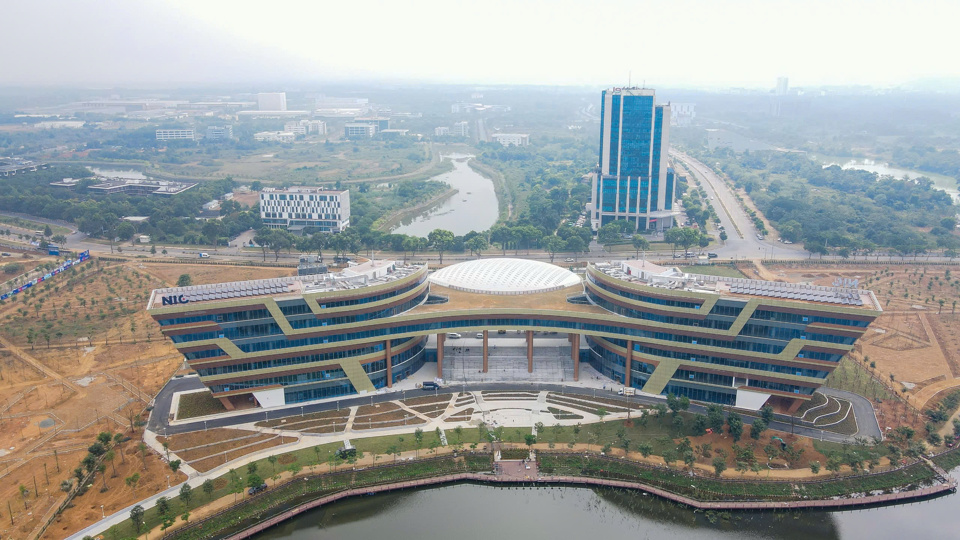
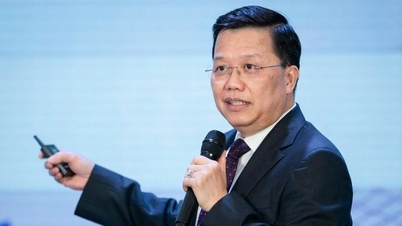
According to Dr. Architect Dao Ngoc Nghiem - Vice President of the Vietnam Urban Planning and Development Association, applying the urban cluster model aims to create additional growth poles, reducing pressure on the central urban area in terms of industry, education , commercial services, culture, sports, etc., especially in terms of environment and infrastructure. Satellite cities are linked to the center but operate independently, connecting natural elements and preserving traditional culture and craft villages, creating green spaces and ecological environments.
Looking further ahead, satellite cities are also areas that facilitate innovative startups, adapting to both demographic dividend and population aging. Specifically, Hoa Lac urban area is a science, technology, and training city, established over 20 years ago with a potential of approximately 18,000 hectares of urban development land and a capacity to accommodate 0.5 million people. It also serves as the western gateway to the capital, connecting with the region.
The Son Tay satellite city is a cultural, historical, and tourist resort. With the unique features of the Son Tay Ancient Citadel, Duong Lam Ancient Village, and its natural landscapes, it is not only a key national tourist area but also a center for relaxation and healthcare; it has the potential to develop approximately 4,000 hectares of land for construction, accommodating 0.18 million people with stable living conditions and a high quality of life.
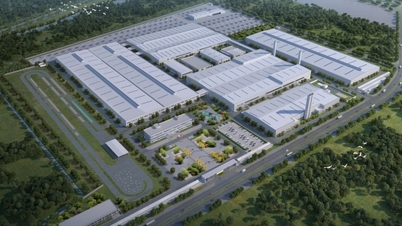
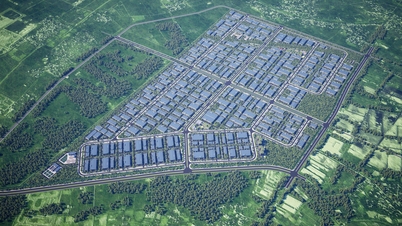
Phu Xuyen satellite city is an industrial city, a transportation hub, and a goods transshipment center. It will be an attractive location for relocating industries from the inner city, with the potential to develop approximately 3,000 hectares of urban land and accommodate around 0.13 million people.
The Xuan Mai satellite town is a service-industrial center supporting the development of small-scale handicraft areas and traditional craft villages, which are strengths of Hanoi City. This town has the potential to utilize approximately 4,500 hectares of urban development land and accommodate 0.22 million people. Furthermore, it serves as a southwestern gateway for Hanoi City to connect with the surrounding region.
The Soc Son satellite city is a developing urban area encompassing industry, aviation services, resorts, medical centers, and a concentrated university district. As the northern gateway to the capital, it offers convenient connections not only to the central urban area and the surrounding region but also to the Trans-Asian economic corridor: Kunming - Hanoi - Quang Ninh. It will be an attractive destination for spiritual tourism and recreation both domestically and internationally. The area has the potential to develop over 5,500 hectares of urban land, accommodating approximately 0.25 million people.
Dr. Architect Dao Ngoc Nghiem added that, in addition to the five satellite cities, there is also the potential to develop eco-towns from more than 10 existing towns (Tay Dang, Kim Bai, Van Dinh, Chuc Son, etc.) and more than 10 new towns, contributing to a new urban landscape. This development of Hanoi's urban system not only promotes economic, cultural, and social development but also benefits the region, creating conditions for international integration and development on par with the capitals of developed countries in the region. A correct understanding of the urban cluster model, especially the five satellite cities, is necessary and important for inheriting and guiding development in the next phase of the capital's planning, linked to the local government model. However, given the limitations that have existed in the past, it is necessary to review the scale, connectivity, and resources, as well as build specific policy mechanisms to ensure the new plan is practical.
It's not early anymore.
In reality, Hanoi's urban development over the past years has been quite fragmented, creating a "patchwork" pattern, spread across many areas but with little or no completion of each area. This leads to many negative consequences: costly infrastructure investments that still lack uniformity. Specifically, many large urban areas have few or no residents, wasting investment resources, inefficient land use, and hindering agricultural production in neighboring areas. Thus, it contributes little to improving the quality of life for residents, redistributing the population, and addressing pressing urban issues, creating a somewhat unsightly image and impression of the city. Experts believe that this fragmentation shows that the city's urban development is somewhat passive, heavily dependent on project proposals from businesses with vastly different capabilities, perspectives, and interests.
According to To Anh Tuan, Chairman of the Hanoi Urban Planning and Development Association, the cluster urban structure of the capital city is an important solution in Hanoi's master plan to ensure balanced and rational development for the city, avoiding excessive concentration in the central urban area, addressing pressing urban issues, exploiting the potential of land, landscape, environment, and diverse culture of the areas, and promoting more balanced socio-economic development in the region. In the past, the development of Hanoi's satellite cities has mainly been in the planning stage. In the coming years, the city needs a program and plan to accelerate the development of satellite cities to gradually form a cluster urban structure. Among the satellite cities, Hoa Lac plays an important role, has potential and advantages for development, and therefore can be prioritized for early development. Following this direction, in the short term (possibly until 2030), it is necessary to establish basic infrastructure, especially infrastructure connecting to the central urban area, to develop Hoa Lac urban area, while also preparing for subsequent urban projects.
Experiences from Hanoi's urban development process show that special attention should be paid to the planning implementation phase. A comprehensive urban development program should be established, encompassing several phases; development should be concentrated, synchronized, and decisive for each area; priority areas for investment should be proactively organized; and strategic investors should be selected. These approaches should be considered and applied to the maximum extent when developing a new city like Hoa Lac, as well as other satellite cities.
Developing a new city with a population of approximately 600,000 people like Hoa Lac would require decades and enormous resources. Developing a system of five satellite cities with a population of 1.4-1.5 million people would demand even more time and resources. Therefore, for the capital to develop in a balanced way and form a cluster of cities, accelerating the development of satellite cities from this stage is essential and not premature.
The central urban area of Hanoi is the nucleus of the urban cluster structure. It is the most important urban development space of the capital city. After 12 years of planned development, it has experienced rapid growth, creating a civilized, modern, and distinctive urban landscape, contributing to socio-economic development and serving as a driving force for the economic development of the capital and the entire country. However, under the pressure of urbanization, as well as challenges in socio-economic development, population, urban infrastructure, environment, and resource attraction, the central urban area in particular and Hanoi in general urgently need to consider and identify priority development directions, leverage new drivers and trends, and adapt to new domestic and international contexts; promote the development of industries and sectors within the city during the period 2021-2030, with a vision to 2050, and orient the development of infrastructure space in the longer term.
Assoc. Prof. Dr. Architect Le Quan - Rector of Hanoi University of Architecture
Source: https://kinhtedothi.vn/quy-hoach-thu-do-ha-noi-tao-them-cuc-tang-truong-tu-mo-hinh-chum-do-thi.html



















































Comment (0)