

Amidst rising global tensions, both Russia and China are accelerating the development of modern intermediate-range ballistic missiles (IRBMs). Russia's RS-26 Rubezh (Oreshnik variant) and China's DF-26 represent two distinct but equally dangerous approaches.
One focuses on hypersonic speed and the ability to penetrate enemy defenses, while the other emphasizes dual-capable flexibility and the ability to engage moving targets at sea. These two systems are reshaping the military balance in Europe and the Western Pacific.
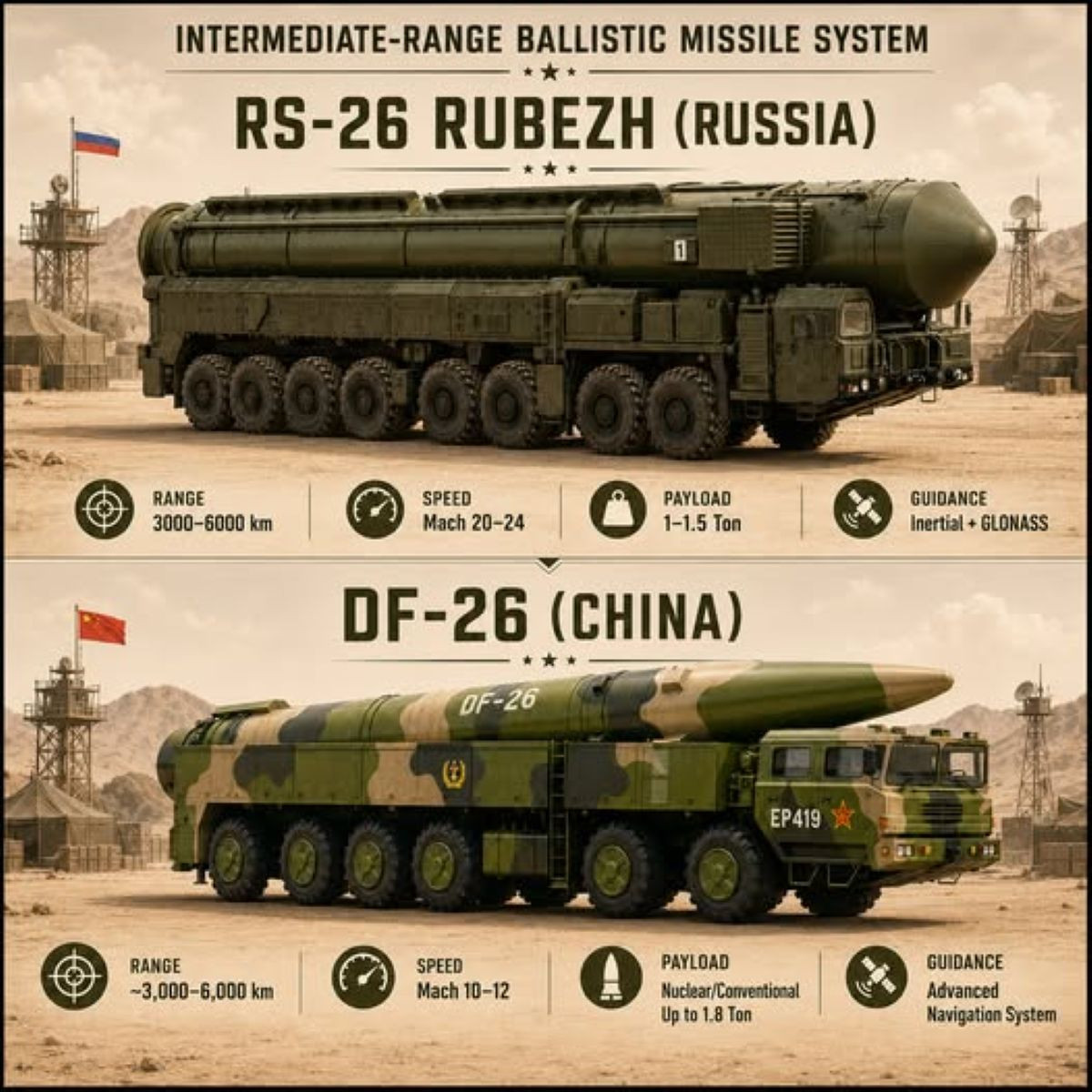
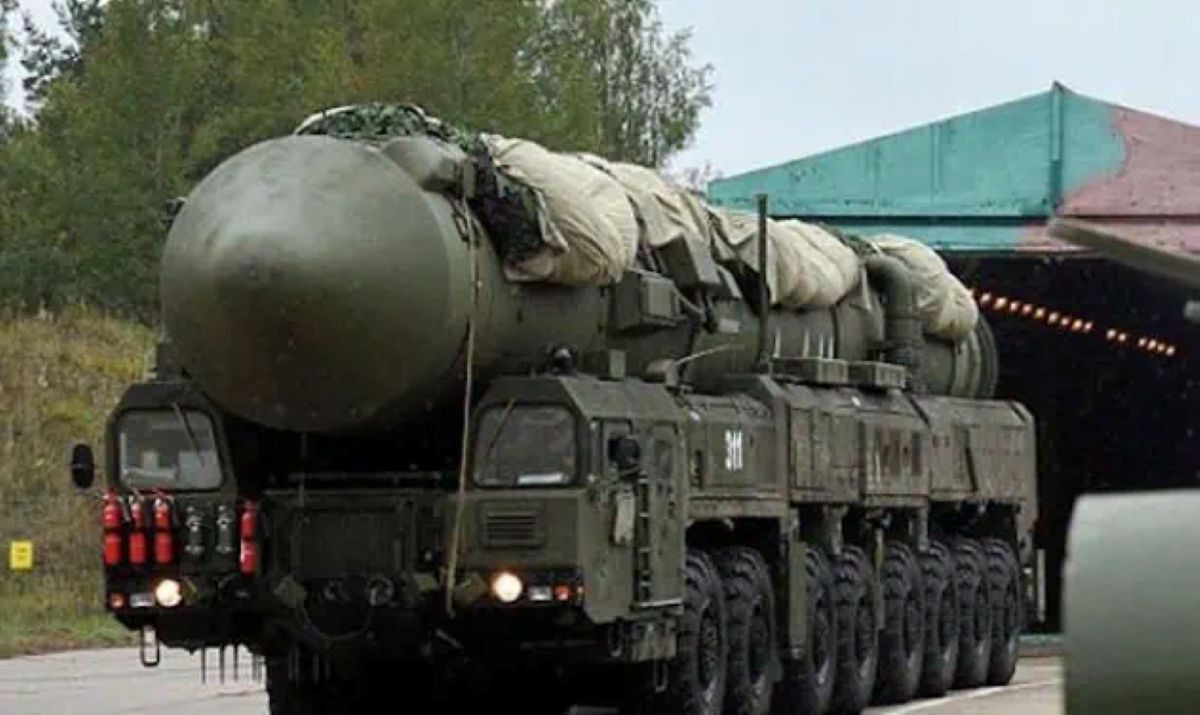
The Oreshnik missile (an operational variant of the RS-26 Rubezh missile ) is a solid-fuel intermediate-range ballistic missile (IRBM) launched from a mobile, road-launched platform.
This is a simplified version of the original RS-26 missile design, with two booster stages instead of three. The RS-26 missile has an estimated range of 3,500 to 5,500 km, enough to reach most European capitals from Russian territory.
The RS-26 missile 's maximum speed exceeds Mach 10 (approximately 12,300 km/h), and it can even reach higher speeds during the re-entry phase.
The most notable feature of the Oreshnik missile is its ability to carry MIRV (multiple independently targetable reentry vehicles) warheads, with the configuration used in combat consisting of 6 warheads, each carrying multiple submunitions.
Using hypersonic kinetic energy instead of relying entirely on explosives increases destructive power and reduces the likelihood of interception.
The navigation system combines inertial navigation and GLONASS, resulting in relatively high accuracy.
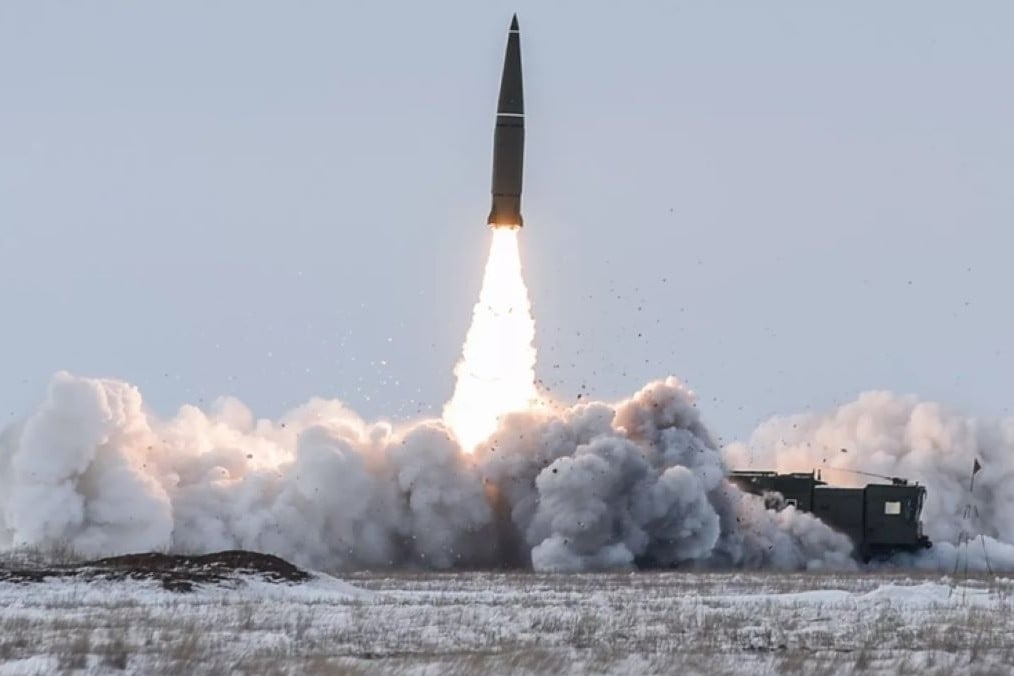
Russia used Oreshnik missiles in attacks in Ukraine from late 2024 to 2026, marking the first time MIRV technology was used in modern warfare.
China's DF-26 missile , often referred to as the "Guam Killer," is a two-stage, solid-fuel, mobile-launched medium-range ballistic missile.
With a length of approximately 14 meters, a diameter of 1.4 meters, and a launch weight of about 20 tons, the DF-26 missile has a range of 3,000-5,000 km (depending on the variant), sufficient to cover Guam and US carrier groups operating in the Western Pacific.
The payload capacity ranges from 1,200 to 1,800 kg, capable of carrying both nuclear and conventional warheads.
The DF-26 missile is an advanced dual-capable system, with an anti-ship ballistic missile (ASBM) variant equipped with a radar-guided terminal, allowing for precise engagement of moving targets at sea.
The navigation system uses a combination of inertial navigation, BeiDou satellite positioning, and can incorporate optical or radar end-of-course guidance, achieving accuracy with a circular error probability (CEP) of approximately 100 meters.
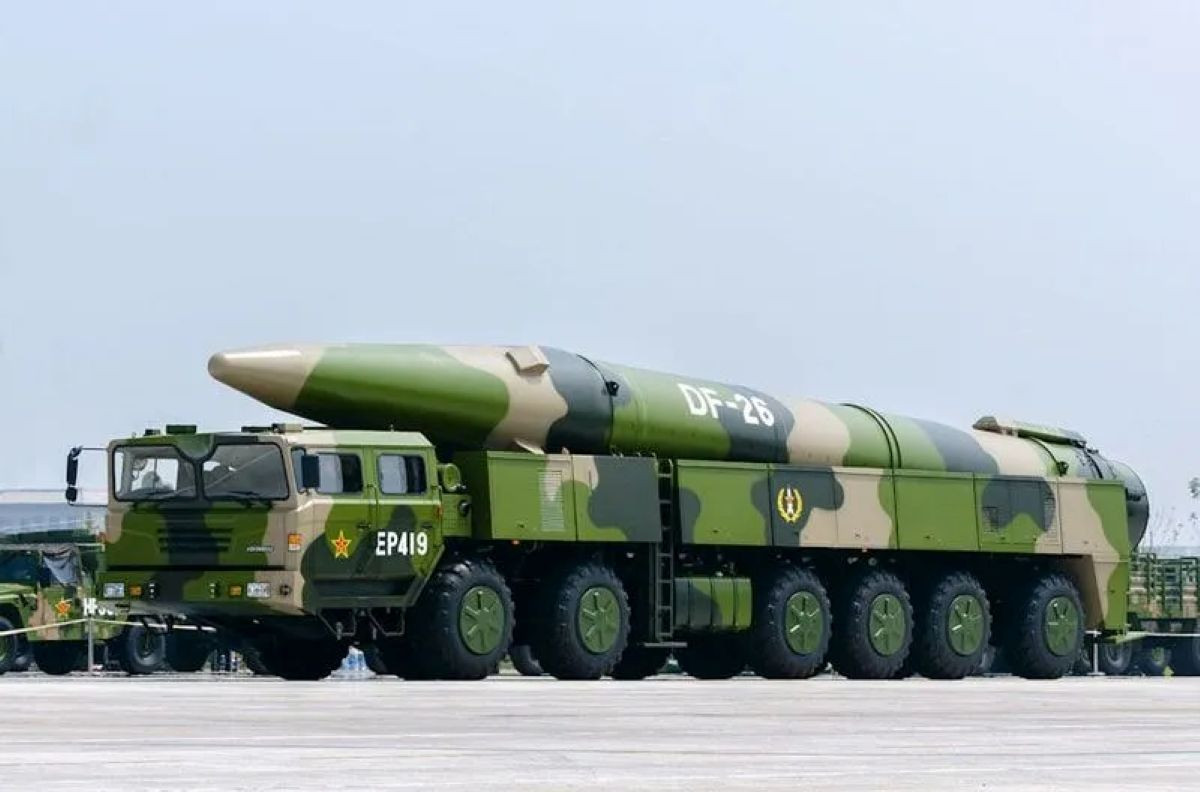
The road-mobile design makes it easy for China to deploy, camouflage, and survive a preemptive attack.
Comparing the two systems, Russia's Oreshnik missile prioritizes extremely high speed and the ability to penetrate enemy defenses using MIRV (Microwave Reconnaissance Ordnance Verification) and hypersonic kinetic energy, making it suitable for European warfare and deterrence against NATO.
Meanwhile, China's DF-26 missile emphasizes dual-use versatility, the ability to accurately strike both fixed and moving targets at sea, serving the anti-access/area denial (A2/AD) strategy in the Western Pacific.
Both utilize solid fuel and mobile launch platforms, offering high mobility and rapid response times.
These two missiles not only demonstrate the advanced missile technology of Russia and China but also reflect their differing military strategies: Russia focuses on destructive power and speed, while China prioritizes accuracy and wide coverage at sea.
(According to armyrecognition.com, missilethreat.csis.org, missiledefenseadvocacy.org)
Source: https://vietnamnet.vn/ten-lua-rs-26-nga-toc-do-mach-10-tam-ban-5-500km-so-gang-ten-lua-df-26-trung-2517435.html







































































































Comment (0)