Organic farming is a form of agricultural practice that avoids or largely eliminates the use of chemical fertilizers, pesticides, and plant growth regulators. Organic farming is a solution aimed at producing clean agricultural products while simultaneously enhancing the efficiency and value of agricultural production.
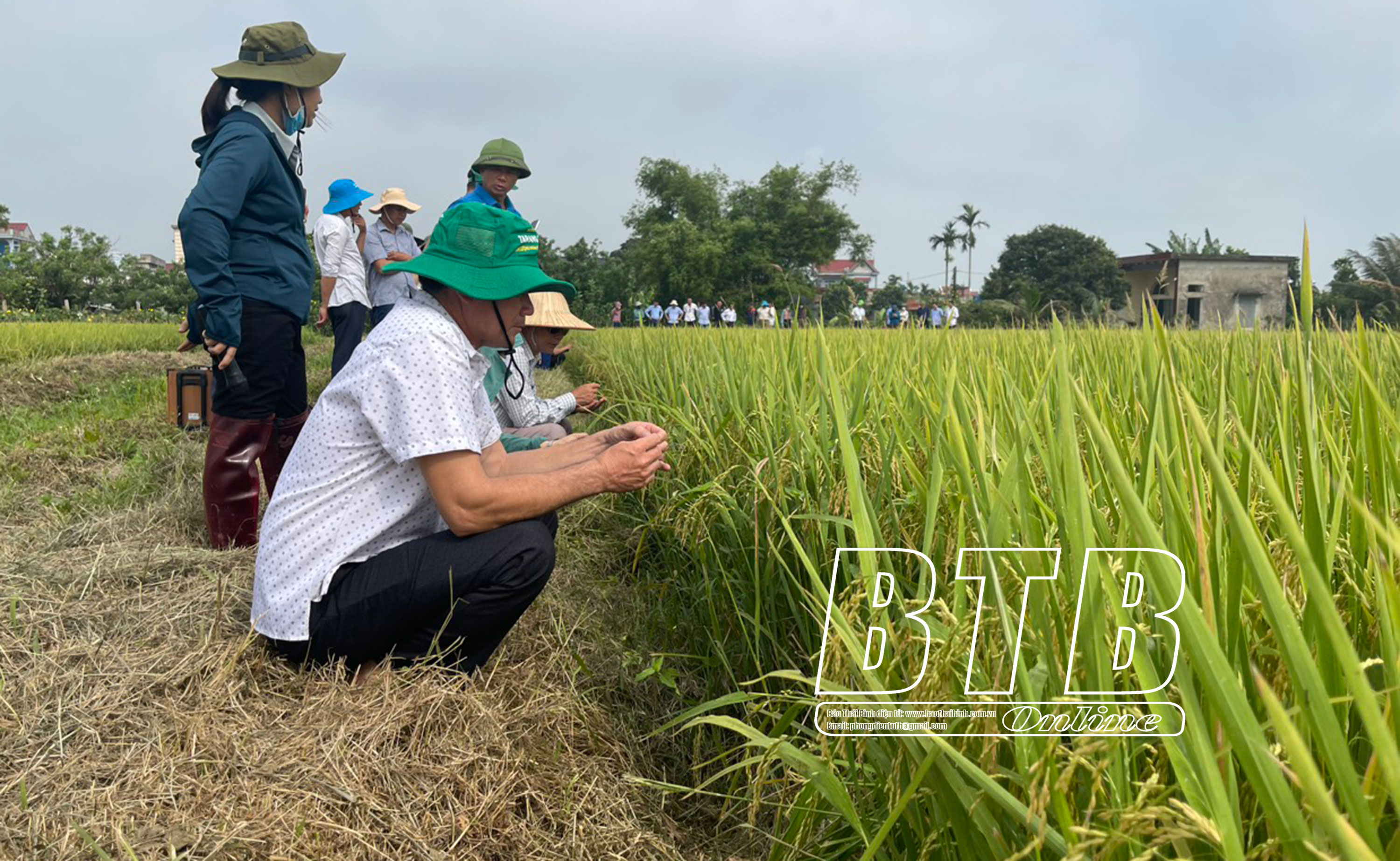
The project to build and develop the rice brand of Thai Binh province for the period 2021-2025 and with a vision to 2030 aims to achieve 500 hectares of high-quality rice meeting organic standards. However, currently, Thai Binh only has over 200 hectares of organic rice production, mainly in areas where earthworms and crabs are raised. These products have not yet been certified as organic by the authorities, and specialized organic rice production areas have not been established according to established procedures. With the desire to successfully build organic rice production models and thereby spread and change agricultural production thinking, the Department of Agriculture and Rural Development has implemented two organic rice production models linked to product consumption in Thuy Thanh commune (Thai Thuy district) with an area of 11 hectares and Song Lang commune (Vu Thu district) with an area of 10 hectares.
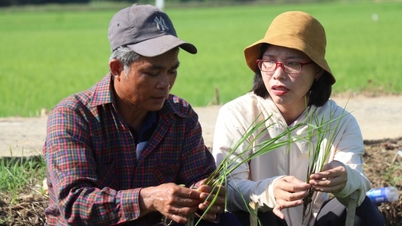
As a participating household in the model, Mr. Nguyen Cong Toi, from Vo Hoi Dong village, Thuy Thanh commune, currently cultivates 40 hectares. Mr. Toi said: "Currently, the trend in rice consumption among people is changing towards not only delicious but also higher quality, ensuring health safety. Therefore, farmers must also change their production methods to meet market demands. With the support of the commune People's Committee in planning concentrated areas, in the spring of 2021, I switched from traditional production to applying organic methods. However, because I was learning and practicing at the same time, the process was not yet standardized. In the spring of 2022, with the support of the agricultural sector, I implemented an organic rice cultivation model on an area of 11 hectares, with systematic planting and cultivation techniques. Through three production seasons, I have seen a significant improvement in the soil and water environment. The soil is more porous, and flora and fauna such as algae, crabs, and fish are more abundant." The rice plants grow well, have beautiful foliage, and are less susceptible to pests and diseases; the rice quality is better, with a richer flavor than rice of the same variety grown using traditional methods. In the long term, organic production will bring many health benefits to producers and consumers and contribute to environmental protection.
Mr. Tran Quoc Duong, Deputy Head of the Department of Crop Production and Plant Protection, said: "All models use tray seedlings transplanted by machine; 100% organic biological fertilizers. Regarding pest and disease control, we guide households to implement integrated pest management measures on a large scale; apply integrated pest control measures and field sanitation to avoid the spread of pests and diseases from one season to the next. When spraying pesticides to control pests and diseases, we use biological pesticides that are selective and highly effective, decompose quickly, and leave minimal residue in the environment and agricultural products. In practice, in the 2022 planting season and the spring of 2023, the model pushed the planting schedule forward by 10 days compared to previous years and 5-7 days earlier than farmers' fields. However, organic rice production also faces many difficulties, which has prevented the area from expanding significantly." In organic farming, producers are only allowed to use organic fertilizers and control weeds and pests using manual methods or biological pesticides. This requires a lot of labor and is difficult to implement on a large scale, especially in our country where the hot and humid climate is very favorable for the development and spread of many pests and diseases. In areas with high-intensity farming that previously used a lot of chemical fertilizers and pesticides, when switching to organic production, yields decrease significantly in the first few years, and pest control becomes difficult due to high pest pressure and the disruption of the previous ecological balance, which needs time to be re-established. Organic fertilizers and biological preparations have a slower effect compared to chemical fertilizers and pesticides, so the supply of mineral nutrients to plants in the early stages is very slow and insufficient. Due to low yields and high labor costs, the cost of organic products is higher than conventional production...
Mr. Mai Thanh Giang, Head of the Department of Crop Production and Plant Protection, said: In the 2023 crop season, the Department continued to implement the model in the districts to gradually change the awareness and farming practices of farmers, shifting from production using chemical fertilizers and pesticides to using organic fertilizers and biological pesticides that are beneficial to the environment, contributing to the development of green, clean, safe and sustainable organic agricultural production.