

 |
Within just a few days, Beijing successively welcomed the leaders of two superpowers that have shaped the world order for decades: US President Donald Trump and Russian President Vladimir Putin.
As energy cooperation emerges as a new strategic priority, successive state visits by US and Russian leaders to China are fueling speculation about the possibility of a new coordination mechanism emerging among the world's three leading powers. However, according to many international relations experts, if such a structure does form, the most unpredictable factor remains the United States.
According to Cui Hongjian, recent diplomatic moves could open the door to a triangular form of cooperation between China, Russia, and the United States. However, Washington – along with President Donald Trump's approach – remains the biggest unknown factor determining the trajectory of this structure, according to SCMP.
Expectations for a "three-pronged" balance of power.
During talks with President Vladimir Putin on May 20, President Xi Jinping emphasized the need to strengthen strategic coordination between Beijing and Moscow to counter what he called the "law of the jungle" trend in the international order.
The meeting took place just days after Trump's visit to Beijing, where the U.S. and China sent messages about promoting a "constructive and stable strategic relationship."
The succession of these two high-level visits has drawn particular attention from observers. Against the backdrop of a rapidly reshaping international order, the relationship between the world's three largest centers of power is increasingly seen as a factor that could shape geopolitical trends for years to come.
According to Mr. Cui, the APEC summit scheduled for November in Shenzhen could become an opportunity for the three major powers to test the possibility of forming a trilateral coordination mechanism.
"Previously, the situation was primarily characterized by bilateral confrontations. China and the US competed, the US and Russia also clashed, while China and Russia maintained cooperative relations. Beijing and Moscow are drawing closer together, similar to the link between Europe and the US," he said.
"Although the risk of bloc-based confrontation still exists, this trend is diminishing as the US adjusts its relations with Europe and reduces confrontational rhetoric. A new possibility is emerging: could the three bilateral relationships between China and the US, and China and Russia, develop into a triangular relationship structure?" Cui analyzed.
Cui suggested that President Putin also wanted to know what issues related to Russia were discussed during the meeting between Xi and Trump.
"The stability in US-China relations is becoming increasingly evident, sending strong signals of de-escalation. This means the pressure is now shifting to Russia," he observed.
Nevertheless, he stressed that every scenario largely depends on American choices. From how Washington handles hotspots like Iran to the impact of the midterm elections and the potential for bipartisan consensus – all are unpredictable factors.
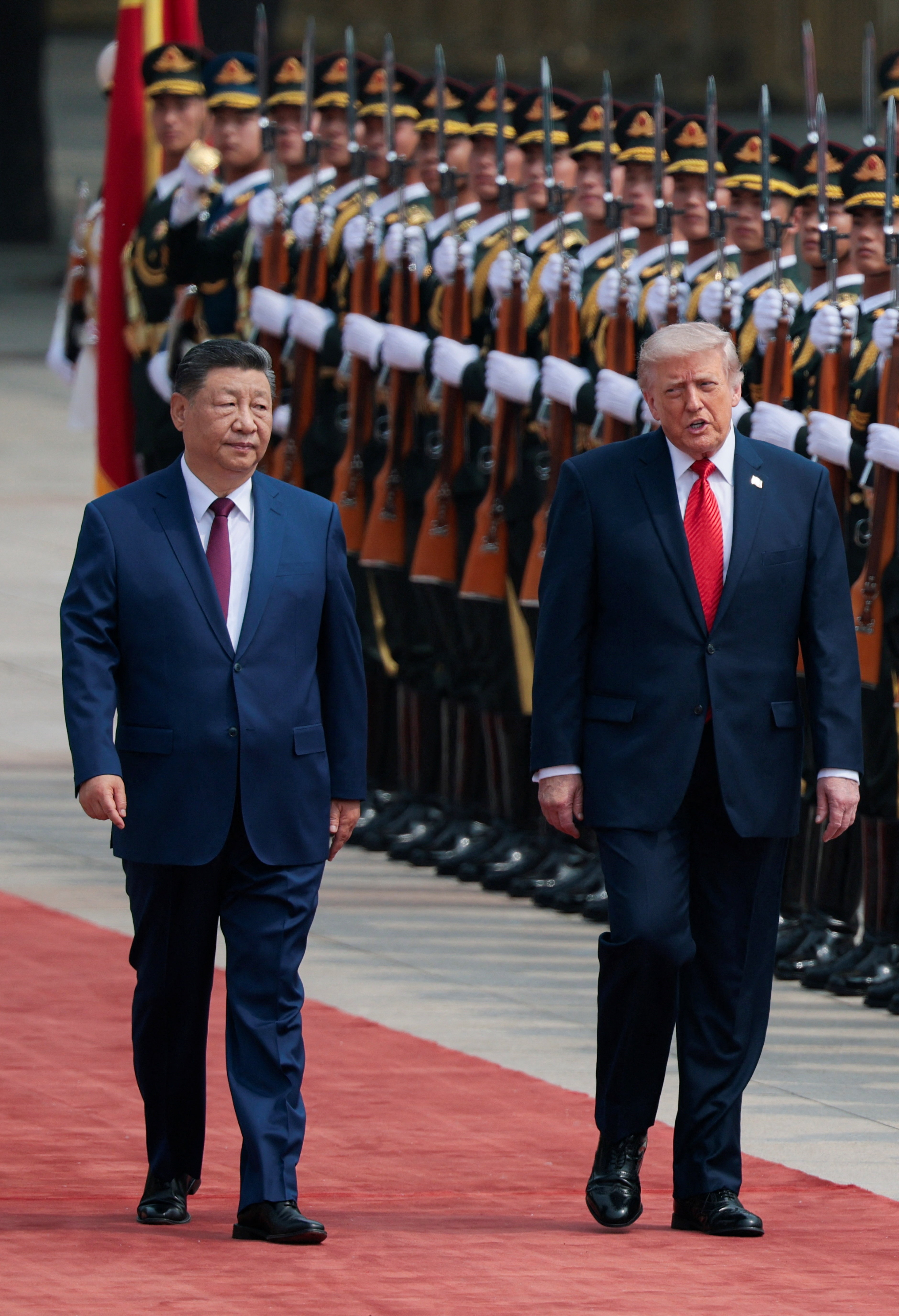 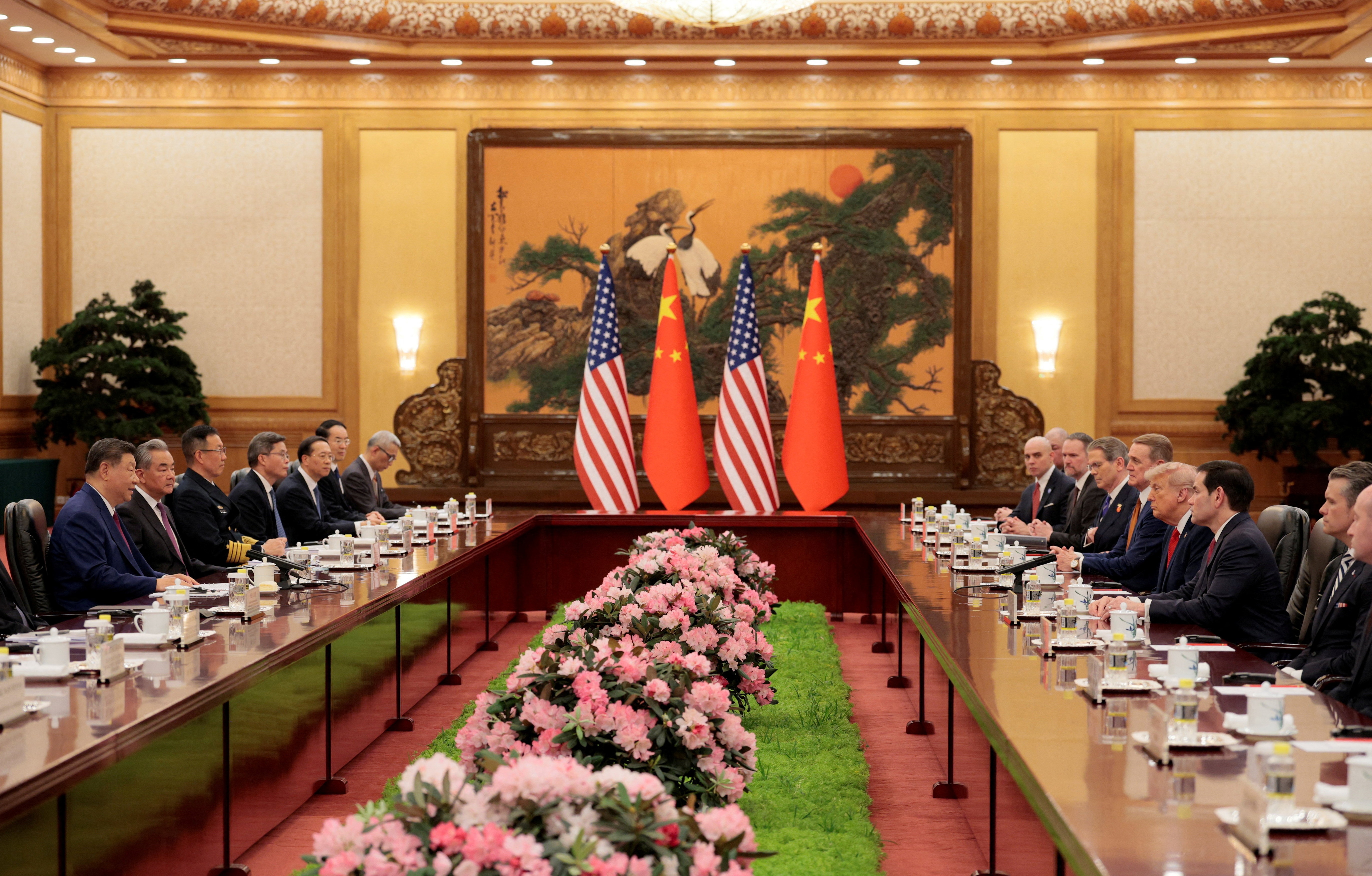 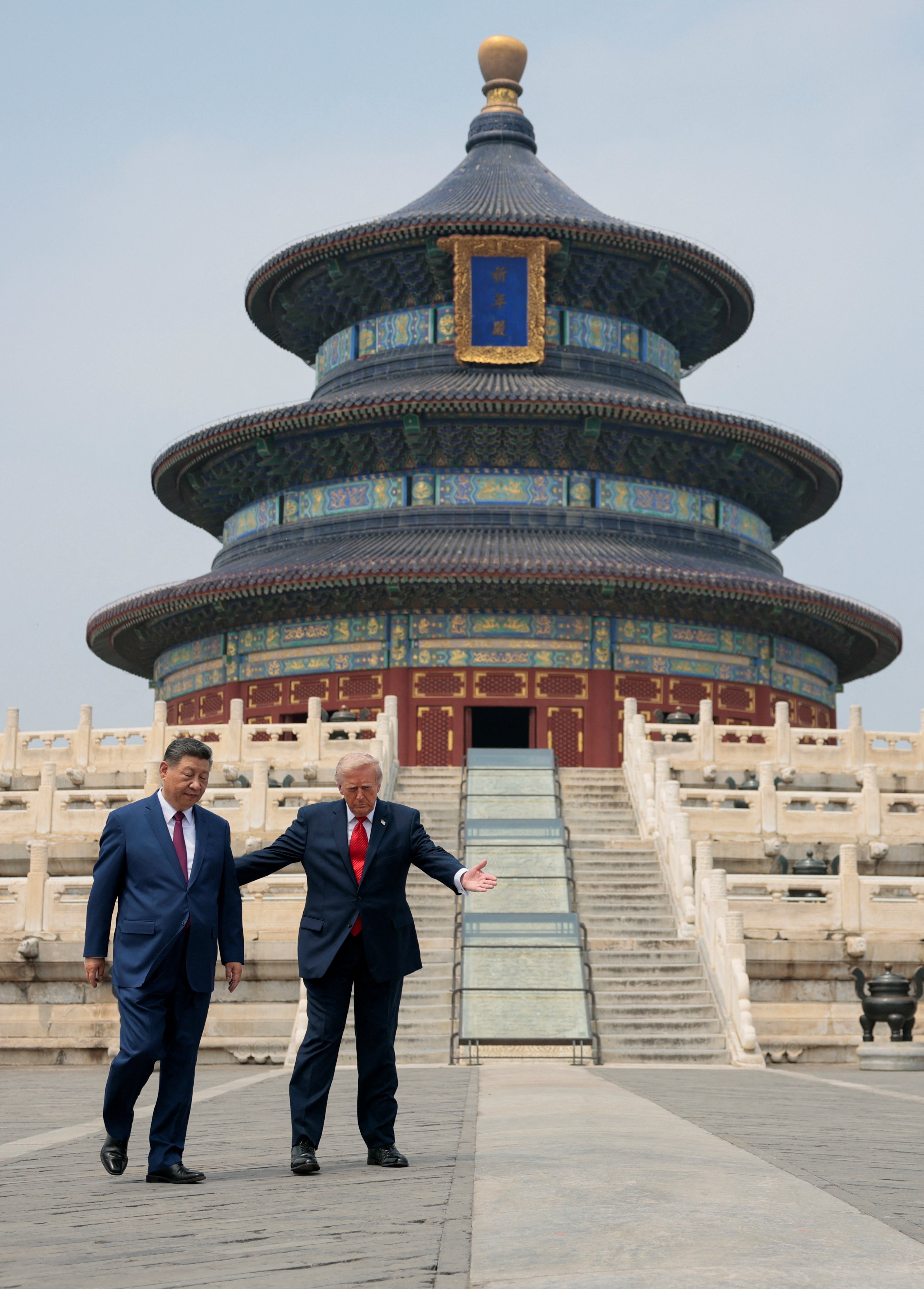 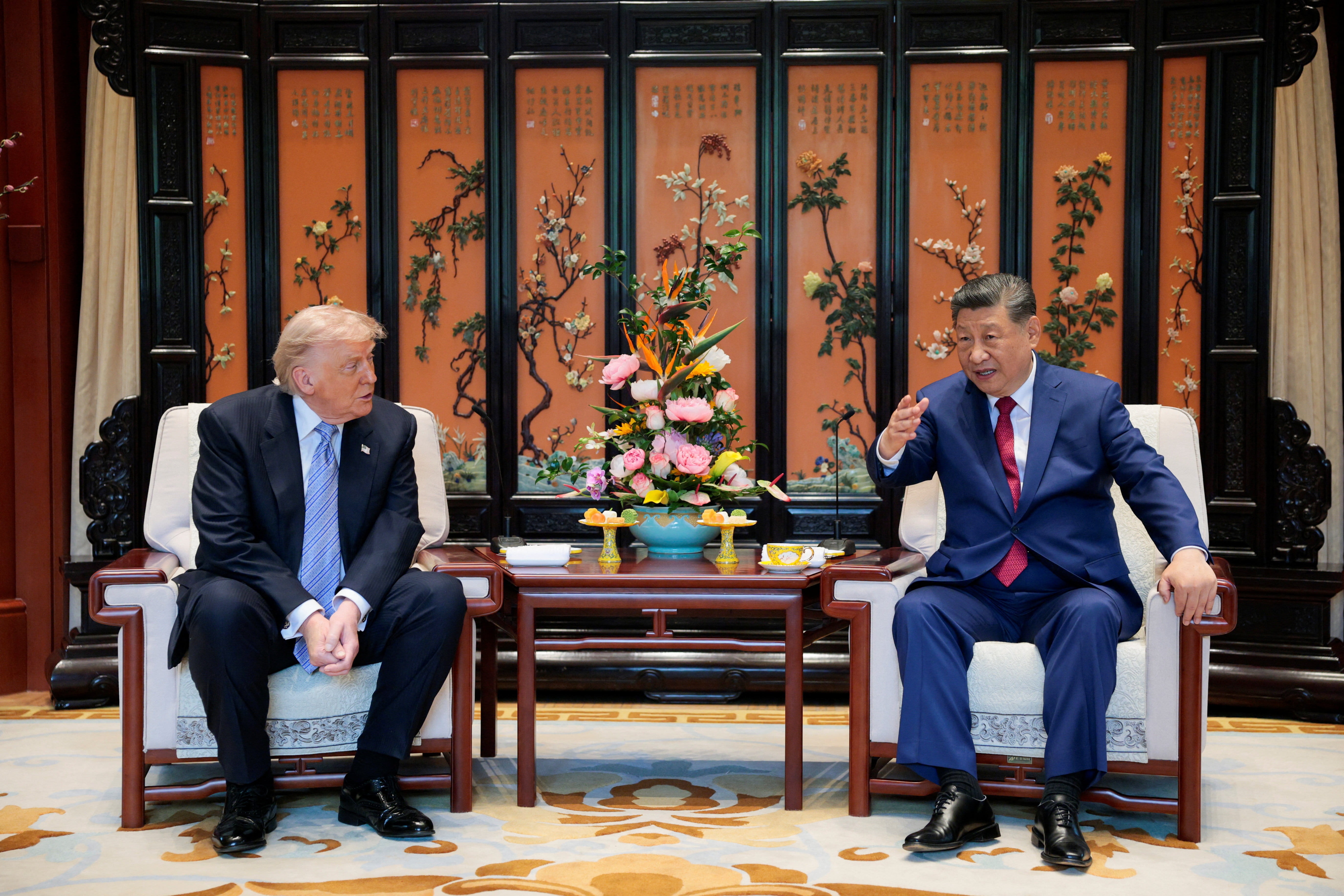 |
US President Donald Trump and Chinese President Xi Jinping during his visit to China from May 13-15. Photo: Reuters. |
Avoid repeating the "Cold War" model.
Meanwhile, Zhao Long argued that it would be inaccurate to view current developments through the lens of the Cold War era.
According to him, China is not pursuing a “strategic triangle” model – where one superpower is used to balance or contain the other two. Instead, the current reality shows that the three major economies are sharing more strategic interests than before.
Areas such as energy supply and demand stability, the application of artificial intelligence in the military, and cooperation in Arctic development all create new points of intersection of interests.
Mr. Zhao predicted that more trilateral contacts at the leadership level could emerge in the future, particularly on the sidelines of the G20 Summit scheduled to be held in Florida later this year.
"However, that doesn't mean Beijing wants to build a strategic triangle between China, the US, and Russia to divide spheres of influence or promote a bargaining-style diplomacy between great powers," he said.
Energy "link"
If geopolitics is the visible part of the picture, then energy is becoming the most real driving force drawing Moscow and Beijing closer together.
During talks on the morning of April 20, President Putin particularly emphasized energy agreements between the two neighboring countries, describing Russia as a "reliable" resource supplier and China as a "responsible" consumer.
"Russia is currently placing its hopes on China to solve the energy export problem," Cui noted, adding that if the "Power of Siberia 2" pipeline – a gas pipeline from western Russia to northern China via Mongolia – is completed, the scale of bilateral energy cooperation could almost double, helping Moscow partially compensate for the lost European market.
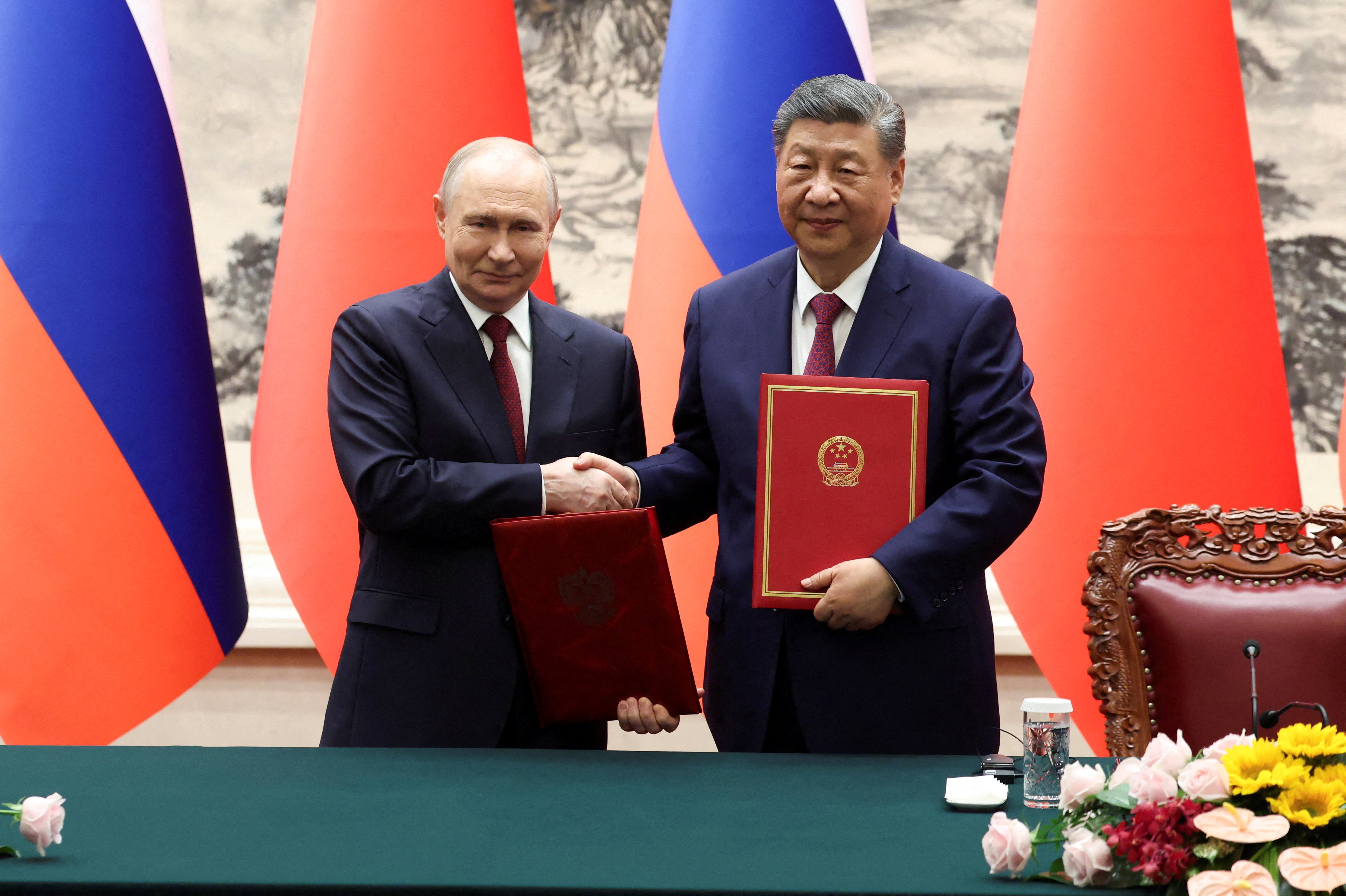 |
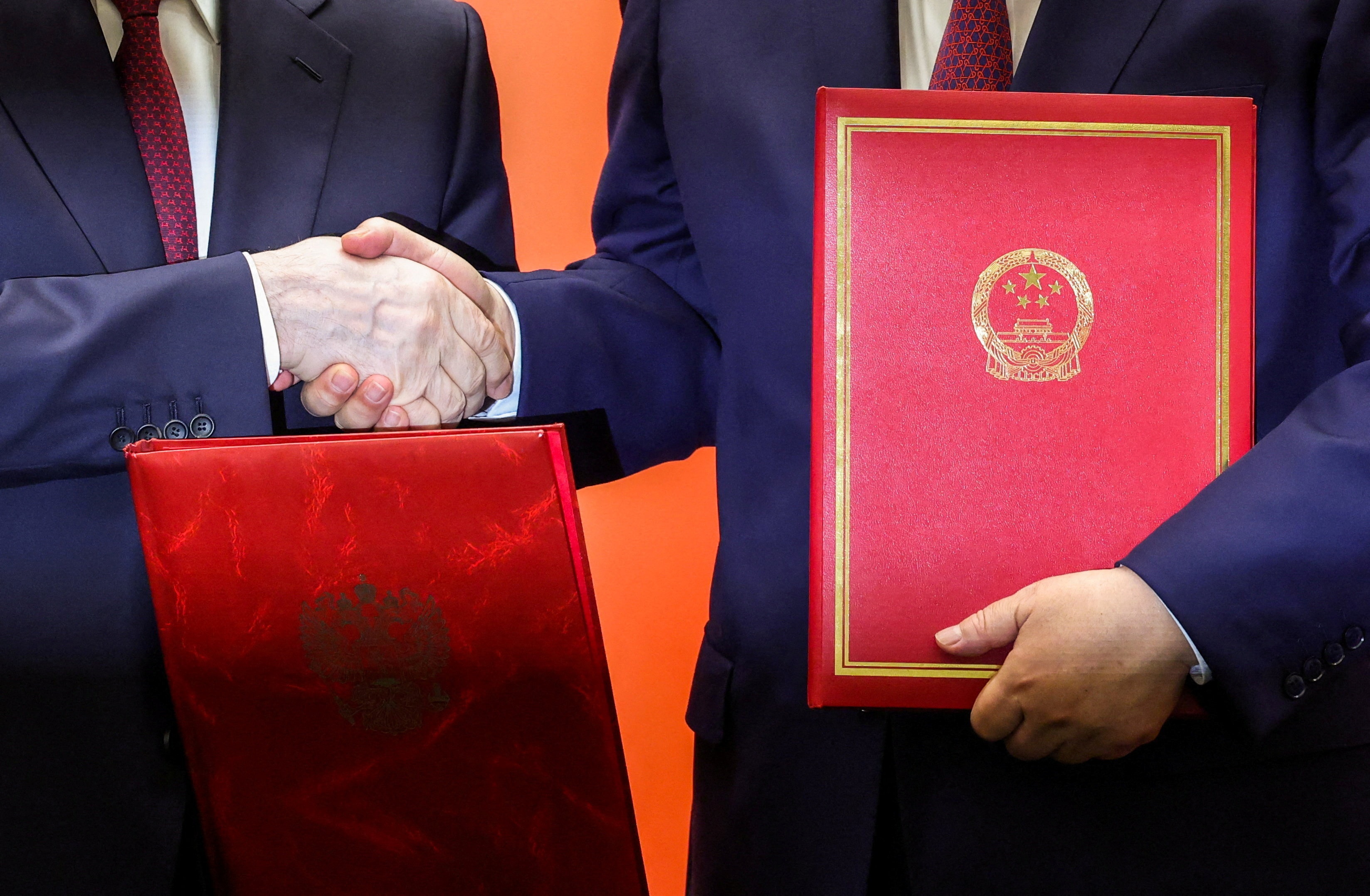
Russian President Vladimir Putin and Chinese President Xi Jinping shake hands during a signing ceremony at the Great Hall of the People in Beijing, China, on May 20. Photo: Reuters . |
He argued that the increasingly difficult domestic economic situation, coupled with pressure from the conflict in Ukraine, is making Russia need cooperation with China more than ever.
"Relying on a huge market like China means Beijing can provide vital financial and economic support if the confrontation with Ukraine and Europe continues," he said.
However, Cui suggested that Beijing might want more than a simple buyer-seller relationship in the energy sector.
According to him, China's strategic priority is likely to be building comprehensive partnerships across the entire energy supply chain, including upstream, downstream, and infrastructure.
Later that same day, the two sides signed dozens of cooperation documents in the fields of trade, technology, energy, innovation, media, journalism, and intellectual property protection.
Speaking after the signing ceremony, President Xi Jinping affirmed that China and Russia need to continue strengthening strategic trust and expanding bilateral trade, while opposing what he called "unilateral bullying" and attempts to "reverse history."
In that picture, even as Sino-Russian relations continue to strengthen and Sino-American dialogue channels show signs of easing tensions, observers believe the biggest question remains unchanged: what role will the US choose in a reshaping power structure?
Source: https://znews.vn/the-can-bang-moi-giua-my-nga-trung-quoc-post1653049.html




















































































Comment (0)