

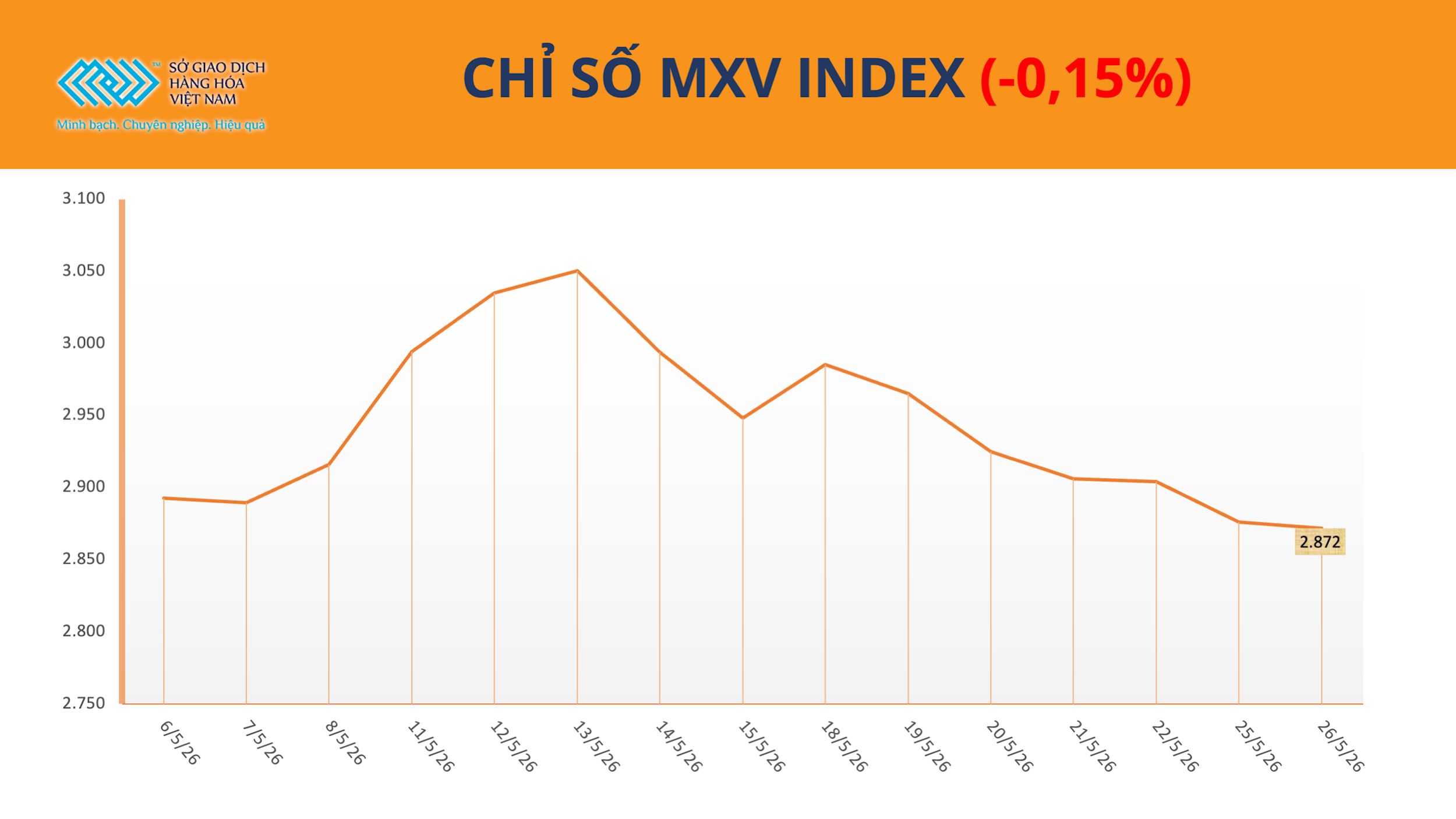
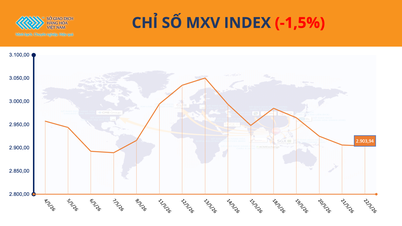
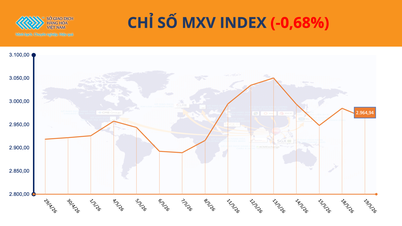
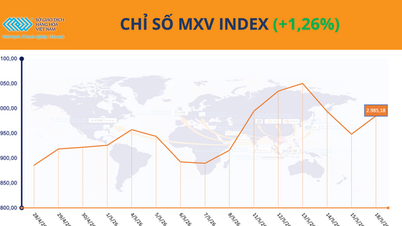
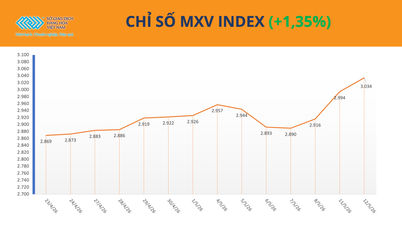
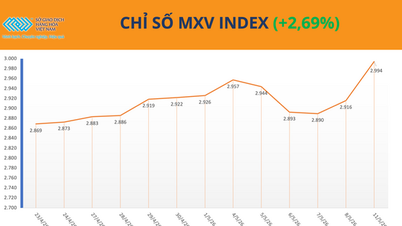
According to the Vietnam Commodity Exchange (MXV), at the close of trading, the MXV-Index fell slightly by 0.1% to 2,871 points, reflecting a clear divergence in the global raw materials market.
In the agricultural commodities market, technical selling pressure and position liquidation by hedge funds on the CBOT exchange were the main reasons for the decline in soybean prices. At the close of trading, July soybean futures fell nearly 1% to $435.8 per ton.
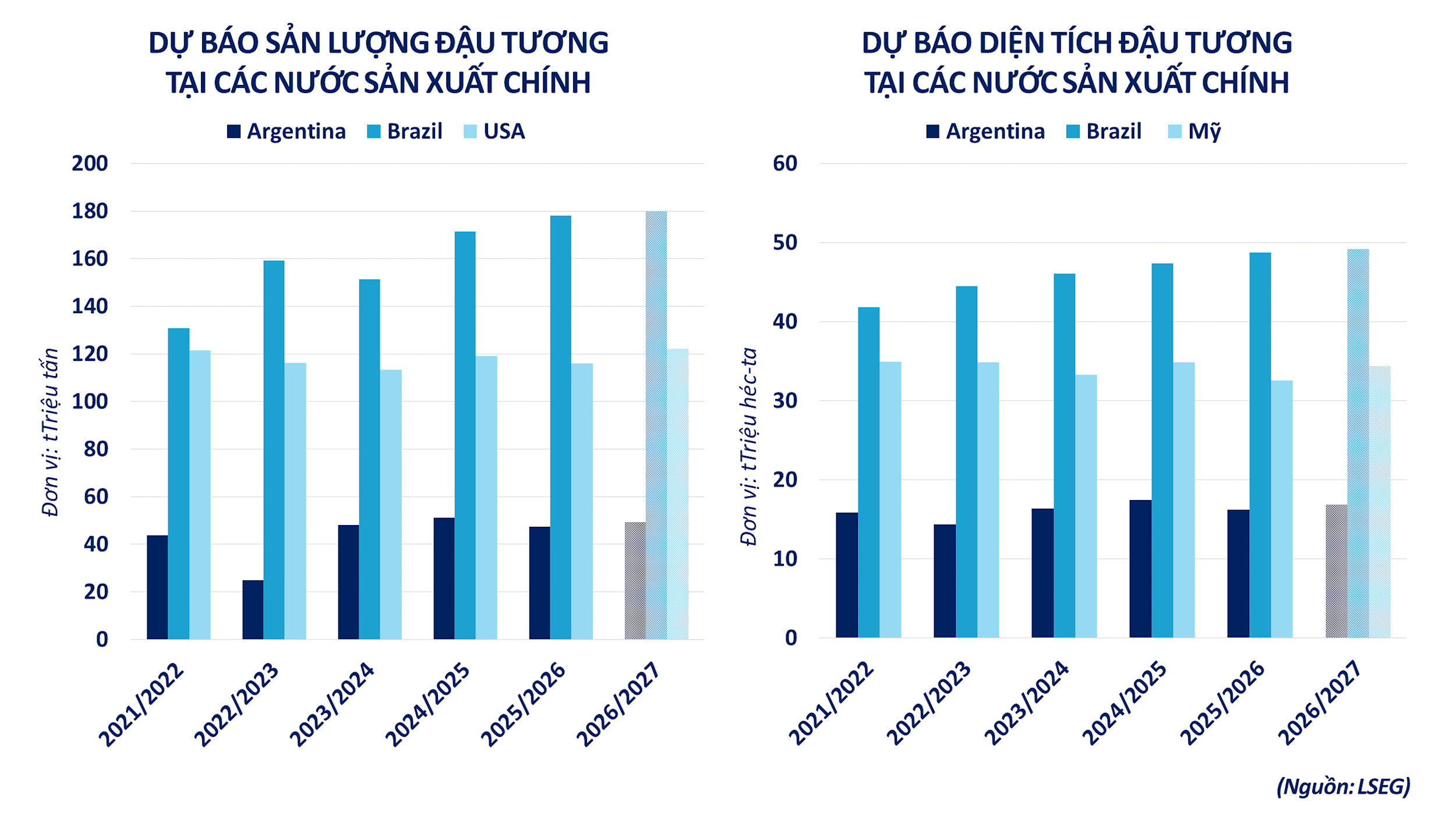
This development comes amid a backdrop of abundant global supply prospects. In the US, favorable weather is strongly supporting planting progress, raising expectations of a bumper crop in the new season.
The latest Commitment of Traders (COT) report also shows that hedge funds had net sold more than 7,000 CBOT soybean contracts as of May 19, bringing the total net long position down to approximately 208,000 contracts.
Weak export activity is also putting pressure on prices. Importers are adopting a wait-and-see attitude as supplies from South America remain high. Furthermore, the large supply from South America is narrowing the room for further price increases for US soybeans in the international market.
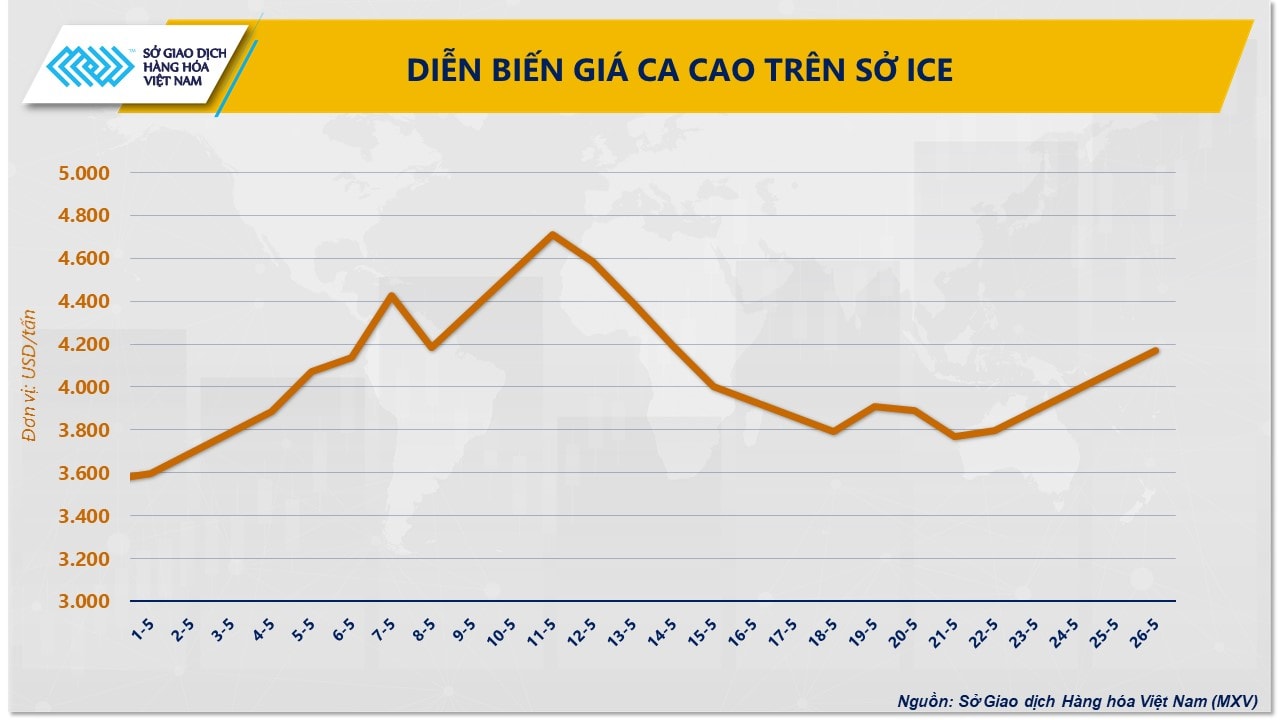
Conversely, the cocoa market recorded its strongest gain in weeks. July cocoa futures rose nearly 10%, to $4,169 per ton, as concerns about supply in West Africa continued to escalate.
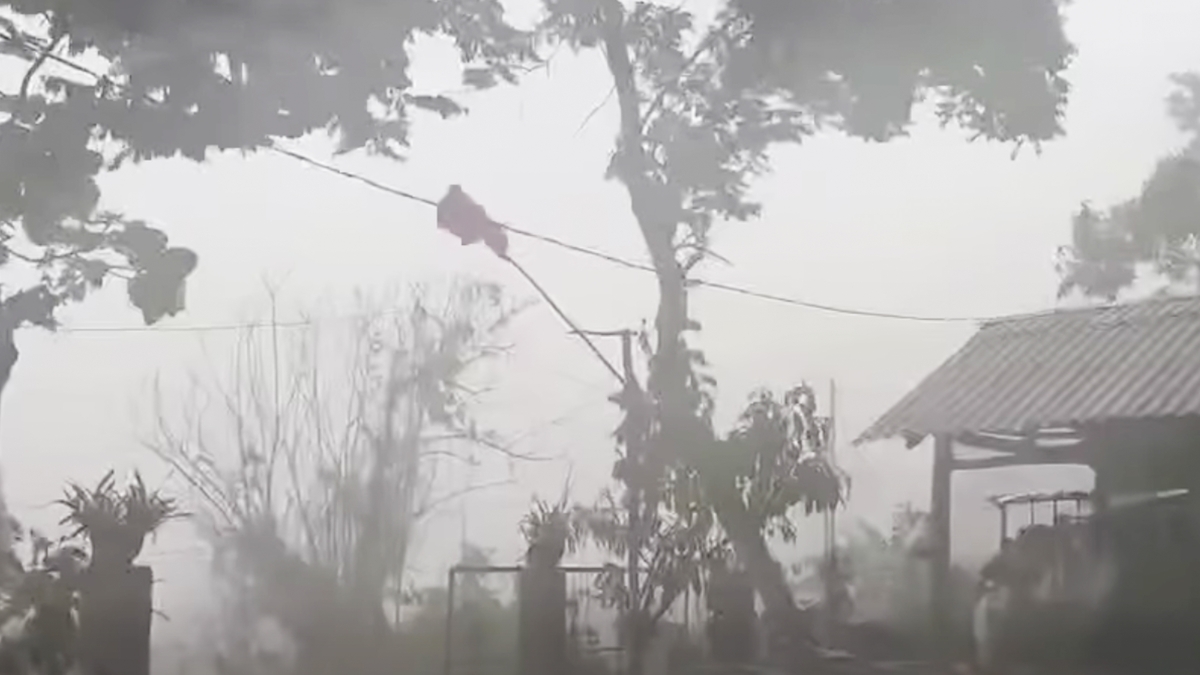
The main impetus comes from prolonged heavy rains in Ivory Coast – the world's largest cocoa producer – disrupting harvesting and transportation, thus raising concerns about future export supply. This development has prompted hedge funds to significantly increase short-covering activity after a period of short selling.
In the long term, the cocoa market continues to be supported by climate risks, as forecasts indicate an 82% probability of El Niño forming between May and July, increasing the risk of drought in key cocoa-growing regions of West Africa.
In addition, geopolitical tensions in the Middle East are driving up logistics costs and fertilizer prices, putting pressure on farming in Ivory Coast and Ghana. Meanwhile, global chocolate demand remains relatively stable, although purchasing power in North America has begun to feel the impact of inflation.
Source: https://hanoimoi.vn/thi-truong-phan-hoa-manh-ca-cao-bat-tang-gan-10-972304.html

![[Photo] The heat at the fireworks display site on the opening night of the Da Nang International Fireworks Festival 2026](https://vphoto.vietnam.vn/thumb/1200x675/vietnam/resource/IMAGE/2026/05/27/1779889741485_ndo_br_z7872039145157-fecaba5112f39e8352544099d7ef4738-5140-jpg.webp)

![[Photo] The courage of new recruits of Brigade 144 on the training ground.](https://vphoto.vietnam.vn/thumb/1200x675/vietnam/resource/IMAGE/2026/05/27/1779881651341_anh-man-hinh-2026-05-27-luc-18-32-52.png)



















































![[Photo] The courage of new recruits of Brigade 144 on the training ground.](https://vphoto.vietnam.vn/thumb/402x226/vietnam/resource/IMAGE/2026/05/27/1779881651341_anh-man-hinh-2026-05-27-luc-18-32-52.png)


























Comment (0)