


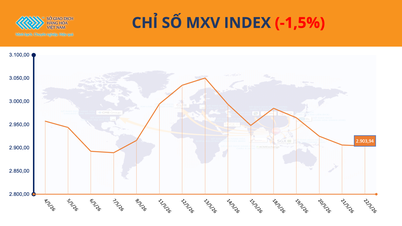
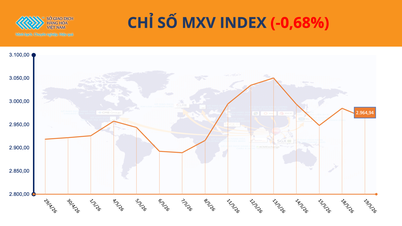
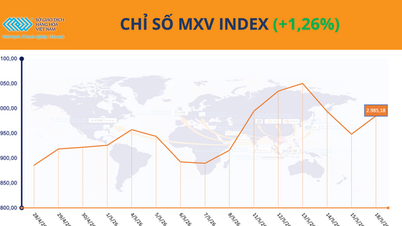
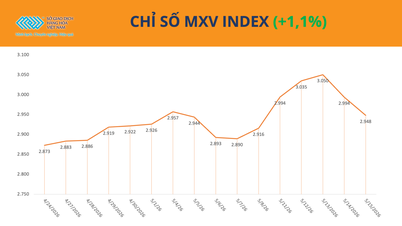
The rubber market saw strong gains in both key commodities, while the energy sector faced downward pressure amid concerns about prolonged high interest rates in the US. At closing, the MXV-Index remained above its historical peak, rising 0.5% to 3,050 points.
Rubber prices surged sharply due to concerns about supply shortages.
According to the Vietnam Commodity Exchange (MXV), the global rubber market saw a widespread improvement yesterday (May 13). At the close of trading, the price of TSR20 rubber surged by 4.42% to $2,610 per ton. Meanwhile, the price of RSS3 rubber for June delivery also increased by 1.73%, reaching $2,316 per ton.
The main driver supporting the market comes from growing concerns about the risk of supply disruptions in Southeast Asia, particularly Thailand – the world's largest producer and exporter of natural rubber – with the majority of its output belonging to the TSR20 variety.
According to MXV, Thailand's rubber exports in the first quarter of this year decreased by approximately 15% compared to the same period in 2025. At the same time, the supply outlook continues to face pressure as the country enters the rainy season, increasing the risk of widespread damage to rubber plantations and impacting harvesting productivity.
Not only Thailand, but other key rubber-producing countries in Southeast Asia are also facing adverse weather conditions due to the El Niño phenomenon. Forecast models indicate that the current drought is the most severe in about a decade.
Besides weather factors, the continued high price of crude oil is also supporting the natural rubber market. Amidst ongoing tensions in the Middle East, the sharp increase in the cost of producing synthetic rubber has made natural rubber more economically attractive.
However, the market's upward momentum is somewhat limited by the weakening consumption outlook in China, the world's leading rubber consumer.

The latest data shows that domestic car sales in China fell 21.6% in April compared to the same period last year. Retail sales of passenger cars in the country also recorded their seventh consecutive month of decline, reflecting relatively strong consumption pressure on the tire manufacturing industry and natural rubber demand.
In the domestic market, the price of liquid latex in Binh Phuoc this morning (May 14th) increased by about 5-10 VND/degree, fluctuating around 540-555 VND/degree. Meanwhile, the price of cup latex increased by about 1,000 VND/kg, reaching 25,000-27,000 VND/kg.
Oil prices adjusted downward due to concerns about prolonged high interest rates in the US.
In contrast to the positive developments in the rubber market, the energy sector faced downward pressure yesterday as investors increased concerns about the outlook for interest rates in the US.
Market attention was focused on the US Senate's official confirmation of Kevin Warsh as the new Chairman of the Federal Reserve (Fed). This news raised expectations that the Fed might continue to maintain its hawkish monetary policy to control inflation.
Previously, Mr. Warsh had repeatedly expressed his support for maintaining high interest rates to curb price pressures in the world's largest economy.

These concerns were further reinforced after the U.S. Bureau of Labor Statistics released data showing that the Producer Price Index (PPI) for April rose sharply by 1.4% compared to the previous month, the strongest increase in four years.
Compared to the same period last year, the April PPI increased by 6%, marking the fourth consecutive month of growth. Core PPI indicators also rose sharply across the board, reflecting continued high input cost pressures, particularly under the impact of escalating energy prices in recent times.
According to MXV, the possibility of the Fed continuing to maintain high interest rates could slow economic growth and weaken global energy demand. At the same time, prolonged high oil prices also risk destroying demand, putting pressure on the crude oil market for adjustment.
At the close of trading, WTI crude oil prices fell by approximately 1.14%, to $101 per barrel, while Brent crude oil dropped nearly 2%, to $105.63 per barrel.
Furthermore, the Dollar Index (DXY) surpassed 98.5 points yesterday, its highest level since the beginning of May. This development makes commodities priced in USD more expensive for international investors, thereby weakening buying power in the overall commodities market.
Nevertheless, the market remains open to the possibility that the Fed could shift toward cutting interest rates for the remainder of 2026, especially given President Donald Trump's continued support for loose monetary policy to boost growth and re-stimulate manufacturing in the US.
Source: https://baotintuc.vn/thi-truong-tien-te/thi-truong-phan-hoa-mxvindex-duy-tri-tren-moc-3050-diem-20260514104719568.htm

![[Image] Hanoi's urban life under the challenge of a "scorching hot" environment](https://vphoto.vietnam.vn/thumb/1200x675/vietnam/resource/IMAGE/2026/05/25/1779706979265_nang-nong-t5-2026-minh-duy-7-4636-jpg.webp)


![[Image] Close-up view of the interchange connecting the two expressways and Long Thanh Airport.](https://vphoto.vietnam.vn/thumb/1200x675/vietnam/resource/IMAGE/2026/05/25/1779703378210_ndo_br_z7863716673926-224453a31600126cce10622af6290afd-4549-jpg.webp)






























































































Comment (0)