

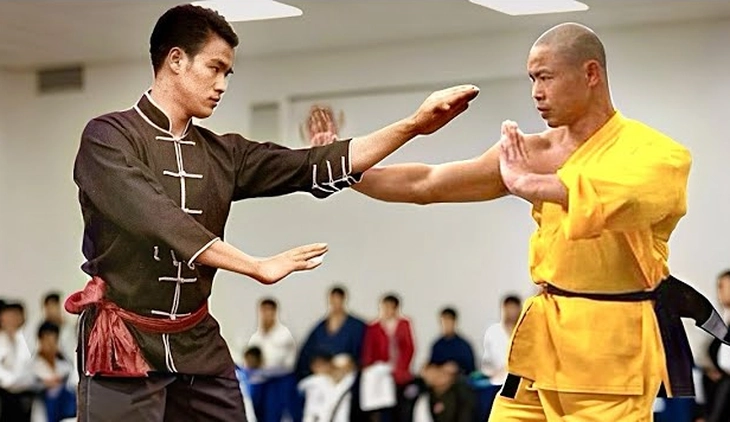
YouTubers have created countless analyses and simulations of Shaolin and Wing Chun sparring matches - Photo: YT
Two ideologies of Chinese kung fu
In the world of Chinese kung fu, Shaolin and Wing Chun are always the two most frequently mentioned names, representing two vast and expansive ideologies that encompass thousands of years of martial arts history on the mainland.
On one side is Shaolin – considered the origin of Chinese martial arts, possessing a vast and comprehensive system of fighting techniques; on the other side is Wing Chun – famous for its concise, direct style and especially associated with real-life legends such as Ip Man and Bruce Lee...
But if we consider the context of a modern fighter looking for a martial art to truly compete in, especially in a professional ring, which would be a more suitable choice?
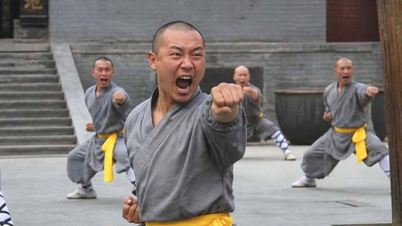
First and foremost, we need to have a proper understanding of Shaolin. This martial art has a history spanning thousands of years, creating a vast cultural system that extends far beyond just martial arts.
The Shaolin martial arts system encompasses hundreds of diverse forms, weapons, and techniques: from punches, kicks, and grappling to various grappling and seizing stances. This richness is what makes it so appealing culturally and for physical training.
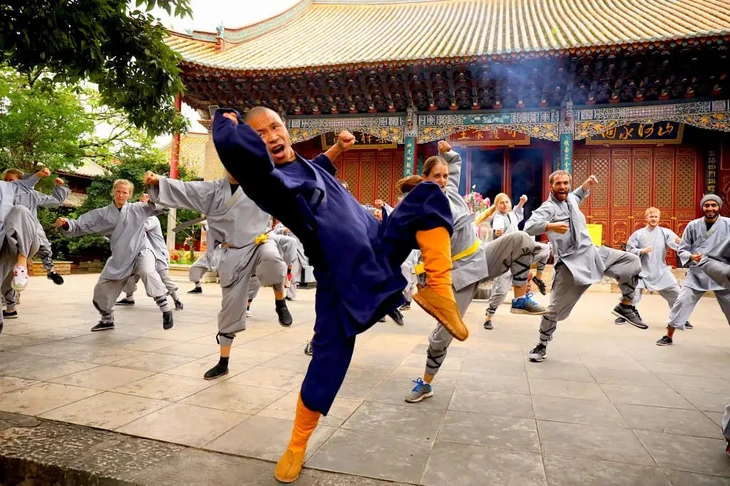
Shaolin has immense appeal - Photo: WT
However, modern martial arts researchers have pointed out that much of the training at Shaolin focuses on performance, forms, and internal energy techniques, while free sparring – the core element for testing technique – receives less emphasis.
A study in ResearchGate (2023) comparing Shaolin with MMA emphasized that: “Traditional kungfu lacks a comprehensive sparring system, making it difficult to maximize its potential in a modern ring environment.”
Meanwhile, Wing Chun emerged later but is highly practical. A prominent characteristic of Wing Chun is the concept of the "middle line"—controlling the straight line between two opponents to launch the quickest and shortest attacks possible.
Hand techniques such as stick hands, palm strikes, and combination punches are designed to neutralize and counter an opponent at extremely close range.
The system of techniques is minimal but focuses directly on effectiveness. Modern Wing Chun masters often encourage their students to practice sparring from an early age so that the techniques are not just theoretical.
The martial arts website Kids Martial Arts Guide stated: "If you need a martial art to apply in real-life situations, Wing Chun surpasses Shaolin due to its directness and ease of deployment in close combat."
The question is: are the techniques of Wing Chun alone sufficient to rival the physical prowess and overall skill of Shaolin?
Is Vịnh Xuân slightly better?
The answer depends on the practitioner's goals. If the goal is to improve health and learn a martial arts system with cultural and spiritual significance, Shaolin remains a valuable choice.
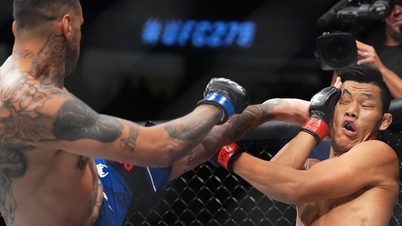
But in the context of a fighting arena, where opponents can use boxing, Muay Thai, or modern wrestling, the complexity and lack of focus of Shaolin becomes a major disadvantage.
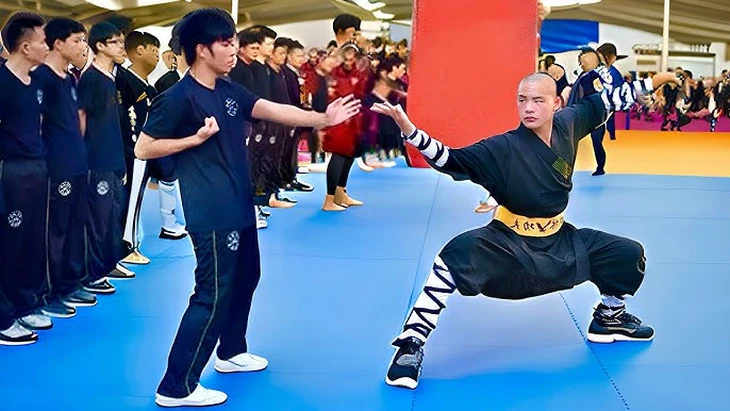
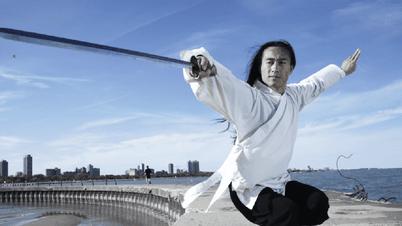
The practical combat effectiveness of Shaolin is still a subject of much debate - Photo: TP
Conversely, Wing Chun, while streamlined, also faces difficulties when confronting martial arts that are accustomed to high-intensity sparring.
A forum member, r/martialarts, commented: "The Wing Chun concept of controlling the midline is interesting, but against a boxer with good angle cutting ability, this strategy is difficult to implement."
This opinion accurately reflects the limitations of Wing Chun: highly effective in close combat, but lacking versatility when the distance is extended.
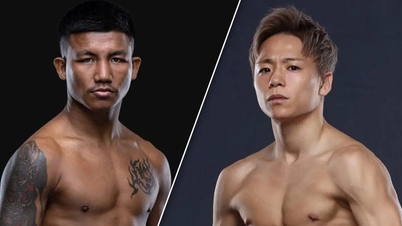
In fact, in today's Chinese MMA scene, it's rare to find a fighter who relies solely on Wing Chun or Shaolin to enter the ring.
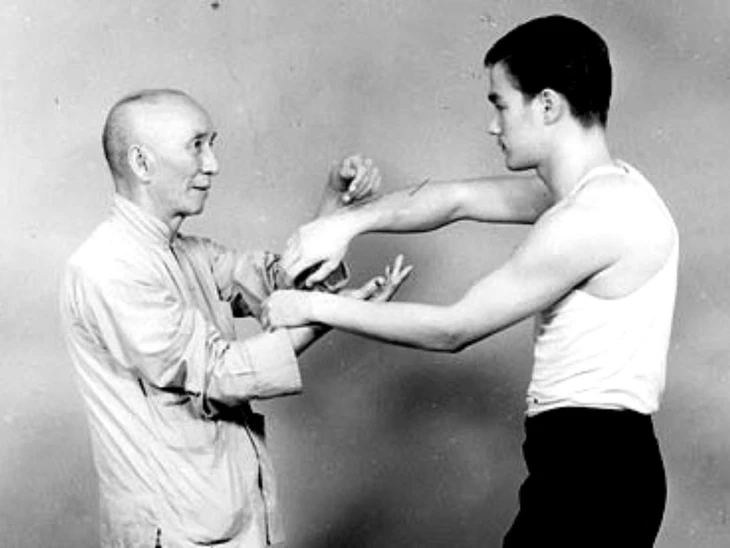
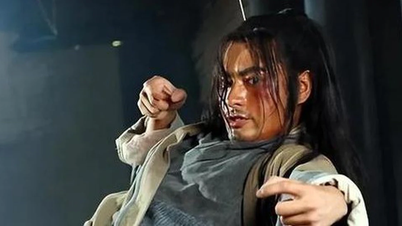
Ip Man (left) in real life, representing the renowned Wing Chun martial art - Photo: FOR
Instead, they often choose Sanda – considered a synthesis of traditional Kung Fu and modern combat – combined with wrestling, BJJ, and boxing.
From an objective perspective, if a direct comparison were to be made, Wing Chun has a higher degree of similarity to real combat than Shaolin, because it focuses on close combat, is easier to apply in self-defense, is less complicated, and encourages realistic sparring.
But that doesn't mean victory is guaranteed for Wing Chun. Because despite having a history spanning hundreds of years, these two martial arts styles have never had an official competition.
The Chinese martial arts community therefore tends to come to a rather "half-hearted" conclusion: if you want to learn martial arts to truly improve your fighting skills, you should choose Wing Chun.
Source: https://tuoitre.vn/thieu-lam-dau-vinh-xuan-ai-thang-20250831130258229.htm






































































































Comment (0)