

The beauty of literature, including poetry, lies first and foremost in the beauty of language. Many folk songs and rhymes of our ancestors have resonated with generations because they are meticulously crafted in their wording, smooth in their rhymes, fluid in their rhythm, and rich in melodious musicality. Simply reading or listening to the folk song: "Oh, girl scooping water by the roadside / Why are you scooping up the golden moonlight and pouring it away?", evokes a sense of peace and joy in our hearts. Before our eyes, we see the image of a young woman diligently scooping water – a rather arduous manual labor for farmers in the fields, yet still radiating a natural, simple beauty in a rural scene under a clear, breezy moonlit night.
 |
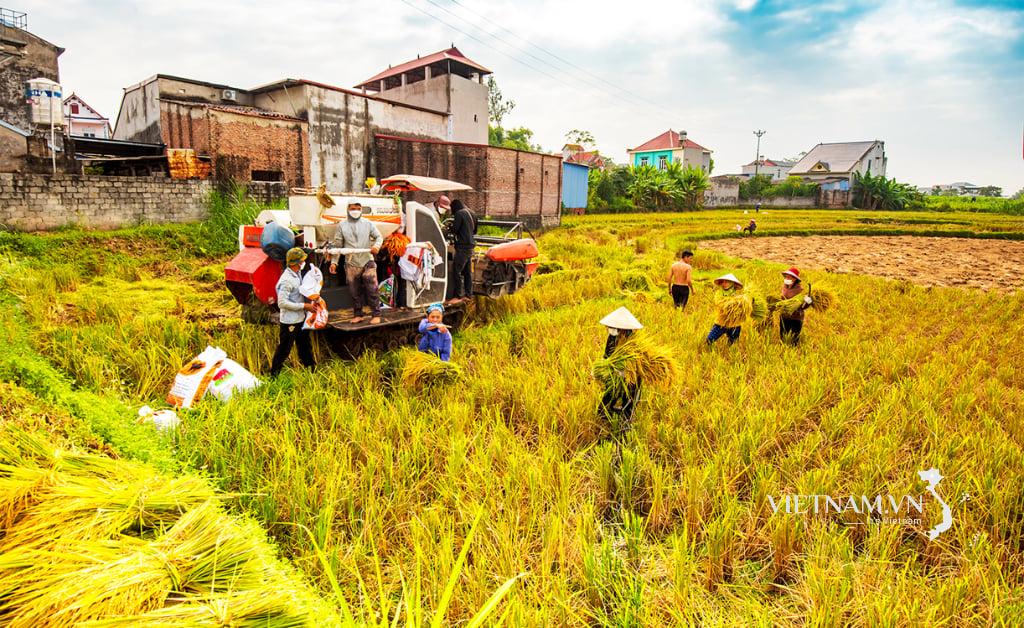
| Illustration photo: hanoimoi.vn |
People love poetry because it stirs the heart, making people feel refined and delighted by its beautiful words and ideas. Poetry is the voice of the soul. Poetry is one of the "refined and powerful weapons we possess, to both denounce and change a wicked and deceitful world , and to make the reader's soul purer and richer" (Thạch Lam). A good poem cannot but originate from a pure and healthy soul. Thanks to the resonance of poetry, people sometimes become stronger and more optimistic in the face of life's "turning points": "There are moments of despair / I lean on poetry to stand up again" (Phùng Quán).
Poetry is the most profound expression of the art of language. Many poems endure through the ages, many verses are cherished by generations, because they convey powerful, deep emotions and feelings through concise, evocative language, rich in imagery and rhythm. A good poem must first and foremost be evocative. From a single good verse, countless colors, images, sounds, and metaphors can be conjured up in the reader's mind, along with rich associations from many angles and dimensions, reflecting on each person's individual exploration and perception. Of course, regardless of the perspective or dimension, a good poem, a good verse, must have a "common denominator": satisfying humanity's need to seek and yearn for beauty, and guiding people to appreciate and create according to the laws of beauty.
Whether it's traditional poetry genres that demand strict rules and rhyme like quatrains, seven-syllable lines, seven-syllable octaves, and six-syllable lines, or modern poetry that is open, free, and unrestrained, good poetry must aim to purify the soul, beautify human spiritual life, and instill faith and love in life. Therefore, when analyzing, commenting on, evaluating, and assessing a poem, a line of poetry, or even a collection of poems, one must adhere to this common denominator. If one goes against this common spirit, poetry fails to fulfill its noble purpose.
With the above understanding, it's easy to understand why public opinion reacted negatively to the poetry collection titled "Picking Up Your Corpses to Build a Museum" by a young poet, as it lacks aesthetic appeal in its language and easily evokes negative (if not outright negative) associations with its message.
Many comments on social media included: "What kind of poetry is this, like an execution ground full of corpses?", "The title of the poetry collection is both inhumane and meaningless", "The author picked up his lover's corpse and put it in a museum, letting him rot in prison"... These comments partly show that the title of the poetry collection failed from the very beginning in terms of aesthetic taste for the majority of poetry readers.
It's regrettable that this poetry collection was chosen to receive an award from a leading and prestigious literary association in the country. Even though the award was revoked just a few days later. Leaving aside the question of impartiality, this incident reveals the limitations in the literary appreciation and evaluation abilities of those "in charge of judging."
Source: https://www.qdnd.vn/van-hoa/doi-song/tho-ca-dung-am-mui-hoi-ham-1028789



![[Photo] National Assembly Chairman Tran Thanh Man working with the Standing Committee of the Law and Justice Committee](https://vphoto.vietnam.vn/thumb/1200x675/vietnam/resource/IMAGE/2026/05/21/1779378929214_ndo_br_1-4610-jpg.webp)
![[Photo] General Secretary and President To Lam presides over a working session with the Central Policy and Strategy Committee on the development of the materials industry.](https://vphoto.vietnam.vn/thumb/1200x675/vietnam/resource/IMAGE/2026/05/21/1779359935432_a3-bnd-3129-1412-jpg.webp)


















































































Comment (0)