Teething is a natural process that marks a child's development. Most babies begin teething their first milk tooth around 6 months of age, although some may get theirs as early as 4 months or later, after 12 months.
When do babies start teething?
According to the UK National Health Service (NHS), every baby's teething process is different. However, most children will begin teething within their first year of life.
Most babies begin teething around 6 months of age, but some may start teething before 4 months or after 12 months. Some babies are even born with teeth. By around 2-3 years old, most children will have all 20 primary teeth. Then, from around 6 years old onwards, children begin the process of replacing their primary teeth with permanent teeth.
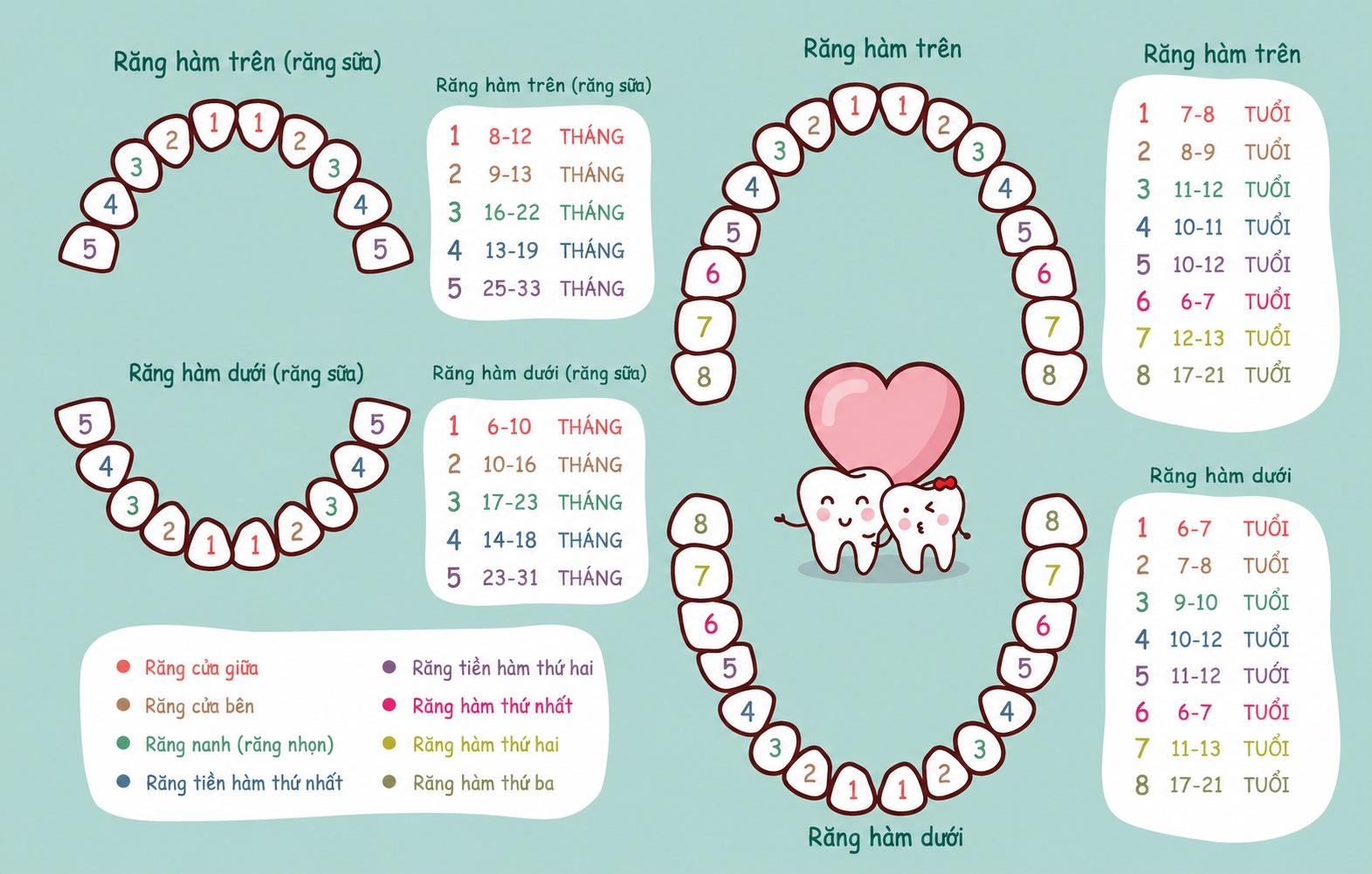 |
The timing of the eruption of baby teeth and permanent teeth in children. Graphic: P. Mai. |



Common signs when babies are teething
Not all babies show noticeable signs of teething. Some babies experience little to no discomfort, while others may cry more.
Common symptoms include:
- The gums are swollen, red, and slightly painful at the site where the tooth is about to erupt.
- Excessive drooling.
- They like to bite, chew, or gnaw on objects.
- Frequently putting hands in your mouth.
- They rub their cheeks or pull their ears.
- Irritability and crying more than usual.
- Poor sleep or frequent awakenings.
- One cheek may be flushed red.
- Body temperature rises slightly but usually does not exceed 38°C.
For many children, these symptoms only last about 2-3 days around the time the tooth erupts and then improve on their own.
If a child has a fever of 38°C or higher, frequent diarrhea, vomiting, refuses to feed, or shows signs of prolonged fatigue, parents should not assume it's just teething but should take the child to the doctor to find the cause.
What can we do to help children feel more comfortable?
During the teething phase, parents can apply several simple measures to reduce discomfort for their child, such as:



- Give your baby teething rings or toys that have been chilled in the refrigerator to chew on.
- Use a clean finger or a soft cloth to gently massage the gums.
- Wipe away saliva frequently to minimize irritation to the chin and around the mouth.
- Give your child soft, cool foods if they have started eating solid foods.
- If a child is in significant pain and cries for an extended period, consult a doctor before using any appropriate pain medication.
In addition, parents should avoid using teething necklaces as they pose a risk of suffocation or strangulation. Teething gels of unknown origin or containing unsuitable ingredients should also not be used on children without consulting a doctor.
Source: https://znews.vn/thoi-diem-moc-rang-o-tre-nho-post1663715.html