Promoting digital transformation in healthcare nationwide.
According to Dr. Vuong Anh Duong, Deputy Director of the Department of Medical Examination and Treatment Management ( Ministry of Health ), the National Assembly's enactment of the Law on Disease Prevention is of great importance in perfecting the legal framework for disease prevention, care, protection, and improvement of people's health in the new situation.
This is also a concrete step in implementing the Party's major policy on Resolution No. 72-NQ/TW dated September 9, 2025, of the Politburo "On some breakthrough solutions to strengthen the protection, care, and improvement of people's health," which emphasizes the task of organizing regular health check-ups and free screening for the people; and at the same time, promoting the digital transformation of healthcare and establishing a unified health record management system nationwide.
On May 15, 2026, the Prime Minister issued Decree No. 165/2026/ND-CP detailing and guiding the implementation of several articles of the Law on Disease Prevention, which provides relatively comprehensive regulations on the scope, subjects, implementation roadmap, organizational basis, coordination mechanism, and resources for ensuring periodic health check-ups, screening, and management of people's health data.
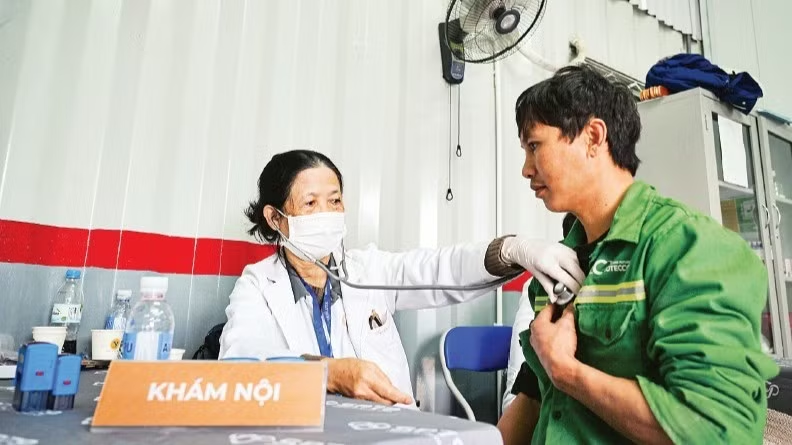
According to this Decree, the following groups are entitled to free periodic health check-ups or screenings at least once a year: the elderly, people with disabilities, poor and near-poor households, people with meritorious service, people with chronic diseases, people living in ethnic minority areas, mountainous areas, areas with difficult socio-economic conditions, and some other groups as prescribed.
The provincial People's Committee is responsible for organizing free periodic health check-ups or screenings for these individuals. Based on socio-economic conditions, budget balancing capacity, and legally mobilized resources, localities may decide to expand the scope and content of examinations within their jurisdiction.
The decree stipulates that health examinations must be conducted at qualified medical facilities as prescribed by law. The examination results are compiled, evaluated, an electronic health record is created, and integrated into the VNeID application as prescribed.
The participation rate among the population is still low.
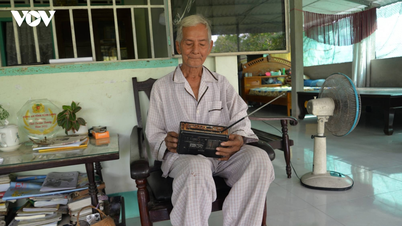
![[Video] From 2026, senior citizens will receive free annual health check-ups at least once a year.](https://vphoto.vietnam.vn/thumb/192x108/vietnam/resource/IMAGE/2026/06/24/1782258548731_nguoi-cao-t-uoi-jpg.webp)
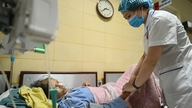

According to Deputy Minister of Health Vu Manh Ha, in order to implement the above-mentioned contents, the Ministry of Health has issued professional guidelines on periodic health check-ups for the people, creating a basis for localities to implement them uniformly.
However, initial assessments indicate that many localities and units still face difficulties and obstacles in the implementation process, especially regarding: organizing periodic health check-ups and screenings; allocating human resources, funding, and facilities; collecting, updating, and sharing health check-up data; creating, managing, and utilizing electronic health records on the VNeID platform; and the coordination mechanism between the health sector and relevant agencies and units at the local level.
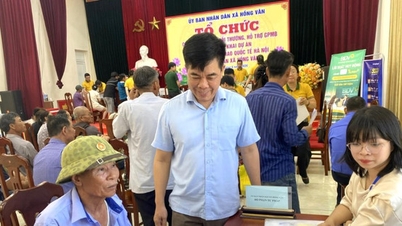
According to Tang Chi Thuong, Director of the Ho Chi Minh City Department of Health, the biggest challenge currently is not the capacity to organize examinations, but rather the low participation rate of the population. Therefore, it is necessary to strengthen mobile examination teams, expand hospital operations, and bring medical services closer to the people to facilitate regular health check-ups.
In addition, localities need to review and compile complete lists of eligible individuals down to each household and neighborhood, ensuring that no one eligible for examination is missed; at the same time, they should strengthen the capacity of grassroots healthcare, promote the connection of health examination data with electronic health records, and gradually build a comprehensive health database for the people in the area.
To promptly overcome the aforementioned difficulties and limitations, Deputy Minister Vu Manh Ha suggested that localities organizing free periodic health check-ups or screenings for the people should implement them according to target groups and appropriate priority schedules; closely integrate them with health insurance medical examination and treatment activities, school health services, occupational disease examinations, and create and manage electronic health records for the people.
Regarding finances and resources for implementation, localities with the ability to balance their budgets should proactively allocate funds for implementation.
For localities still facing difficulties, it is necessary to compile a complete list of funding needs to report to the Ministry of Finance and competent authorities for consideration; at the same time, strengthen the mobilization of social resources and other legitimate resources, ensuring a proactive approach to implementation.
Professionally, the Ministry of Health will continue to review and refine the guidelines to ensure consistency in implementation; and at the same time, study mechanisms to expand the scope of benefits and payment methods to report to competent authorities for consideration.
The Ministry of Health is urgently finalizing guidelines on collecting, updating, and interconnecting health examination data and creating electronic health records on the VNeID application, ensuring consistent implementation nationwide and meeting information security and privacy requirements.


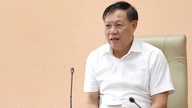
According to the Director of the Hanoi Department of Health, Nguyen Trong Dien, in order to develop a scientifically sound and compliant plan for free health check-ups and screenings for the public in 2026, avoiding duplication, the Department of Health has requested the People's Committees of communes and wards to review and report data for this purpose. Based on this, localities will compile lists of individuals needing examinations or screenings to develop organizational plans and send invitations according to schedule.
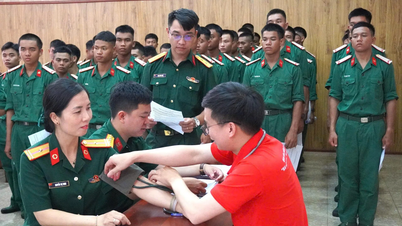
The target groups being reviewed include: the elderly, people with disabilities, poor and near-poor households, people with meritorious service, people with chronic diseases; preschool children, primary and secondary school students; workers and individuals under the management of the Ministry of National Defense and the Ministry of Public Security in the area.
Source: https://nhandan.vn/thong-nhat-trong-kham-suc-khoe-dinh-ky-cho-nguoi-dan-post971033.html





![[Photo] Prime Minister Le Minh Hung presides over the thematic session on promoting science and technology development and innovation.](https://vphoto.vietnam.vn/thumb/1200x675/vietnam/resource/IMAGE/2026/06/23/1782207872934_ndo_br_dsc-1724-jpg.webp)






























![[Infographic] Cristiano Ronaldo: The first player to score in 6 World Cups](https://vphoto.vietnam.vn/thumb/402x226/vietnam/resource/IMAGE/2026/06/24/1782279244766_chatgpt-image-jun-24-2026-11-56-56-am-jpg.webp)