

LPBank has just issued an urgent notice to its customers regarding a scam targeting bank accounts through labor export brokerage. According to the warning, the perpetrators often post job advertisements for work in Germany, Japan, South Korea, or Taiwan (China) with high salaries, simple procedures, and minimal requirements to attract job seekers.
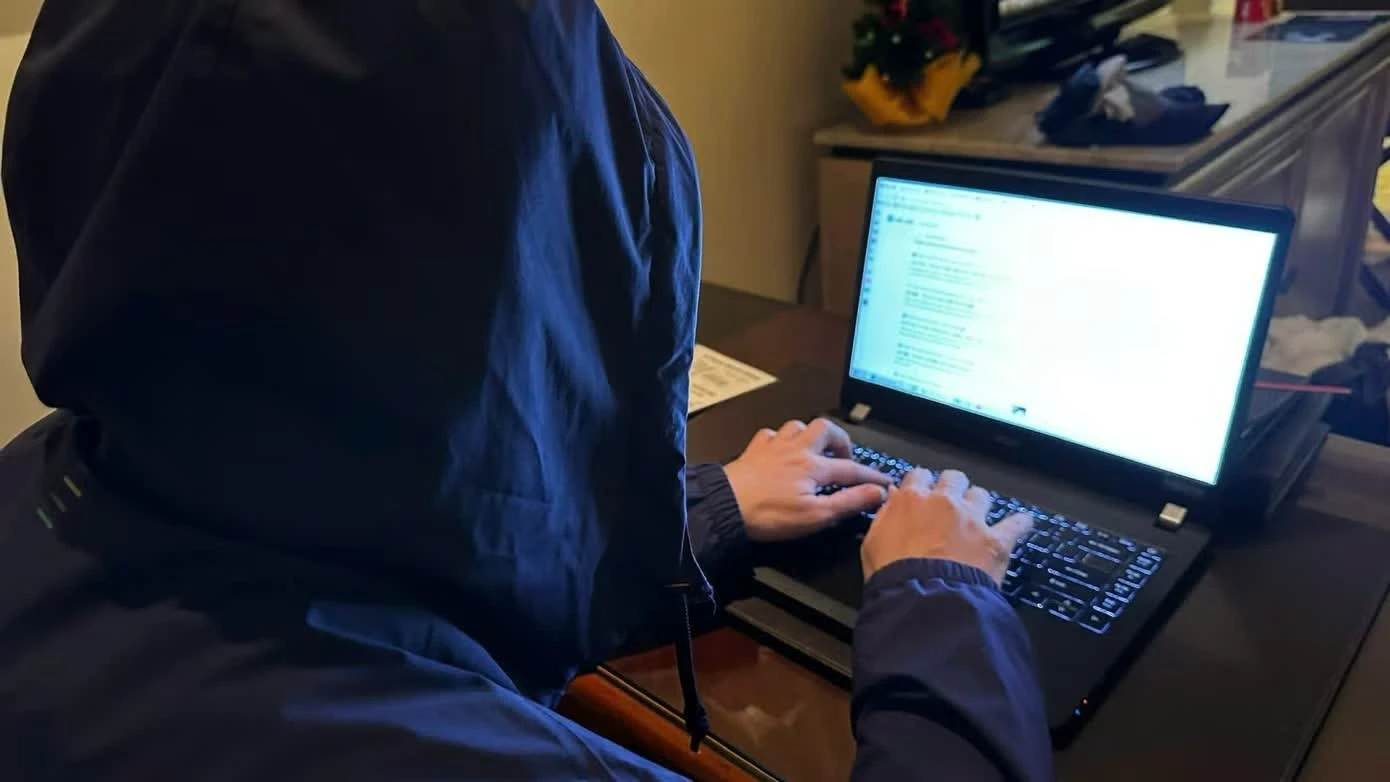
After gaining trust, the perpetrators impersonate employees of labor export companies to guide people through the application process. People are asked to provide various personal information such as their national identity card, portrait photos, bank account numbers, or transfer fees such as application fees, deposit fees, and processing fees.
Alarmingly, many victims are also tricked into installing unfamiliar applications or accessing links from unknown sources under the guise of "profile verification," "completing procedures," or "synchronizing information." In reality, these are applications containing malware that allows attackers to take control of the phone, steal personal data, and bank login information.
After gaining control of the device, criminals can silently monitor the user's actions, obtain OTP codes, passwords, or biometric information to transfer money out of the account. In many cases, hundreds of millions of dong have been stolen in just a few minutes after following instructions.
Beyond just labor export scams, banks are also noticing an increase in other high-tech tricks. VPBank reports that online applications capable of spoofing phone numbers and voices, known as Voice Phishing, are appearing.
With this technology, perpetrators can create calls that look exactly like bank numbers, police numbers, or even impersonate relatives to manipulate victims. These calls are often staged with emergency scenarios such as accounts showing signs of being compromised, involvement in a crime, needing information verification, or requesting money transfers to a "secure account."
During the exchange, fraudsters will attempt to exploit confidential information such as OTP codes, login passwords, biometric data, or trick users into downloading applications containing malware. In some cases, users are even tricked into granting remote access to their phones, allowing the perpetrators to control the entire device and carry out unauthorized transactions.
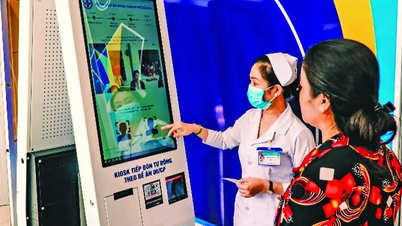
Alongside these warnings, the banking sector is also strengthening its application of technology to combat fraud. One notable solution is the Customer Risk Management, Monitoring and Prevention Information System (SIMO), which the State Bank of Vietnam piloted from January 2024 and officially launched in May 2024.
This system allows credit institutions to share information about suspicious accounts when signs of fraud are detected. From this centralized data source, banks can quickly make decisions to block transactions or require additional verification before customers can make online money transfers.
According to the latest update from the State Bank of Vietnam, as of May 17th, more than 4 million customers have received warnings from the SIMO system. Notably, over 1.3 million customers proactively paused or canceled transactions after receiving the warnings, with a total transaction value of approximately 4,400 billion VND. This figure shows that online financial fraud remains complex and reflects the initial effectiveness of technological solutions in protecting people's assets.
Source: https://baolaocai.vn/thu-doan-lua-dao-moi-rat-tinh-vi-duoc-cac-ngan-hang-canh-bao-la-gi-post900306.html


![[Image] Close-up view of the interchange connecting the two expressways and Long Thanh Airport.](https://vphoto.vietnam.vn/thumb/1200x675/vietnam/resource/IMAGE/2026/05/25/1779703378210_ndo_br_z7863716673926-224453a31600126cce10622af6290afd-4549-jpg.webp)


![[Image] Hanoi's urban life under the challenge of a "scorching hot" environment](https://vphoto.vietnam.vn/thumb/1200x675/vietnam/resource/IMAGE/2026/05/25/1779706979265_nang-nong-t5-2026-minh-duy-7-4636-jpg.webp)























































































Comment (0)