

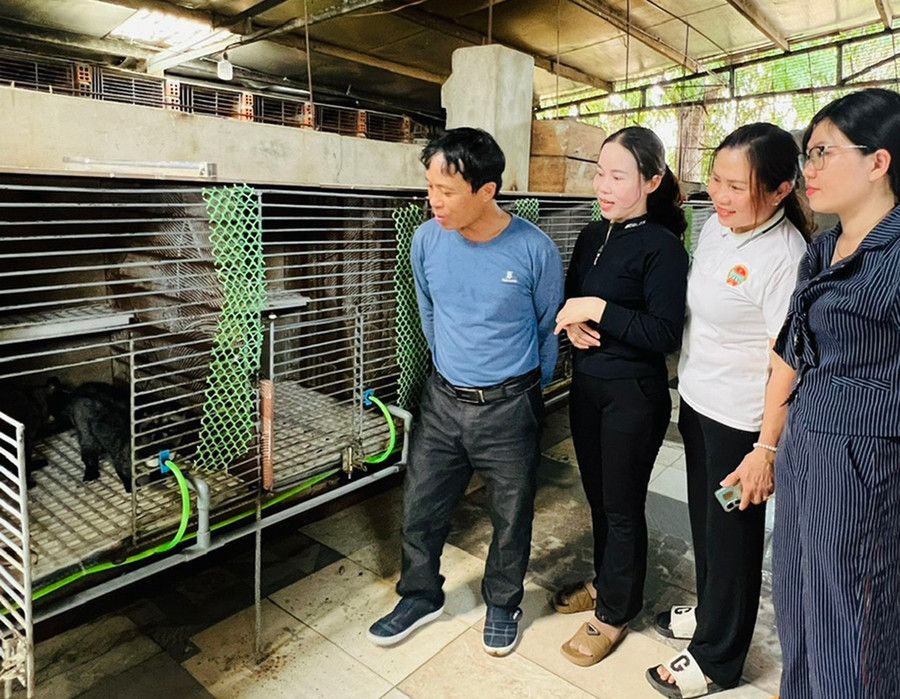
After several failed attempts at breeding pigs and raising wild boars for meat, in early 2020, Ms. Binh and her husband invested 150 million VND to buy 10 civets (7 females, 3 males) to raise. Initially, due to a lack of experience, they faced many difficulties in caring for and preventing diseases in the civets. After a period of learning and accumulating experience, the family understood the characteristics of civets and adjusted their care methods accordingly.
Civets are animals with high economic value, their meat is delicious and popular in the market. After more than a year of breeding, Ms. Binh's civet herd has developed well and begun to reproduce regularly. Thanks to this, she quickly recovered her investment.
Ms. Binh shared: "Civets are easy to raise and rarely get sick. Their main food consists of bananas, fish, chicken necks, chicken eggs, and spoiled duck eggs... which are cooked, cooled, and fed once in the afternoon. I vaccinate the civets against diseases 1-2 times a year. The selling price of breeding civets ranges from 9 million to 30 million VND per pair (including one female and one male), depending on the rearing time."
According to Ms. Binh, civets have the characteristic of sleeping during the day and being awake at night. During the day, she can still work as a security guard at a school near her home. In the evening, she prepares food for the civets. Besides ensuring proper nutrition, she places special emphasis on hygiene in the cages to prevent disease outbreaks. From the initial 10 civets, her farm now has up to 100, including breeding civets and young civets.
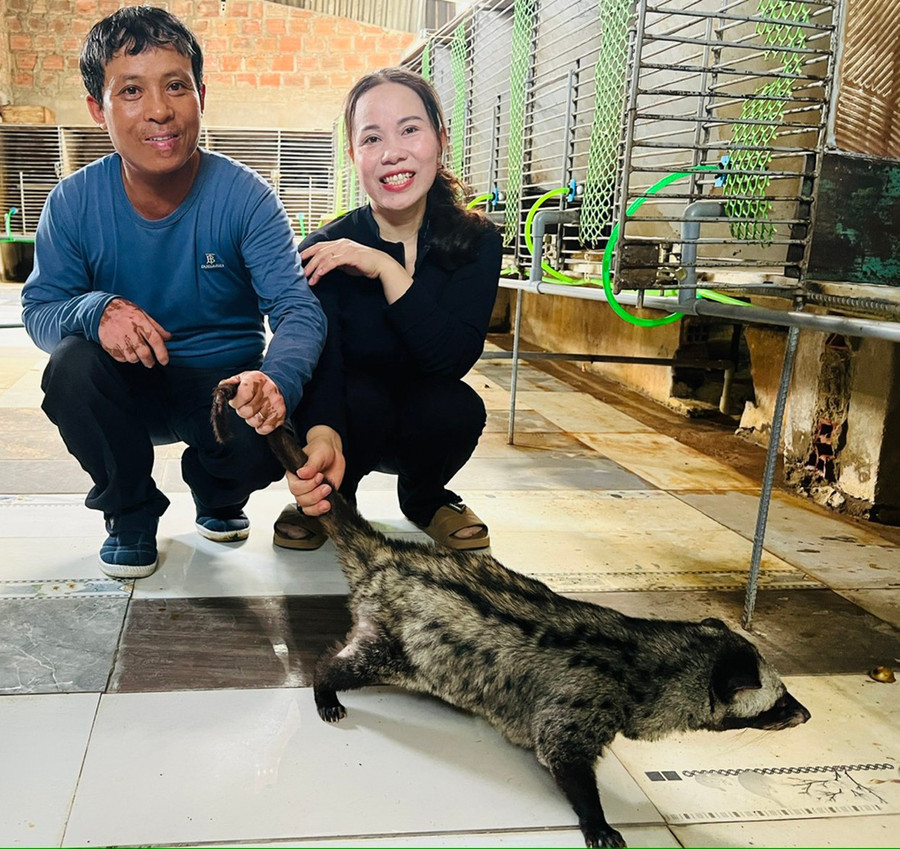
“Civets begin breeding after 12-14 months, but the best time is when the animals are around 20 months old. During this period, breeding civets need to be provided with sufficient nutrients, especially calcium. Female civets give birth 2-3 times a year, with 3 to 6 offspring per litter. After 45 days old, the young civets are separated from the group and cared for until they are strong enough to be sold,” Ms. Binh informed.
Currently, in addition to supplying breeding minks to households in the province, Ms. Binh also sells them to customers in Da Nang, Kon Tum , and other places. Thanks to the stable breeding of her mink herd and consistently high prices, her family earns approximately 500 million VND annually after deducting expenses.
Besides selling breeding stock and commercial minks, Ms. Binh also provides technical support to other households to develop their economy together using this model, contributing to increased income and creating jobs for many local workers.
Sharing her future plans, Ms. Binh said: “My family plans to expand the farm and increase the number of minks raised to 100 for commercial purposes. Minks raised for meat are expected to reach 2.5-4 kg/animal after one year, with a selling price ranging from 1.3-1.5 million VND/kg.”
Ms. Tran Thi Phuong, Chairwoman of the Farmers' Association of Ia Hiao commune, commented: "Ms. Nguyen Thi Thanh Binh's family is the first household in the commune to implement the civet farming model, bringing high economic efficiency. Recently, the Association organized a visit for its members to observe and learn from this model in order to replicate it."
Source: https://baogialai.com.vn/thu-nhap-nua-ty-dong-tu-nuoi-chon-huong-post320033.html













































































Comment (0)