

This is not just a technical problem, but a problem of mechanisms, of people, and of how we define the role of journalism in a society that is changing faster than ever before.
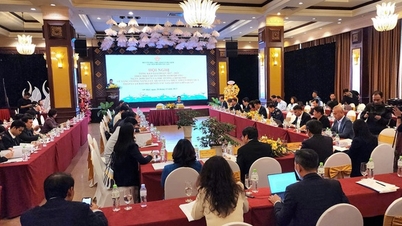
Many media outlets are currently facing a dilemma: simultaneously fulfilling their political and informational mission – which is inherently public service – and struggling to survive and thrive in a fiercely competitive environment where cross-border platforms with enormous financial resources are dominating the game. The pressure to "perform their duties well, receive additional tasks, but lack additional resources," as shared by Mr. Do Duc Hoang, Deputy General Director of Vietnam Television (VTV), is weighing heavily on journalists who are striving to create content under limited financial, equipment, and human resources. The economic challenges facing journalism are also becoming a major bottleneck.
Mr. Phung Cong Suong, Editor-in-Chief of Tien Phong Newspaper, clearly stated the double challenge: "Resources are limited, while the cost of digital transformation is very high." This puts the press in a vicious cycle - lack of investment makes it difficult to retain talented people; a lack of skilled personnel makes it even harder to create high-quality products.
Furthermore, the differences between the legal frameworks for businesses and the press create a significant disparity in operational capabilities and media competition. Businesses are allowed to do anything that the law does not prohibit, while the press only does what the law permits. Flexibility and creativity—essential elements for survival in the digital media environment—are therefore often limited.
In the face of these pressures, amending the Press Law to include regulations on the specific organizational and financial model of the press, in line with the realities of digital transformation and the economics of journalism, is essential. In addition, a special mechanism is needed to provide financial support to the press to enhance the effectiveness of policy communication. Essential political tasks and information dissemination activities serving political objectives should be identified, and the State should ensure funding – possibly through commissioning, assigning tasks, bidding, purchasing services, or providing regular support – with a specific list of tasks using the state budget.
This is not just financial support, but a guarantee for a force to hold firm in the "ideological battleground" amidst the information explosion. This has been repeatedly emphasized by Mr. Le Quoc Minh, Editor-in-Chief of Nhan Dan Newspaper and President of the Vietnam Journalists Association . According to Mr. Le Quoc Minh, to enhance the effectiveness of propaganda and protect the Party's ideological foundation in the digital media environment, it is necessary to build a mechanism for the State to commission journalistic products on digital platforms for official media outlets.
Furthermore, many agree that if there were a transparent and open ordering mechanism with clear content and format criteria, it would not only ensure a stable revenue stream for media organizations but also help improve content quality and avoid chasing views and sensational news.
Another noteworthy perspective offered by Mr. Phung Cong Suong is: "The press should be considered a key cultural and media industry, to benefit from appropriate financial and tax policies." This is both an acknowledgment of its social role and opens up the possibility of accessing preferential investment policies, loans, tax reductions, etc., like other strategic industries. These are prerequisites for the sustainable, professional, and competitive development of the press in the digital age. Only when its position in the national economic and cultural landscape is properly recognized can the press maximize its potential and fulfill its mission.
The 100th anniversary of Vietnam's Revolutionary Press Day is not only an occasion to express gratitude and reflect, but also an opportunity to redefine the role of journalism in modern society. Journalism is facing a major turning point, and it cannot be left alone to face challenges – a pioneering force in protecting ideological foundations and preserving social trust. Timely, coordinated, and practical policies will help journalism overcome difficulties, thrive, and continue to be a leading force on the ideological and cultural front in the current context.
Source: https://www.sggp.org.vn/tiep-them-nguon-luc-de-bao-chi-vuon-minh-post800172.html


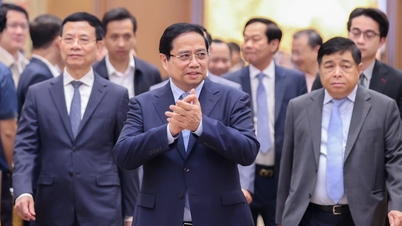
![[Photo] Prime Minister Pham Minh Chinh presides over a meeting on private sector economic development.](/_next/image?url=https%3A%2F%2Fvphoto.vietnam.vn%2Fthumb%2F1200x675%2Fvietnam%2Fresource%2FIMAGE%2F2025%2F12%2F20%2F1766237501876_thiet-ke-chua-co-ten-40-png.webp&w=3840&q=75)





































































Comment (0)