

And now, the province is entering a new phase – building model villages: greener, cleaner, more civilized, and more sustainably developed.
New Rural Development should not be merely about meeting standards.
To date, 69 out of 95 communes in Quang Tri province have met the standards for New Rural Development, achieving a rate of 72.6%. These figures not only reflect the efforts of the government but also the result of the unity of tens of thousands of people in this land of hot winds and white sand. However, the leaders of Quang Tri province frankly acknowledge: "New Rural Development should not stop at meeting the standards, but must truly bring a quality of life to the people." That is why Quang Tri proactively focuses on directing the implementation of the program to build "model New Rural Residential Areas" and "model Villages" in many localities.
Tra Loc village in Hai Hung commune, Hai Lang district, is one of the pioneering areas in building model residential areas. More than a decade ago, it was a poor, purely agricultural village with muddy roads, and the lives of its people depended entirely on a few acres of rice paddies and supplementary occupations. But today, visitors to Tra Loc encounter a peaceful, clean, and beautiful rural landscape with tree-lined roads, bougainvillea hedges, and a series of well-maintained houses. The village cultural center has become the "heart" of the community, hosting various community activities: meetings, performing arts, group activities, and vocational training. The commune and village authorities have also digitized administrative records, organized online meetings, and created Zalo groups to disseminate policies and mobilize the people… As a result, the administrative apparatus is streamlined, and interaction with the people is more timely and transparent.
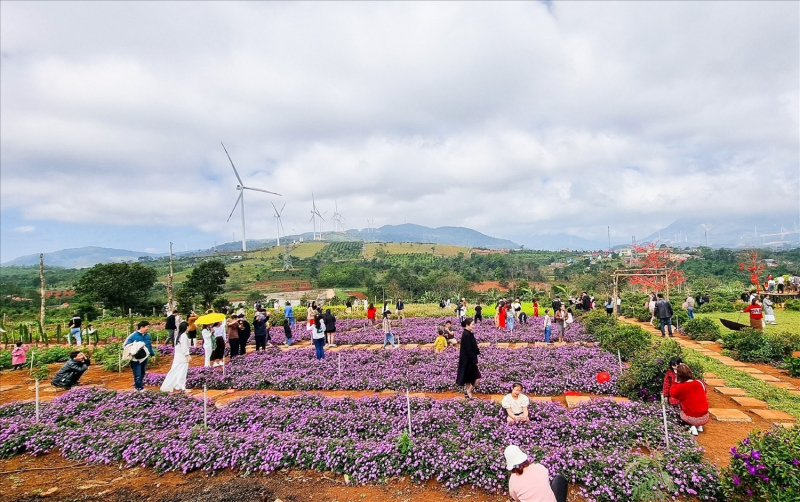
In Vinh Linh district, Thuy Ba Dong village in Vinh Thuy commune, with 259 households, stands out. After three years of building a model new rural area, the village has undergone many positive changes. The villagers contributed more than one-third of the total of over 1.5 billion VND mobilized for infrastructure development such as roads, a cultural center, and a lighting system. To date, the village has concreted and asphalted over 96.4 km of roads, 100% of the roads have lighting systems, the percentage of trained workers has reached over 51.6%, and the percentage of people participating in health insurance has reached over 95%.
Another village in Vinh Linh district, Co My village in Vinh Giang commune, is also a prime example. With the unanimous support of the people, the village has completed its concrete and asphalt road system; cultural facilities have been built and renovated to meet the needs of the people; and cultural, artistic, and sports activities are regularly maintained. Mr. Thai Van Thanh, Chairman of the Vinh Linh District People's Committee, shared that to achieve these results, the district has implemented many comprehensive solutions, including issuing resolutions and specialized directives, developing projects and plans to mobilize all resources and the participation of the entire population. The district also focuses on developing production towards clean, organic agriculture , applying high technology, linking production and consumption of products, and developing key local products to create a breakthrough in agriculture, linking agriculture with commercial services to increase people's income and reduce poverty sustainably.
By the beginning of 2025, Vinh Linh district had added 13 villages recognized as model new rural areas, bringing the total to 72 out of 149 villages meeting the standards. Typical villages include Liem Cong Dong in Hien Thanh commune; Chap Le in Vinh Chap commune; Nam Cuong in Trung Nam commune; Thai Lai and Tan Hoa in Vinh Thai commune… These achievements not only improve the quality of life for the people but also create a solid foundation for the socio-economic development of Vinh Linh district in the coming years.
Aiming for a livable countryside.
The journey to building model villages in Quang Tri still has much work to be done: narrowing the gap between regions, improving living environments, and developing community culture. But it is clear that the people are at the center of change. In the highlands of Huong Hoa, many villages of the Van Kieu - Pa Co ethnic group are now filled with laughter and conversation. "Before, life was difficult, everyone only thought about worrying about food. Now, houses have electricity and water, children can go to school, and most of the roads to the villages are paved with clean concrete. We can plant trees, raise chickens, and do tourism…," said Mr. Ho Van Phuc, a respected elder in Cheng village, Huong Phung commune, proudly.
In Vinh Lam commune (Vinh Linh district), villages like Tien My 2 and Lam Cao once faced many difficulties in socio-economic development, but thanks to the concerted efforts of the entire political system and the people, these villages have undergone a spectacular transformation: the infrastructure has been invested in comprehensively, agricultural production applies high technology, and people have a strong awareness of preserving the environment and rural landscape.
Late in the afternoon, golden sunlight gently bathed the clean, straight village roads of Vinh Lam commune. Standing in Tien My 2 hamlet, one of the newly recognized model new rural areas, we felt an unusual sense of peace. Just a few years ago, this area was still a purely agricultural commune, with narrow roads, difficult transportation, and people's income mainly dependent on rice, chickens, and pigs. But now, from Tien My 2 to Lam Cao, Duy Vien…, these villages have truly transformed.
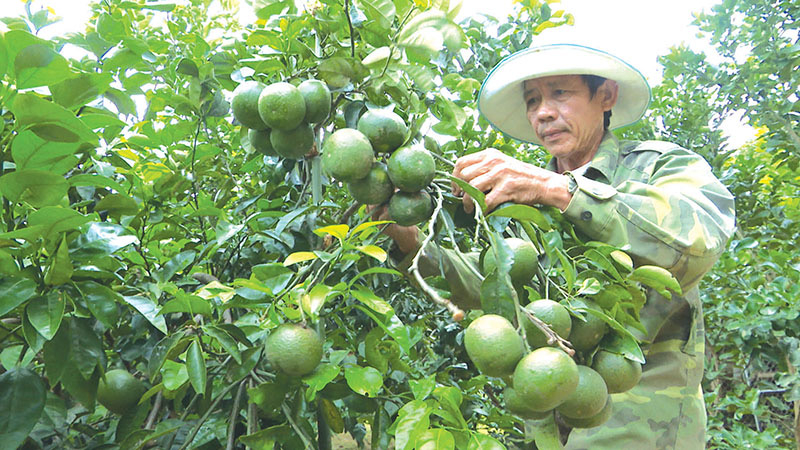
Walking along the inter-village roads, the first thing that caught our eye was not only the sturdy buildings, but also the smiles of the people—simple, friendly, and full of rural charm. They greeted each other upon meeting, yielded to pedestrians, and readily stopped their vehicles to help each other upright a fallen basket of vegetables. These simple acts, for us, represent the most profound "model" that no set of criteria can explicitly state.
Mr. Nguyen Van Hieu, a farmer in Tien My 2 village, slowly recounted: “Before, during the rainy season, the mud was up to our feet, and we had to use flashlights to go out at night. Now, it's as bright as a city street, with concrete roads right up to our alleys. I never imagined I'd live this long and see my hometown change so much!” These changes didn't happen naturally. It was a whole process of concerted efforts between the government and the people. Some contributed labor, some contributed resources, and some contributed ideas. In some villages, people even voluntarily donated their garden land to expand village roads. In Vinh Lam, building a new rural area isn't an administrative order, but a story of trust and collective effort!
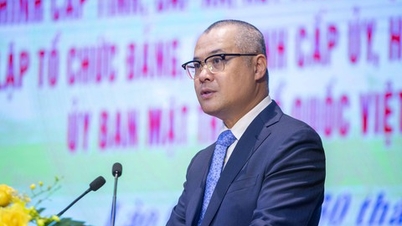
Mr. Ha Sy Dong, Acting Chairman of the Quang Tri Provincial People's Committee, shared that to date, Quang Tri province has hundreds of villages that have achieved model new rural area standards, with dozens of communes achieving advanced new rural area standards. Each livable rural area is not only a source of pride for the local people but also the result of the responsible and effective involvement of the government, the cohesion of the community, and the aspiration for sustainable development.
Source: https://cand.com.vn/doi-song/tinh-quang-tri-xay-dung-nhung-lang-que-kieu-mau-i766905/












































Comment (0)