

On the occasion of the 79th anniversary of National Day, General Secretary and President To Lam wrote an article titled: "Digital transformation - An important driving force for developing productive forces, perfecting production relations, and leading the country into a new era."
DIGITAL TRANSFORMATION - A KEY DRIVING FORCE FOR DEVELOPMENT
FORCES OF PRODUCTION, IMPROVING PRODUCTION RELATIONS
BRINGING THE COUNTRY INTO A NEW ERA
1. Immediately after seizing power, our Party deeply recognized the importance of developing productive forces and gradually reforming and perfecting production relations. This process took place in many stages, reflecting the continuous movement and development of the Vietnamese Revolution. The August Revolution of 1945 opened a new chapter in the nation's development under conditions where the country, having just gained independence, had to embark on a protracted resistance war. Starting from a backward agricultural base, having endured thousands of years of feudalism and hundreds of years of colonial rule, our Party implemented the "land to the tiller" policy to give land to farmers, abolish private ownership of the means of production, and move towards reforming production relations, creating the foundation for building a socialist mode of production.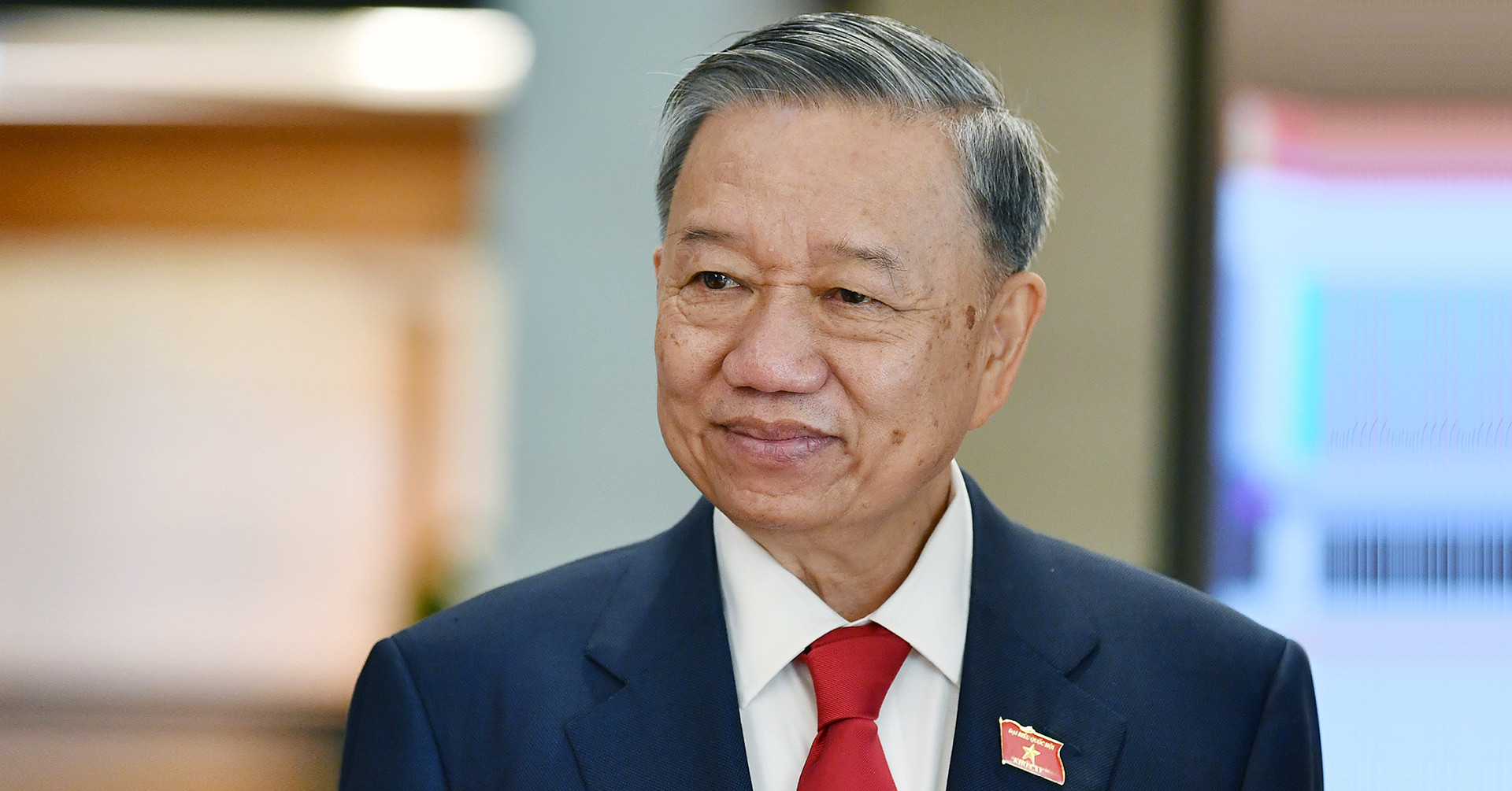
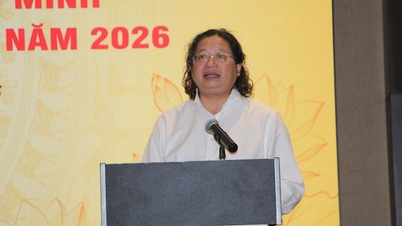
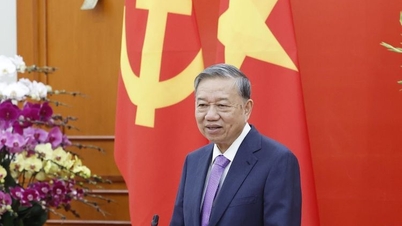
General Secretary and President To Lam . Photo: Hoang Ha
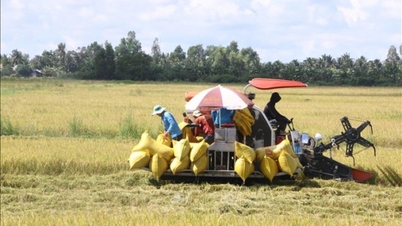
During the period 1954 - 1975, our country's revolution simultaneously carried out two strategic tasks: the socialist revolution in the North and the national democratic revolution in the South. In the North, focusing on building the material and technical basis of socialism, consolidating and perfecting new production relations based on three pillars: public ownership, centralized planned management and distribution according to labor [1], brought about a remarkable development of productive forces. In 1975, our country was completely unified, opening a new chapter in the construction of socialism. The Fourth Party Congress in 1976, based on an assessment of the country's major characteristic, was that from a predominantly small-scale production economy , it went straight to socialism, bypassing the capitalist development stage; It has set forth the line: firmly upholding the proletarian dictatorship, promoting the collective ownership rights of the working people, and resolutely carrying out three revolutions simultaneously: in production relations, science and technology, and ideology and culture [2]. In which, the scientific and technological revolution is key, and promoting industrialization is the central task.The Sixth Party Congress resolved to carry out comprehensive reforms, focusing on economic reform, transforming the economic structure, developing diverse economic sectors, reforming management mechanisms, abolishing subsidies, and gradually transitioning to a socialist-oriented market economy. (From 1979 to before the 6th Party Congress in 1986, our country experienced serious crises, partly due to the lack of synchronization between productive forces and production relations. Productive forces are hampered not only in the case of backward production relations, but also when production relations have elements that go too far beyond the level of development of productive forces [3]. From that correct understanding, the 6th Party Congress decided to carry out comprehensive reforms, focusing on economic reform, transforming the economic structure, developing diverse economic sectors, reforming the management mechanism, abolishing subsidies, and gradually moving towards a socialist-oriented market economy. Resolution No. 10-NQ/TW dated April 5, 1988 of the Politburo was a breakthrough in reforming production relations in agriculture when it officially recognized households as autonomous economic units and granted long-term land use rights to farmers, in accordance with the development requirements of productive forces [4]. Just one year after implementing the Politburo's Resolution, Vietnam, from a country with chronic food shortages, produced 21.5 million tons of rice and exported 1.2 million tons of rice for the first time. The adjustment of production relations in accordance with the Politburo created new impetus for the development of productive forces, helping the country overcome the crisis and enter the period of comprehensive reform and international integration.
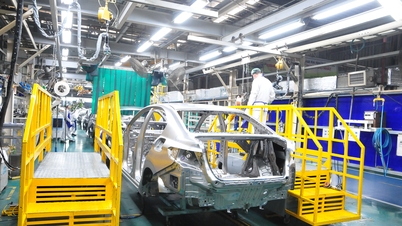
Adjusting production relations appropriately has created new impetus for the development of productive forces, enabling the country to overcome the crisis and enter a period of comprehensive reform and international integration.2. Entering the 21st century, Vietnam has achieved tremendous successes in socio-economic development. The estimated average GDP growth rate for the period 2021-2025 is 5.7-5.9% per year, placing it among the leading countries in the region and the world ; the size of the economy is projected to increase 1.45 times, reaching an estimated US$500 billion by 2025. Per capita income is expected to increase sharply from US$3,400 to approximately US$4,650, placing Vietnam in the group of upper-middle-income countries by 2025. Macroeconomic stability is maintained, inflation is controlled; policies are implemented flexibly and effectively; international standing and prestige are increasingly enhanced; economic growth is sustained at a high level, and people's living standards have improved significantly.

Entering the 21st century, Vietnam has achieved tremendous successes in socio-economic development. Photo: Hoang Ha
The workforce is projected to reach 53.2 million by 2025, with a positive structural shift; the proportion of agricultural workers has sharply decreased to 25.8%; and the quality of human resources is constantly improving, with 70% of the workforce having received training. High-quality human resources meeting the requirements of the Fourth Industrial Revolution in key sectors such as semiconductor industry, artificial intelligence, and information technology are being focused on development, initially forming a workforce with increasingly sophisticated digital thinking and skills. Artificial intelligence (AI), the Internet of Things (IoT), big data, and cloud computing are gradually becoming important production tools in many industries and fields. Infrastructure, especially digital infrastructure, is being heavily invested in and developed. The telecommunications and broadband internet network covers the entire country, creating a foundation for the development of the digital economy and digital society. However, we also face new challenges. The process of globalization and international integration necessitates an urgent enhancement of the competitiveness of the economy. The Fourth Industrial Revolution is unfolding rapidly, and the development of production tools in the digital economy is creating profound changes in the forces of production, leading to new contradictions with existing production relations. This simultaneously creates the foundation and impetus for the formation of new modes of production in the future, while also demanding fundamental changes in the organization of production and social management. New forces of production are emerging and developing rapidly; however, the quality of human resources still lags behind the requirements of national development in the new era. Training and development to improve the quality of human resources, especially high-tech human resources, remains a major challenge. Production relations still have many inadequacies and have not kept pace with the development of the forces of production. In particular, the mechanisms, policies, and laws are not yet truly synchronized, still overlapping, and have not created a truly favorable environment to attract resources from domestic and foreign investors as well as from the people; the organization and implementation of laws and policies remain a weak point. The work of streamlining and consolidating the state administrative apparatus to be more efficient and effective, reducing the number of departments and intermediate levels, is still inadequate; some parts are still cumbersome, with overlaps between the legislative and executive branches, and have not truly met the requirements for improving the effectiveness and efficiency of management. Some ministries and sectors still take on the tasks of localities, leading to the existence of a "request and grant" mechanism, easily giving rise to negative practices and corruption. The work of downsizing the workforce in conjunction with job positions, improving the quality and restructuring the staff of civil servants and public employees is still not thorough. Administrative reform, digital transformation, and the development of e-government and digital government are still limited. Cumbersome and outdated administrative procedures persist, involving multiple steps and bureaucratic hurdles, wasting the time and effort of citizens and businesses, easily leading to petty corruption, and hindering development. Data connectivity and sharing between the information systems of ministries, departments, and localities and the national database are not yet seamless; many online public services are of low quality and have low user rates; and the operation of "one-stop" service centers at various levels is ineffective in many places. Based on the theoretical foundation of Marxism-Leninism, we clearly understand that in the relationship between productive forces and production relations, productive forces play a decisive role in the development of production relations, and production relations must be constantly adjusted to match the increasingly high level of productive forces. When production relations fail to keep pace with the development of productive forces, they become an obstacle, hindering the progressive development of the entire mode of production, thereby affecting the overall development of the country.
We are facing the need for a revolution with strong, comprehensive reforms to adjust production relations and create new impetus for development.
3. We are facing the need for a revolution with strong, comprehensive reforms to adjust production relations and create new impetus for development. This is the digital transformation revolution, applying science and technology to restructure production relations to suit the remarkable progress of productive forces. Digital transformation is not simply the application of digital technology to socio-economic activities, but also the process of establishing a new, advanced, and modern mode of production – the “digital mode of production” – in which the characteristics of productive forces are the harmonious combination of humans and artificial intelligence; data becomes a resource, an important means of production; and at the same time, production relations also undergo profound changes, especially in the form of ownership and distribution of digital means of production.Digital transformation is not simply the application of digital technology to socio-economic activities, but also the process of establishing a new, advanced, and modern mode of production – the “digital mode of production”. (Changes in production relations will profoundly impact the superstructure, opening up new methods of social governance, creating new tools in state management, and fundamentally altering the way the state and citizens interact, and between different social strata. The digital transformation process needs to be comprehensive and synchronized, taking into account the dialectical relationship between infrastructure and superstructure, in order to build a socialist-oriented market economy that both leverages the power of modern productive forces and ensures the positive nature of the socialist system, in accordance with Vietnam's specific conditions in the new era. To achieve this, leaders of Party committees, government agencies, businesses, and the people must have a full and unified understanding, take responsibility, and be determined to implement the digital transformation process. Simultaneously, it is necessary to focus on implementing several key tasks, as follows: Firstly, perfecting the institutional and legal system, steadfastly pursuing the goal of building a socialist-oriented market economy, while continuously innovating to keep pace with the development trends of the times. Focus on building a legal framework for the digital economy, creating a foundation for Vietnam to seize opportunities from the Fourth Industrial Revolution. Develop strong mechanisms and policies to promote digital transformation in all socio-economic sectors, encourage innovation, and protect intellectual property rights. Regularly review and promptly amend outdated regulations, creating a framework for new economic models such as the sharing economy, circular economy, artificial intelligence, etc., ensuring that the legal framework does not become a barrier to development, while also ensuring national security and protecting the legitimate rights and interests of citizens and businesses.
There is a breakthrough mechanism to attract talent from both within and outside the country; building a human resource development strategy with knowledge, skills, and innovative thinking to meet the requirements of the digital economy and the Fourth Industrial Revolution. (Secondly, unlock and maximize all social resources, accelerating modernization. Develop appropriate mechanisms and policies to mobilize the vast resources of the people, businesses, and economic sectors; resources from land and assets accumulated by the people, transforming these potentials into driving forces and means of production to create more material wealth for society. Create a transparent and open investment environment to strongly attract domestic and foreign capital for the development of science and technology and innovation. Maximize human resources – the decisive factor in the reform process. Develop breakthrough mechanisms to attract domestic and foreign talent; build a human resource development strategy with knowledge, skills, and innovative thinking to meet the requirements of the digital economy and the Fourth Industrial Revolution. Thirdly, reform and build a streamlined, effective, and efficient state apparatus. Eliminate unnecessary intermediaries and reorganize the system towards a multi-sectoral and multi-field approach. Promote decentralization and delegation of power, coupled with enhanced inspection and supervision, clearly defining responsibilities between the central and local governments, between different levels of local government, and between managers and employees. Improve the inspection and supervision mechanism to ensure uniformity in state management and foster the initiative and creativity of localities. Promote the application of information technology and build a digital platform for connecting and sharing data among agencies and organizations. The goal is for Vietnam to be among the top 50 countries in the world and rank third in ASEAN in e -government and digital economy by 2030. Throughout the reform process, adhere to the principle of Party leadership, State management, and people's ownership. Streamlining the apparatus must improve the efficiency of state management, the quality of services provided to citizens and businesses, and create a favorable environment for socio-economic development.
Developing the digital economy creates new impetus for growth; promotes the application of digital technology in all industries and fields, and creates new business models.Fourth, promoting digital transformation while ensuring security and safety is an objective necessity for Vietnam to break through in the new era. Focus on building a digital society, comprehensively digitizing state management activities, and providing high-level online public services. Synchronize the connection of national databases on population, land, and businesses, creating a foundation for a streamlined apparatus and substantive administrative reform. Develop the digital economy to create new impetus for growth; promote the application of digital technology in all sectors and fields, creating new business models. Develop digital citizens, equipping them with the necessary knowledge and skills to participate effectively in the digital economy and digital society, ensuring that no one is left behind.

The image shows the national flag flying in the Spratly Islands. Photo: People's Army Newspaper
Our country is facing new opportunities, both opportunities and challenges on the path of development. Under the leadership of the Party, with the unity and joint efforts of the entire Party, the entire people and the entire political system, we will certainly successfully implement the digital transformation revolution, create a breakthrough in the development of productive forces and perfect production relations, and bring our country and our people to a new era, the era of progress, civilization and modernity. TO LAM (General Secretary - President of the Socialist Republic of Vietnam) [1] Complete Party Documents, Documents of the 3rd National Congress of Delegates, September 1960. [2] Complete Party Documents, Documents of the 4th National Congress of Delegates, December 1976. [3] Complete Party Documents, Documents of the 6th National Congress of Delegates, December 1986. [4] Resolution No. 10-NQ/TW dated April 5, 1988 of the Politburo on reforming agricultural economic management.Vietnamnet.vn
Source: https://vietnamnet.vn/toan-van-bai-viet-cua-tong-bi-thu-chu-tich-nuoc-to-lam-ve-chuyen-doi-so-2317731.html
![[Photo] Prime Minister Pham Minh Chinh presides over the conference announcing the establishment of the International Finance Centre in Vietnam.](/_next/image?url=https%3A%2F%2Fvphoto.vietnam.vn%2Fthumb%2F1200x675%2Fvietnam%2Fresource%2FIMAGE%2F2025%2F12%2F21%2F1766309817714_ndo_br_dsc-3400-jpg.webp&w=3840&q=75)


![[Photo] Prime Minister Pham Minh Chinh presides over a meeting on private sector economic development.](/_next/image?url=https%3A%2F%2Fvphoto.vietnam.vn%2Fthumb%2F1200x675%2Fvietnam%2Fresource%2FIMAGE%2F2025%2F12%2F20%2F1766237501876_thiet-ke-chua-co-ten-40-png.webp&w=3840&q=75)
















































































Comment (0)