


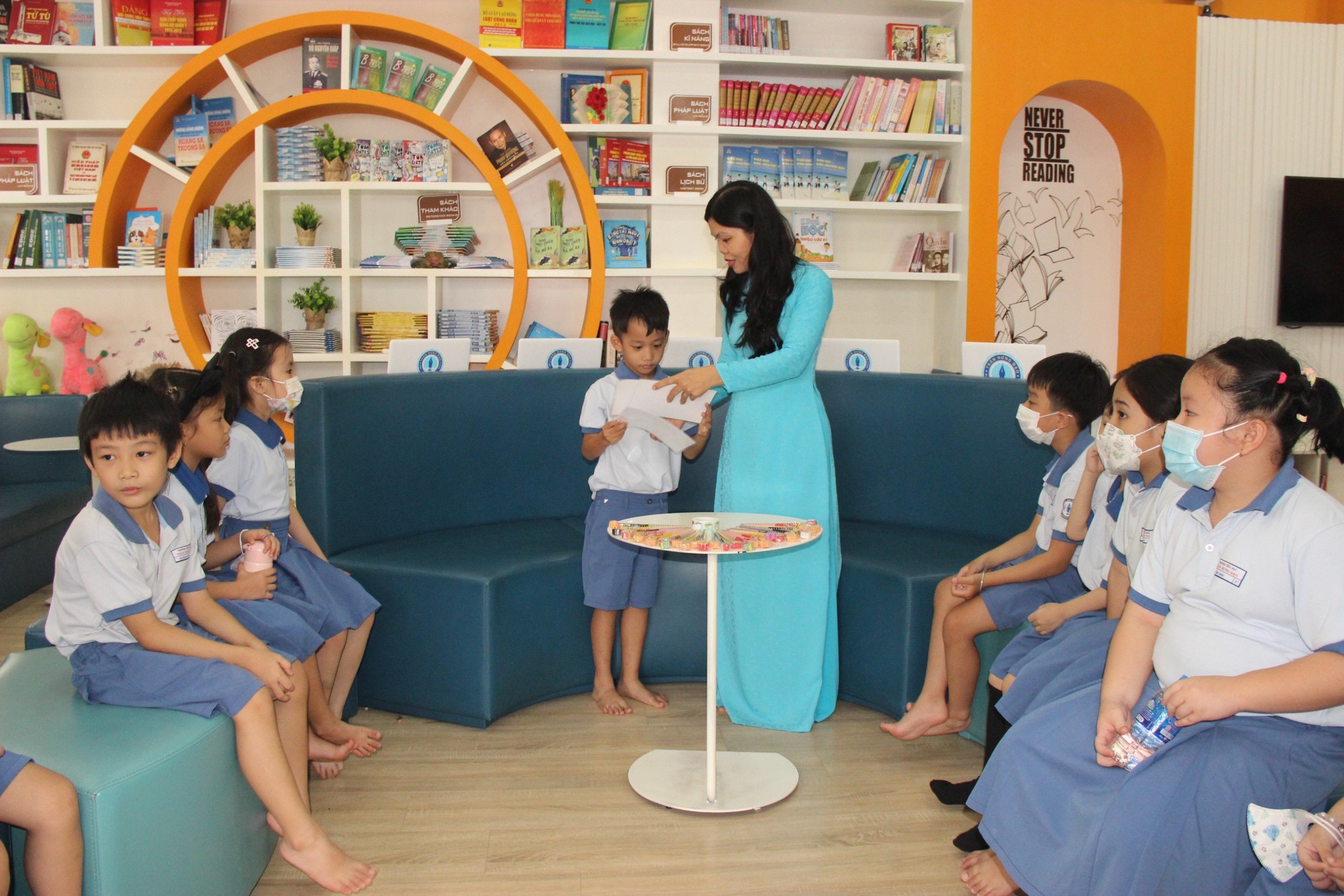
Tran Hung Dao Primary School (District 1, Ho Chi Minh City) has been equipped with a modern library to serve the reading needs of its students.
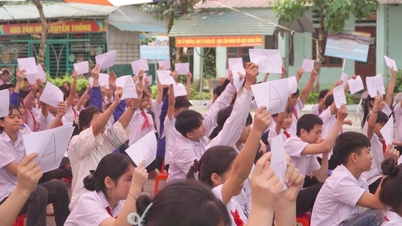
According to statistics from the Department of Education and Training, Ho Chi Minh City currently has 2,084,226 students and trainees studying at 2,716 educational institutions (excluding family-run daycare groups and independent kindergartens), including 1,467 public and 1,249 private institutions, with a total of approximately 95,000 teachers.
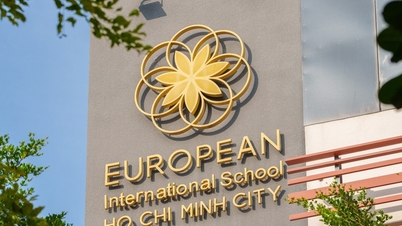
Ho Chi Minh City has 35 schools with foreign investment (including 19 multi-level general education schools, 2 primary schools, and 14 kindergens). Currently, Ho Chi Minh City has approximately 170 businesses investing in the education sector.
Leaders of the Department of Education and Training believe that high schools with foreign elements play an important role in creating a good learning environment for the children of foreigners and Vietnamese people residing abroad who come to Vietnam for work, contributing to promoting foreign investment in Vietnam and contributing to the development of the city.
Besides high schools with foreign elements, private schools in general have made a significant contribution to the development of education and training.
The development of private schools has reduced pressure on urban education, especially in districts and counties with high rates of population growth and urbanization, where there is a high demand for schools to accommodate the rapidly increasing number of students.
However, according to Mr. Nguyen Van Hieu, Director of the Ho Chi Minh City Department of Education and Training, there are difficulties in implementing the socialization of education. For example, the assessment and understanding of socialization among some officials and the public are still incomplete, the pace of socialization is slow, not commensurate with the potential, and has not mobilized all resources for the development of education and training. The conflict between the requirements for reform and the operating mechanism is always an obstacle for those implementing it.
Furthermore, the policy framework is inconsistent, lacking specific guidance and being slow to implement. In particular, the operational mechanisms of public schools do not allow for the full utilization of the positive and creative potential of the institutions and teachers. The mechanisms for school autonomy in finance, tuition fees, recruitment, etc., have not created a strong impetus for development.

Canadian International Bilingual School welcomes students back to school.
According to the leaders of the Department of Education and Training, although the number of non-public educational institutions has increased rapidly, their scale is generally small, their facilities are limited, and their development is uneven, mainly concentrated in urban areas and densely populated regions. The level of socialized education is still low in suburban and remote areas, and in disadvantaged regions; services are insufficient to meet demand, and the quality of specialized expertise has not reached that of the public sector; the teaching staff is still insufficient and lacking in expertise, and the quality and effectiveness of operations are not high. The public still relies on state support and does not yet trust the quality of the non-public school system.
The management of schools with foreign investment and the management of organizations providing study abroad consulting services still face many shortcomings due to the lack of a complete legal framework.
The investment procedures remain complex and inadequate, hindering the process of attracting investment, introducing projects, and conducting specific negotiations.
From there, Ho Chi Minh City has made proposals and recommendations to the National Assembly , the Government, and ministries and agencies regarding the removal of difficulties and obstacles in the mechanisms and policies for implementing the socialization of education and training. These include considering and resolving issues related to land use planning for educational facilities; specific mechanisms and solutions; and specific preferential policies on land, taxes, and administrative procedures… to mobilize resources outside the state budget to invest in the development of the school network through public-private partnerships, stimulating demand and socialization.
Source link




















![[Photo] A large number of people offer incense and visit the Ho Chi Minh Memorial Church.](https://vphoto.vietnam.vn/thumb/1200x675/vietnam/resource/IMAGE/2026/02/21/1771668099014_ndo_br_12-resize-7721-jpg.webp)












































Comment (0)