SGGPO
Enterovirus and adenovirus are the two main causative agents of conjunctivitis today, with enterovirus being the predominant cause (86%), while adenovirus, which was previously more common, now accounts for only a small percentage (14%).
 |
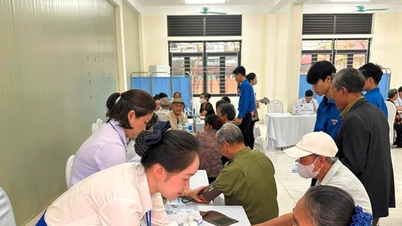
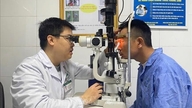
| Children with conjunctivitis are examined at Children's Hospital 2. |


On September 8-9, a quick report on research results from the laboratory of the Emerging Infectious Diseases Research Unit, a collaboration between the Hospital for Tropical Diseases and the Oxford University Clinical Research Unit (OUCRU), showed that enterovirus and adenovirus are the two main causative agents of conjunctivitis today, with enterovirus being the dominant cause (86%), while the previously common adenovirus accounts for only a small percentage (14%).
The study results were based on 39 patients with conjunctivitis (20 males, 19 females), including both adults and children, with an average age of 19.7 years (variation: 4-64), who visited the Eye Hospital on September 7-9 and had samples taken. The patients came from 13 districts in Ho Chi Minh City and Thu Duc City, 5 from Binh Duong, 2 from Ba Ria Vung Tau, 1 from Long An, and 1 from Tien Giang.
After collection, the samples were sent to the laboratory of the Emerging Infectious Diseases Research Unit for multiplex PCR testing to detect adenovirus, enterovirus, metapneumoniovirus, and parainfluenza viruses.
On August 8-9, after PCR analysis, the research team detected adenovirus in 5 patients, enterovirus in 32 patients, and no pathogen was found in 2 cases. There were no positive cases of metapneumovirus or parainfluenza virus, and no cases of co-infection between enterovirus and adenovirus were found.



"Thus, enterovirus and adenovirus were found in 37 out of 39 (95%) patients tested, with enterovirus being the predominant pathogen (32/37, 86%), while the previously common adenovirus accounted for only a small percentage (5/37, 14%)," the Ho Chi Minh City Department of Health reported. The research team is currently continuing gene sequencing analysis to accurately identify the serotypes and genotypes of the pathogenic enteroviruses and adenoviruses.
Source





![[Photo] Prime Minister Le Minh Hung presides over the thematic session on promoting science and technology development and innovation.](https://vphoto.vietnam.vn/thumb/1200x675/vietnam/resource/IMAGE/2026/06/23/1782207872934_ndo_br_dsc-1724-jpg.webp)