That concluding sentence, annotated on page 157 of the book considered to be a geographical chronicle of the Southern region in the early 19th century, from the translation, annotation, and research by author Pham Hoang Quan (2018), reads as follows: "This refers to the rice of Dong Nai - Ba Ria, the fish of Phan Ri - Phan Rang," which are the hallmarks of the products of the Southeast region, often mentioned by people from the northern provinces and towns.
CHILDHOOD MEALS OF RICE AND FISH
In my childhood, I remember that every afternoon, my mother would call us playful children home for dinner. Those meals almost always included fish. If not anchovies, mackerel, or tuna, then it would be tuna or scad, depending on how busy my mother's fish market was that day. Small anchovies with soft bones, mackerel stewed until tender with tomatoes, or scad or scad stewed with just the right amount of salt, sliced and mixed into a bowl of rice. Each of us would grab a bowl and run out to leisurely eat with the neighborhood kids, chatting about school and play.
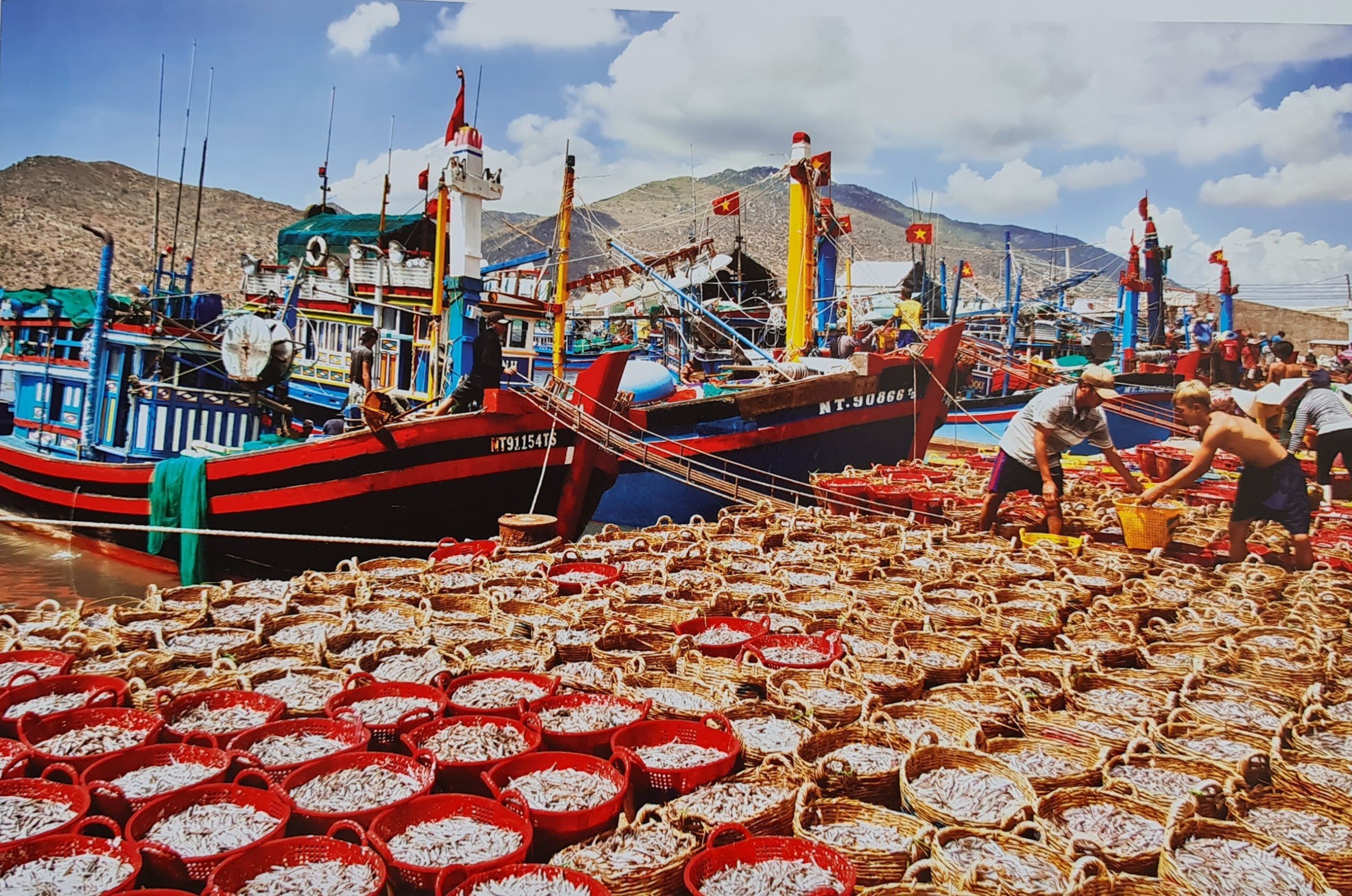
Fish arriving from the sea have landed at Phan Rang port.
My father told me that in the old days, our hometown in Central Vietnam had a way of distinguishing different types of seafood at the market. Large fish, sliced and called "sitting fish," like mackerel, tuna, and scad, were very expensive. Smaller fish, like anchovies, sardines, and herring, sold in bundles (in small baskets), were called "lying fish" and were cheaper. My mother had her own way of preparing each type of fish: braised lightly, braised salty, braised spicy, braised with tomatoes, braised with green chilies... But no matter how it was cooked, the bowl of rice with fish each afternoon after running and playing, scooped and mashed by my mother's hands, left an indelible memory. It marked a period of growing up memories from my childhood, after the stage of demanding milk, after the time of kicking the rickety hut to be fed. And that bowl of rice was a "witness" to the beginning of growing up, the start of the days when I skipped to school with my books.
I think many people have experienced those things. The warmth and affection in every family meal, passed down through generations, from sitting around the table under dim oil lamps to the bright light of electric lamps, from the countryside to the city, all begin in childhood and continue into adulthood.
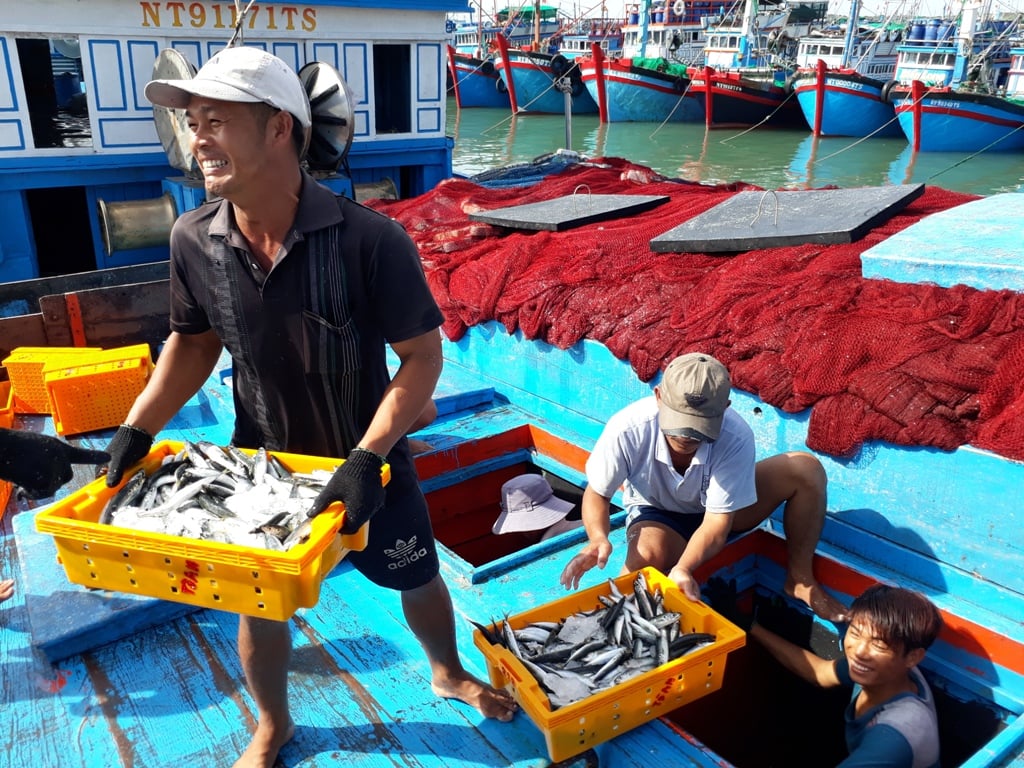
Bringing fish from the boat ashore during a bountiful fishing season.

FISH AND RICE FOR LONG DISTANCES
In a foreign land, the autumn mornings are beautifully sunny. In a village called Thoi Dai (Times), built by Vietnamese people in the remote Kharkiv province of Ukraine exactly 10 years ago, during a visit there, my friends and I were pleasantly surprised when our host, a Vietnamese businessman, treated us to a meal of rice with boiled vegetables and a dipping sauce made from braised fish. Each table also had a few slices of tuna and mackerel, glistening red with chili powder. The host explained that the fish from the East Sea and the water spinach from Thai Binh province traveled nearly 18 hours from his hometown to be served by a Vietnamese chef at the Cay Dua (Coconut Tree) restaurant within the village grounds, offering guests a meal with a distinctly home-style flavor.
That evening, with a gentle autumn rain falling, we sat amidst the rustling of birch trees, sipping vodka and savoring the lingering taste of the fish meal we'd enjoyed long journeys, a meal filled with the warmth of our hosts. That night, in my poem "Fish and Vegetables in Kharkiv," I wrote the very first stanza: "Fish from the East Sea flown for nearly 18 hours. And water spinach grown in Thai Binh. Present on the dinner table at the Coconut Tree restaurant that evening. Reminding each other of a homeland."
A meal on the long, arduous journey, a meal I'll never forget!
I still remember the October 1995 flood season in the Southwestern Mekong Delta. In the twilight casting its glow over the rice fields of Tan Cong Chi commune (Tan Hong district, Dong Thap province), we sat on the flooded Bac Trang hill, while an old man named Sau Len, 73 years old, grilled some snakehead fish, turning them over and over, leisurely recounting stories of the delta floods. It was a valuable introductory lesson for us to understand floods, silt, fish, shrimp, and rice in the delta region. The old farmer said: "These fish, if there were no floods, would surely be scarce. For so many years, our people have accepted and lived with the floods. It's just something natural. Just think, if the delta lacked floods, how could there be fish and rice to survive?" Nearly thirty years later, that statement proves an undeniable reality: the Mekong Delta is increasingly experiencing a lack of floods. And the piece of fish, served with a glass of rice wine reminiscent of the rice fields of the Mekong Delta that the old man gave me, has almost haunted me ever since, not because of the natural taste of the snakehead fish in the evening when the rice paddies are flooded, but because it speaks volumes on its own!
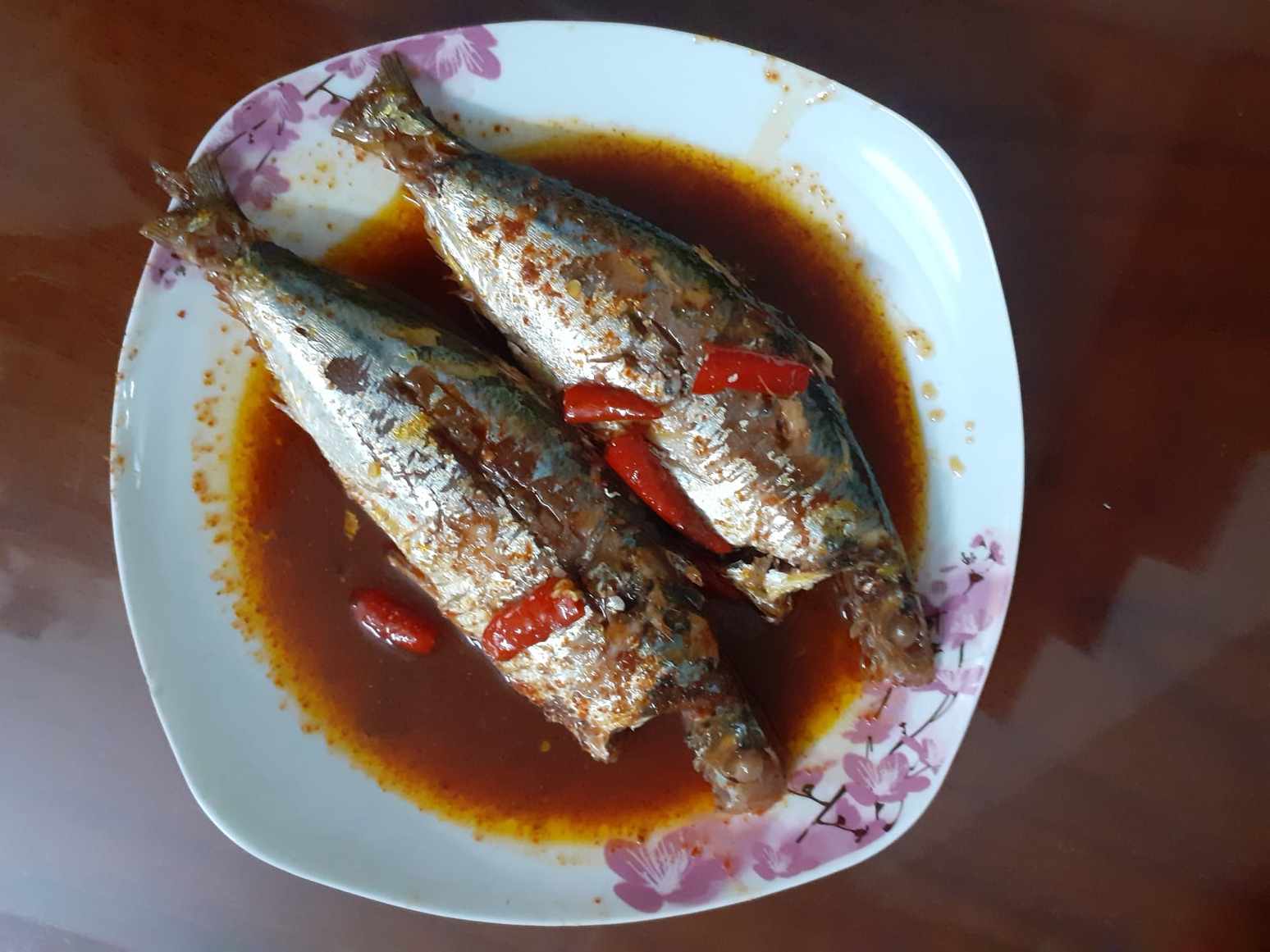
Braised fish always evokes many memories.
VI THANH


From the above-mentioned praise of rice and fish products in the book by scholar Trinh Hoai Duc, I envisioned a stretch of coastline in Ninh Thuan and Binh Thuan provinces extending to the southernmost tip of Vietnam, a place where our ancestors, pioneers who settled the land, must have witnessed countless things in ancient times to arrive at their conclusions. A colleague with nearly 40 years of experience living in Phan Rang sent me some pictures of a bustling morning fish market. Looking at them, I know that the azure sea continues to generously provide the rich flavors for every family's meal, and I begin to ponder the offerings for the year-end ceremony, welcoming ancestors back to gather together during the spring festival. There must be a few slices of braised fish, a few bowls of white rice, sometimes alongside chicken and cakes – a tradition passed down through generations. Then, when spring passes and the flowers fall, the farewell meal for the ancestors returning to the realm of white clouds is also abundant with rice and fish. At such times, in the atmosphere of harmony between heaven and earth, looking up at the altar, I suddenly see a faint echo of rivers, seas, fields, and rice fields converging. Recalling a casual conversation over tea and drinks, a friend asked if traditional New Year's rituals would be somewhat lacking in the future. He mentioned that ordering ready-made offerings like sticky rice, chicken, and fruit delivered by courier has become almost commonplace for young families. The hectic rush of year-end work prevents them from preparing a traditional offering in the kitchen, a tradition that older generations strive to preserve.
It's inevitable, because some things of long-standing value will eventually cease to exist. However, at that moment, I suddenly recalled the bustling atmosphere in the kitchen of a family preparing a solemn New Year's Eve feast, so beautifully described in the novel "The Season of Falling Leaves in the Garden" by writer Ma Van Khang, which I read more than three decades ago, and I felt a little wistful…
The section on "Products" (volume 5) of the Gia Dinh City Chronicle states: "Gia Dinh has fertile and vast land, with local products including rice, salted fish, timber, and birds. The grains that thrive in this land are considered 'Dao rice'. There are many types of Dao rice, but there are two main types: 'canh rice' (rice) and 'thuat rice' (glutinous rice), distinguished by whether they are sticky or not. Non-sticky rice has small, soft grains with a very fragrant aroma and awns. Glutinous rice is sticky, with round, large grains."
Regarding fish, this section also lists quite a few types of fish from Gia Dinh. For example, sea fish include swordfish, shark, mackerel, white pomfret, stingray, snapper, tuna, sardines, stonefish, potato fish, grouper, silverfish… River fish include carp, catfish, whitefish, burnt fish, tra fish, pangasius, sand goby, linh fish, eel…
Source link

![[Photo] General Secretary and President To Lam working with the Technical and Professional Center, Ministry of Public Security](https://vphoto.vietnam.vn/thumb/1200x675/vietnam/resource/IMAGE/2026/07/06/1783318005842_a1-bnd-1129-2263-jpg.webp)