

The Economist recently published an analysis suggesting that the US plans to use Africa as a source of crucial minerals in order to break China's dominance over these resources.
China is the global leader in refining strategic minerals, refining 68% of the world's nickel, 40% of copper, 59% of lithium, and 73% of cobalt, according to the Brookings Institute (USA).
U.S. officials are concerned about China becoming "an OPEC (Organization of Petroleum Exporting Countries) regarding one of the key minerals," and are pursuing more active diplomacy in Africa.
Is the US ready to act?
US Vice President Kamala Harris embarked on a week-long trip to Africa that began in late March. During a meeting with Tanzanian President Samia Suluhu Hassan on March 30th, Harris stated that Tanzania is building a major mineral processing facility with US support, and that this facility will supply battery-grade nickel to the US and global markets by 2026, according to the South China Morning Post (SCMP).
This is the latest move to reduce America's dependence on China for resources. Late last year, the U.S. signed a memorandum of understanding with the Democratic Republic of Congo (DRC) and Zambia to help the two countries establish new supply chains for electric vehicle batteries.
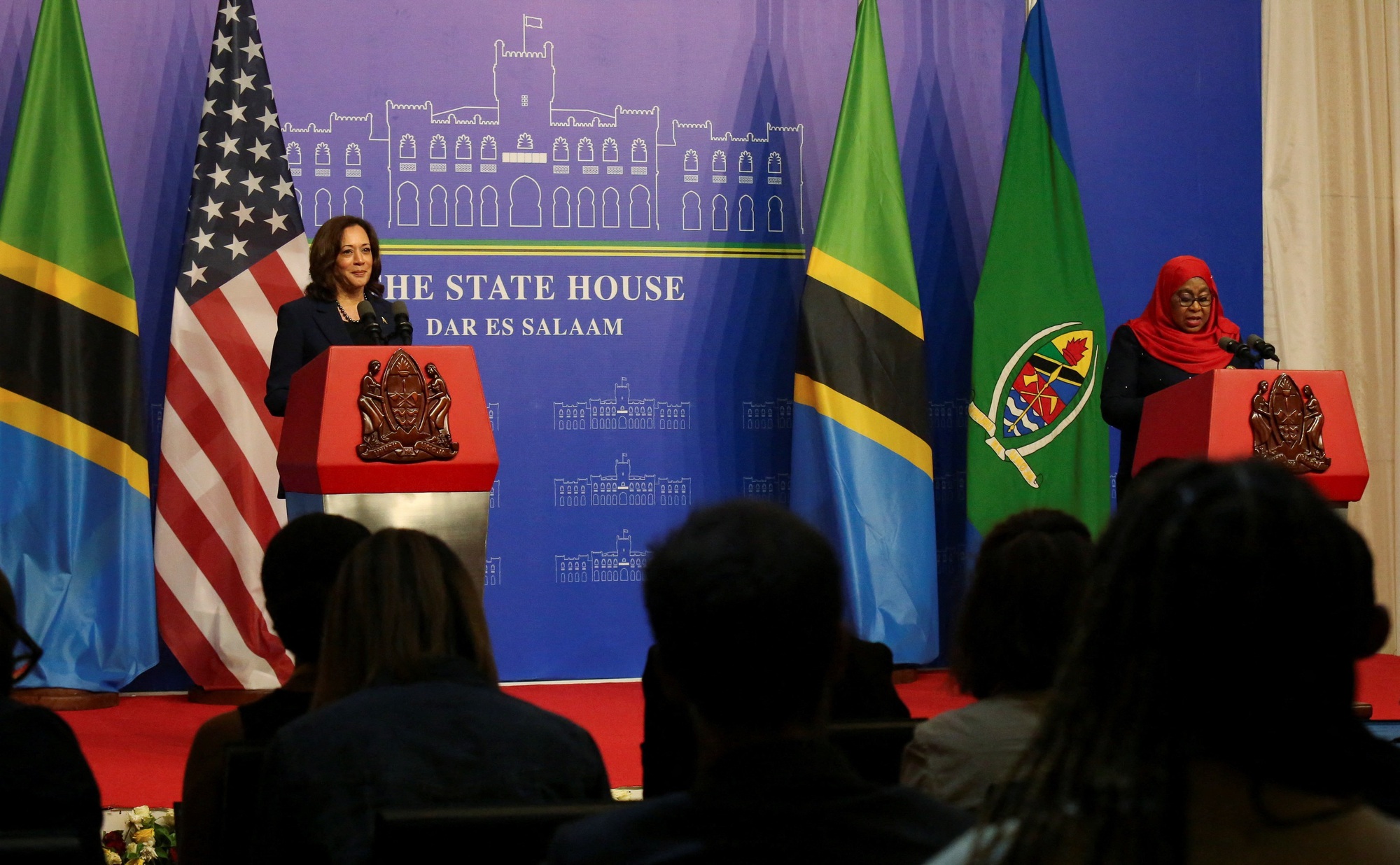
US Vice President Kamala Harris and Tanzanian President Samia Suluhu Hassan at a press conference in Dar es Salaam, Tanzania on March 30.
In a recent commentary by the Center for Strategic and International Studies (CSIS), Christian-Géraud Neema, a senior fellow in the Africa program at CSIS, stated that the memorandum of understanding with the DRC and Zambia “signals the Biden administration’s willingness to act and reduce dependence on China as much as possible.” He further commented: “The U.S. is taking a step toward a rather concrete approach by addressing the economic and industrial needs of the DRC and Zambia.”
The DRC is by far the world's largest exporter of cobalt, accounting for approximately 70% of global production. The country is also rich in diamonds, gold, copper, tin, tantalum, and lithium, and is the largest copper producer in Africa. Zambia is also rich in copper and cobalt.
Chinese companies have invested heavily in both countries and are sourcing 60% of their cobalt from the DRC, according to SCMP . Beyond the DRC, Chinese companies are also penetrating Zimbabwe, which is estimated to have Africa's largest untapped lithium reserves. Lithium is a key raw material in batteries for electric vehicles.
"A crucial battlefield"
Will McDonough, CEO of the US asset management firm EMG Advisors, predicts that the biggest global geopolitical and macroeconomic issue in the next 10 or 20 years will be control over critical minerals or metals used in batteries, with Africa being a key battleground, according to SCMP .
“We cannot allow China to become OPEC’s lithium, copper, cobalt, and nickel, otherwise any future development of these green energy sources will be entirely dependent on their permission and price setting. Dependence is not good for free trade or innovation, but it is a reality we are facing,” McDonough warned.
Furthermore, Chris Berry, president of the US-based commodity consulting firm House Mountain Partners, predicts it will take many years before the US has a chance of achieving a supply chain for battery minerals without interfering with China in any way.
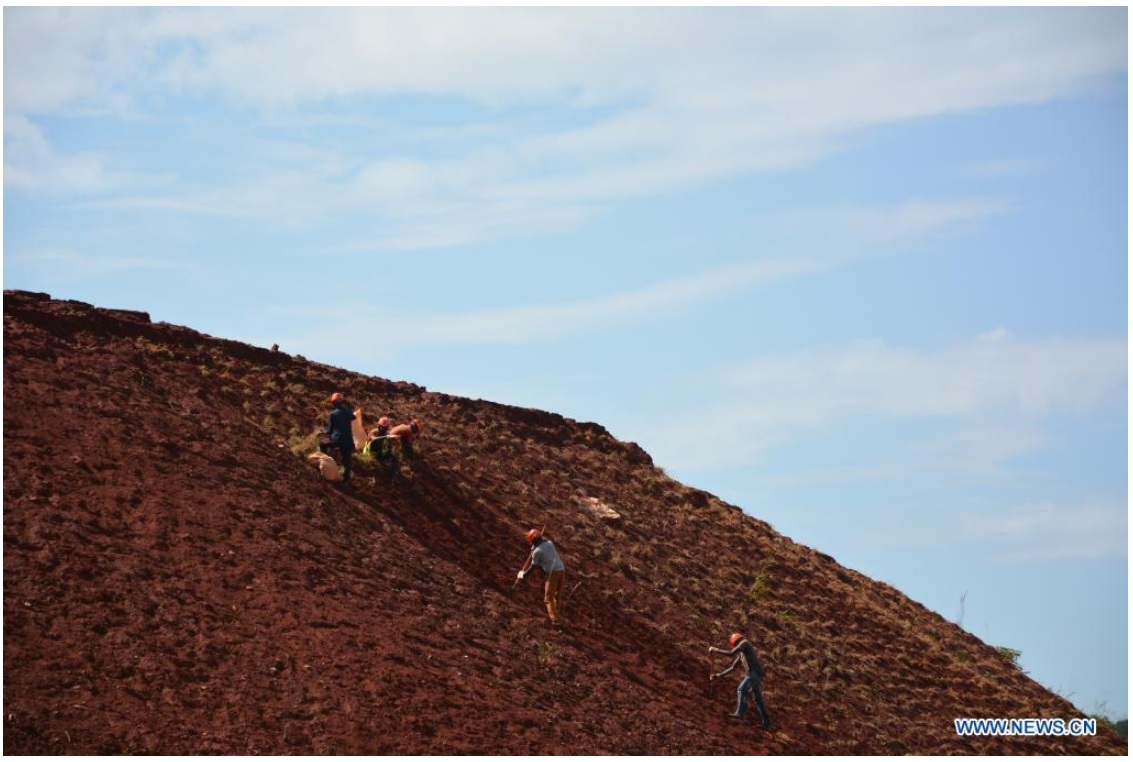
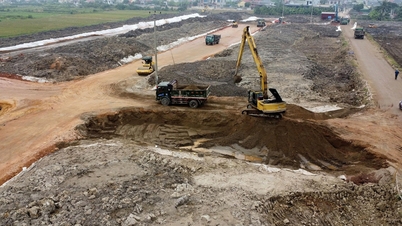
Workers labor near a landfill at a mining site of a Chinese company in the Democratic Republic of Congo on March 11, 2019.
Screenshot from Xinhua News Agency
Meanwhile, David Shinn, an expert on China-Africa relations at the Elliott School of International Relations at George Washington University, argues that Chinese state-owned companies will take on greater risks and even losses on investments that affect China's core security interests. "Chinese state-owned enterprises also have easier access to government financing than private American companies," Shinn commented.
However, American companies may be able to set higher environmental standards, a crucial factor to consider in the extraction and production of minerals, and may also be willing to transfer more skills to their African partners, according to Shinn.
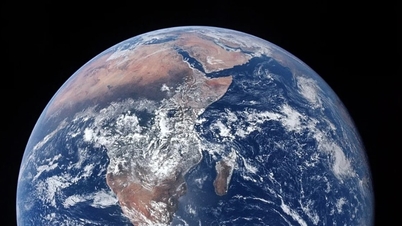
Africa holds approximately 30% of the world's mineral resources, making it a crucial destination for meeting mineral demands, according to The Economist . The International Energy Agency predicts that clean energy technologies will require 40 times more lithium, 25 times more graphite, and about 20 times more nickel and cobalt by 2040 compared to 2020.
Source link
















































































Comment (0)