

 |
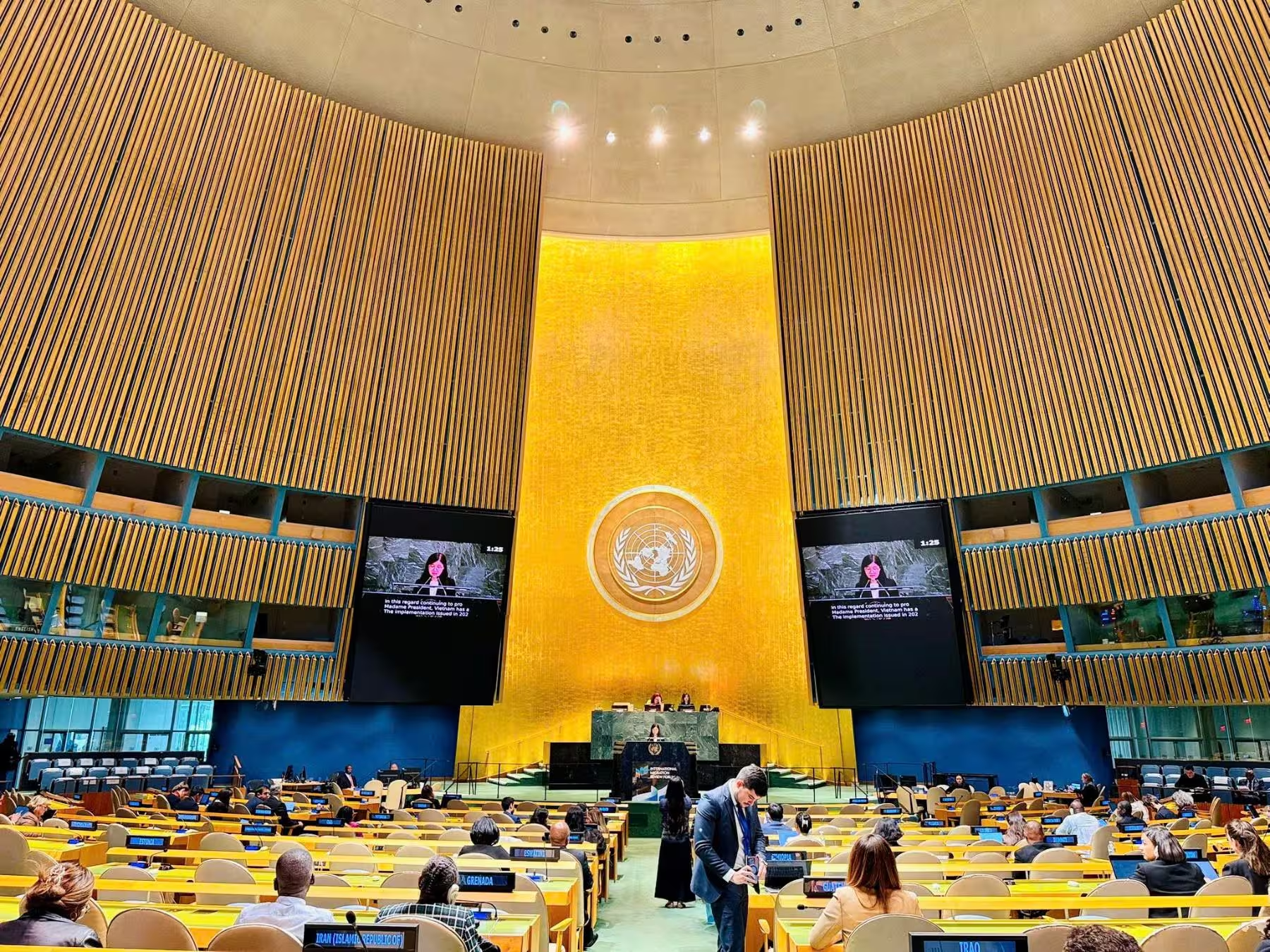
| Vietnam cherishes peace and is a responsible member, actively, proactively, and effectively participating in the common work of the United Nations. (Photo: VGP) |
Therefore, April 30, 1975 is not only a glorious milestone in the nation's history, but also a symbolic embodiment of the will for independence, the aspiration for peace, and the strength of national unity of the Vietnamese people.
The victory of April 30, 1975, ushered in a new era of independence, unity, and the entire nation's progress towards socialism. But behind that great victory lay countless irreplaceable sacrifices and losses. Millions of the nation's finest sons and daughters bravely fell; millions of families were separated; countless Vietnamese mothers sent their sons to war and waited anxiously. Youth volunteer brigades, civilian laborers, and ordinary people—those with "plows in their hands and guns in their hands"—contributed every grain of rice and every drop of blood to the front lines. These memories are preserved in history and have become an inseparable part of the national consciousness, forging the resilience and pride of Vietnam.
However, despite historical facts that have been affirmed over time, there are still reactionary individuals and organizations, and political opportunists, who deliberately distort and deny the significance of the victory of April 30th. Each time the anniversary of the Liberation of the South and the reunification of the country is celebrated, false narratives are disseminated with greater frequency and in more sophisticated forms, especially on the internet.
These individuals seek to distort the nature of the resistance war against the US, misrepresenting it as a "civil war," denying the righteousness of the national liberation struggle, and even propagating the idea that "there were no winners or losers." Some organizations, masquerading as "civil society," "patriotism," or "concerned about the nation's destiny," are in reality advocating pluralism and multi-party systems, denying the Party's leadership role, distorting the Party's guidelines and the State's policies, and inciting discontent among a segment of the population, especially young people.
Notably, these arguments often exploit the losses and damage of war in a one-sided manner, deliberately detaching themselves from the specific historical context, thereby leading to distorted perceptions. More dangerously, some of their content incites hatred, reopens war wounds, and divides national unity, which is the decisive factor in all the victories of the Vietnamese revolution.
It must be affirmed that, in the specific historical context of Vietnam, the resistance war against the US to save the nation was a just war, aimed at protecting the independence, sovereignty , and unity of the country. This was a struggle of the entire Vietnamese nation against the aggression and imposition of neo-colonialism, and was absolutely not a "civil war" as some distorted narratives suggest.
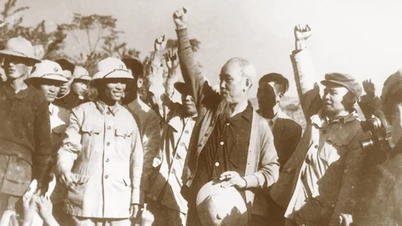
Vietnam is a peace-loving country. From the early years of the resistance war, President Ho Chi Minh and our Party repeatedly expressed their willingness to negotiate and seek peaceful solutions to avoid bloodshed. The 1973 Paris Agreement is clear evidence of that effort. However, faced with the stubbornness, belligerence, and deep interference of the US imperialists, the Vietnamese people were forced to take up arms to defend the sacred rights of the nation: independence, freedom, and national unity.
Objective assessments from the international community have also affirmed the righteousness of the resistance war. Many scholars and historians around the world have recognized Vietnam's victory in 1975 as a triumph of a small but resilient nation against a powerful military superpower, a symbol of the national liberation struggle in the 20th century. Deliberately distorting history is not only an act of disrespect for the truth, but also an insult to those who sacrificed for their country. More dangerously, it distorts perceptions, especially among the younger generation, who have not had the opportunity to directly experience the war and mainly access history through books and the digital environment.
The struggle to protect ideological foundations and safeguard historical truth is not only the responsibility of relevant authorities, but also a shared responsibility of the entire society. Every citizen, especially the younger generation, needs to proactively equip themselves with systematic historical knowledge, access information from official and reliable sources; and at the same time, enhance their "resistance" to misinformation, refraining from hastily sharing or spreading unverified content.
Therefore, the struggle to protect the ideological foundation and safeguard historical truth is not only the responsibility of the authorities, but also the shared responsibility of the entire society. Every citizen, especially the younger generation, needs to proactively equip themselves with systematic historical knowledge, access information from official and reliable sources; and at the same time, enhance their "resistance" to misinformation, refraining from hastily sharing or spreading unverified content.
Respecting history does not mean closing oneself off in the past, but rather understanding the value of the present and charting a course for the future. After the war, Vietnam chose the path of reconciliation, cooperation, and development. From a heavily devastated country, Vietnam has gradually risen, achieving many important socio-economic accomplishments and continuously enhancing its position on the international stage.
Vietnam's independent, self-reliant, multilateral, and diversified foreign policy, guided by the spirit of "leaving the past behind and looking towards the future," has enabled it to establish diplomatic relations with most countries in the world, including those that were once adversaries in war. The normalization of relations between Vietnam and the United States in 1995, and Vietnam's extensive participation in international organizations such as the United Nations, ASEAN, and the WTO, are clear evidence of this correct approach.
These achievements further demonstrate that respecting history is not contradictory to the spirit of reconciliation; on the contrary, it is the foundation for building trust, promoting cooperation, and sustainable development. A nation that respects its past and looks at history with objectivity and humanity will have the strength to move forward confidently into the future. On the occasion of the April 30th Victory Day anniversary, every Vietnamese person, whether at home or abroad, can express their gratitude through practical actions: participating in commemorative activities, learning about national history, spreading positive values; and resolutely speaking out against misinformation, contributing to the protection of historical truth.
History is not something that can be arbitrarily distorted or altered according to subjective will. It is a truth verified over time, through documents, evidence, and the memories of an entire nation. Protecting history, therefore, is also protecting the spiritual foundation, the identity, and the inherent strength of the nation. The victory of April 30th will forever be a symbol of indomitable will, of the aspiration for independence and national unity. No matter how much time passes, no matter how many generations follow one another, the value of that victory remains intact. Our responsibility today is not only to remember, but also to preserve, spread, and protect these sacred values against any distortion or inaccuracy. Respecting the history of our ancestors is not only a source of pride, but also an action to build a better society, a stronger nation, worthy of the immense sacrifices that previous generations have made for the Fatherland.
https://nhandan.vn/tran-trong-nhung-gia-thieng-lieng-cua-lich-su-post958789.html
Source: https://huengaynay.vn/chinh-polit-xa-hoi/tran-trong-nhung-gia-thieng-lieng-cua-lich-su-165133.html

































































































Comment (0)