

 |
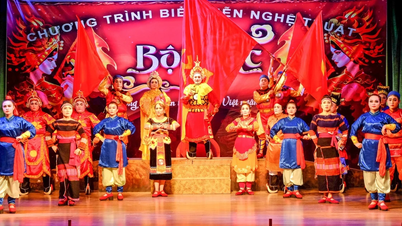
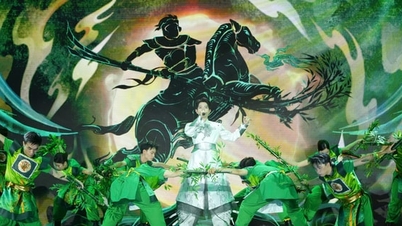
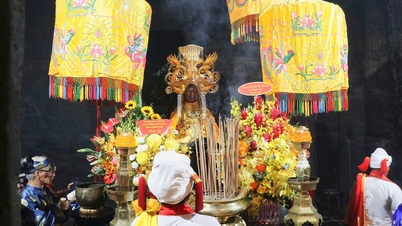
| The artists performed an excerpt from "On Dinh beheads the general" in the play "Son Hau". |
Touching the heritage
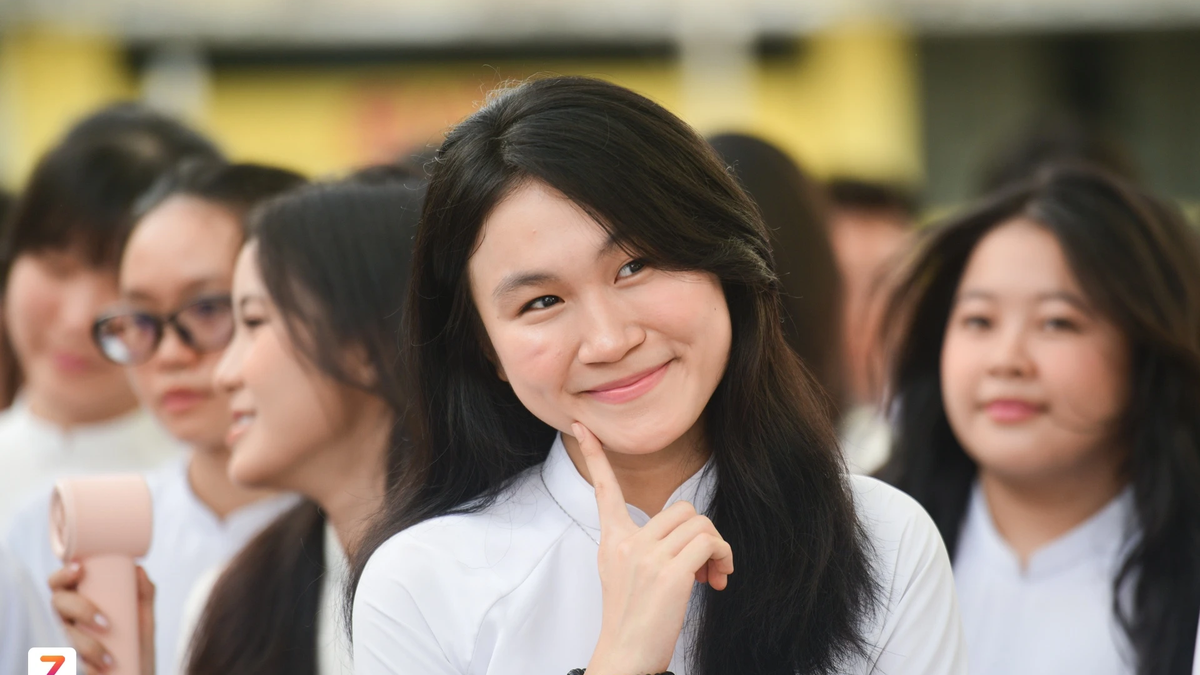
As part of its program to help students learn about Hue culture, the High School for Gifted Students in Science (Faculty of Science, Hue University) organized extracurricular sessions with the participation of traditional opera (tuong) artisans and artists, allowing students to directly engage with this art form. Through introductions, performances, and interactions, students had the opportunity to learn about the history, performance characteristics, and significance of masked tuong art.
Gone are the days of dry lectures and simple illustrations; students are introduced to the art of traditional Vietnamese opera in a visual and engaging way. Each color and pattern on the masks carries a unique message, reflecting the character's personality: loyalty, wickedness, courage, or cunning. From seemingly unfamiliar concepts, the art of traditional Vietnamese opera gradually becomes concrete, relatable, and easy to understand.
As one of the most talented contemporary traditional opera artists, Meritorious Artist La Thanh Hung and other artists from the Hue Royal Court Traditional Arts Theatre directly interacted with the students. With their years of experience, the artists not only introduced painting techniques but also "decoded" the layers of meaning hidden behind each brushstroke. Stories about their profession and their journey with traditional opera were shared in a relatable way, helping students understand that behind each layer of makeup lies a profound cultural depth.
In particular, the opportunity to directly observe and participate in the mask-painting process right in the auditorium created great enthusiasm. From knowing about traditional Vietnamese opera only through books or television, students now had the chance to "touch" the heritage through hands-on experience. Furthermore, the artists performed excerpts from a typical opera, creating a vibrant theatrical atmosphere and helping the students better visualize how characters are portrayed, from makeup and movements to singing.
Nguyen Khoa Bao Tran (11th grade Computer Science class), chosen as a model for the artisan to directly paint the mask, shared that this experience brought more emotions than he expected. “I feel very impressed and want to share more about traditional Vietnamese opera with everyone. When I directly experienced the makeup, I understood to some extent the hard work the artists put in to create such complete performances,” Tran said. From someone who only knew about traditional Vietnamese opera through images, he said that he now has a different, closer, and more interested perspective on this art form.
The atmosphere during the experience became lively. Questions revolved around learning the craft, preserving the tradition, and how to bring traditional theater closer to younger audiences. The interaction between artists and students was not only about exchanging information, but also about connecting two generations: those preserving the heritage and those who could continue it in the future.
From experience to awareness of preservation
Integrating traditional Vietnamese opera (tuong) into local education programs is not new, but the approach of engaging students through direct experience is proving effective. When students are directly involved with this heritage, they not only gain knowledge but also form emotional connections – a crucial element in fostering a sense of cultural preservation.
According to teacher Nguyen Thi Mai Huong, organizing experiential activities in traditional Vietnamese opera mask making gives students the opportunity to access a unique art form that is still often overlooked. She believes that direct participation helps students understand and appreciate it more deeply than traditional theoretical learning. In fact, most students showed enthusiasm when experiencing this new and distinctive art form for the first time.
Following the group experience, students were divided into small groups to continue working with artisans and artists. They conducted interviews, gathered information, and completed learning projects such as presentations about the artisans or videos reflecting on an impressive traditional Vietnamese opera mask. This approach not only reinforced knowledge but also honed their research, analytical, and creative skills.
Not stopping at a single activity, the school has also identified this as a direction that needs to be maintained and developed. Such experiential programs not only help students better understand local culture but also contribute to fostering love for their homeland, awareness of heritage preservation, and proactiveness in learning. Connecting with art organizations and artisans is also considered an important factor in creating authentic and in-depth experiences.
In the context of many traditional art forms facing the risk of extinction, creating accessible spaces for young people is essential. Schools, as educational and guidance environments, can become an important bridge in this journey. Beyond simply imparting knowledge, schools also inspire interest and shape students' attitudes towards cultural heritage.
Through a specific experiential activity, the story of introducing traditional Vietnamese opera into schools demonstrates a positive approach to cultural preservation. Complex approaches aren't necessary; sometimes, simply creating opportunities for students to directly participate, listen, and ask questions can bring heritage back to life in a more accessible way.
Source: https://huengaynay.vn/van-hoa-nghe-thuat/de-tuong-khong-chi-la-ky-uc-165865.html

























































Comment (0)