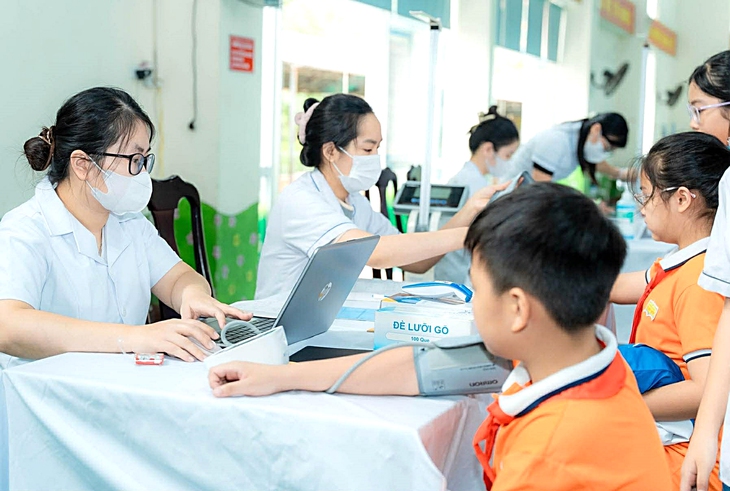
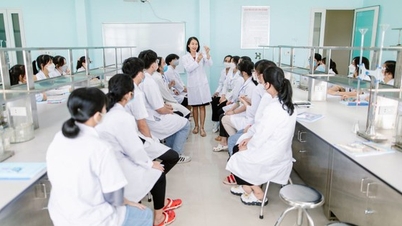
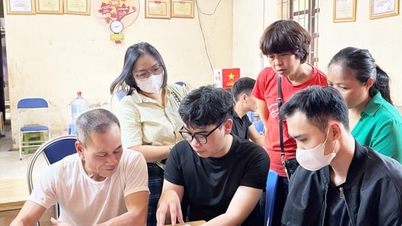
Doctors at Hanoi Children's Hospital measure blood pressure and conduct health checkups for elementary school students in the city - Photo: Hospital provided.
High blood pressure in children
According to a recently published study conducted by a team of international scientists , which synthesized data from 96 independent studies, including more than 400,000 children and adolescents from various regions around the world.
The results showed that the prevalence of hypertension in boys increased from 3.4% to 6.53%, while in girls it increased from 3.02% to 5.82% between 2000 and 2020. This increase occurred across various geographic regions, regardless of differences in income levels or living conditions.
In Vietnam, although this study does not present specific data, the general global trend also reflects the reality in the country to some extent. The rate of overweight and obesity among Vietnamese children has increased rapidly over the past 10 years, especially in urban areas.
According to information from the National Children's Hospital, studies worldwide show that the rate of children with hypertension is approximately 2-5%. Hypertension in children can lead to both short-term and long-term complications, including cardiovascular disease and chronic kidney disease.
According to Dr. Nguyen Tien Dung, former Head of the Pediatrics Department at Bach Mai Hospital, the reality of children suffering from "elderly diseases" is a story that has been warned about in recent years. The disease progresses silently, often going unnoticed, and only when symptoms such as fatigue, vomiting, coma, or seizures appear do families bring their children to the hospital and discover they have the disease.
"Notably, high blood pressure in children is just as dangerous as it is in adults. If left untreated, it can cause complications such as diabetes, cardiovascular disease, heart failure, and stroke," Dr. Dung shared.
Obesity and a sedentary lifestyle
In a professional guide by doctors Nguyen Thi Thuy Lien, Nguyen Sy Duc, and Nguyen Thu Huong from the National Children's Hospital, it is emphasized that the increasing prevalence of obesity and sedentary lifestyles in children and adolescents has led to a higher frequency of hypertension detection in children. In particular, hypertension has been identified as a risk factor for other cardiovascular diseases in adulthood.
Regarding the causes of hypertension in children, doctors have stated that primary hypertension is commonly seen in older children (≥6 years old), with a family history of hypertension and associated with overweight or obesity.
Secondary hypertension is common in young children, often due to kidney and renal vascular diseases. Kidney diseases account for 34-79% of cases, and renal vascular diseases for 12-13%. Secondary hypertension requires particular attention in children under 6 years old and in cases of severe hypertension accompanied by target organ damage. Additionally, endocrine causes account for 0.05-6% of cases.
In addition, hypertension can be screened for and detected early through regular blood pressure measurements. All children ≥ 3 years old should have their blood pressure measured at least once during routine health checkups. Children under 3 years old should have their blood pressure measured in cases where they are at risk of hypertension.
According to pharmacist Le Thi Nguyet Minh from the Pharmacy Department of the National Children's Hospital, the general goal of treating hypertension in children, including both primary and secondary hypertension, is to achieve blood pressure levels that reduce the risk of target organ damage and decrease the risk of hypertension and cardiovascular disease in adulthood.
Treating hypertension requires a combination of lifestyle changes (adopting a healthy diet, physical activity, or weight loss) and the use of antihypertensive medication.
Signs and symptoms that parents should be aware of in an emergency when their child's blood pressure is too high include headache, seizures, vomiting, chest pain, shortness of breath, rapid heartbeat, palpitations, etc.
Preventing hypertension in children
According to doctors, preventing hypertension in children requires lifestyle changes; children should maintain a healthy body weight, as obese children have a very high risk of developing hypertension as well as other cardiovascular diseases.
In terms of nutrition, children should limit salt intake and eat plenty of olive oil, fruits, vegetables, low-fat dairy products, whole-grain products, chicken, fish, and lean meats.
At the same time, children should be encouraged to participate in outdoor activities, exercise, and be active and passionate about a particular sport. Children should engage in physical activity for about 60 minutes each day. Limit the amount of time children spend sitting in front of computer screens, watching television, or playing games. Walking for 30-60 minutes, 3-5 times a week, helps lower blood pressure.
In addition, children may experience stress from excessive academic pressure, psychological stress from parents, friends, and family... This is also a cause of increased risk of hypertension in both adults and children.
Children need to live in a safe environment.
According to Mr. Tran Minh Dien, Director of the National Children's Hospital and President of the Vietnam Pediatric Association, Vietnam is witnessing a worrying increase in non-communicable diseases among young children.
According to statistics, non-communicable diseases currently account for 84% of all deaths in Vietnam, with cardiovascular disease and cancer being the most common causes, accounting for 31% and 19% respectively... Cases of myocardial infarction, hypertension, and diabetes are increasingly appearing in people aged 30-40, and even under 30.
According to Mr. Dien, the causes stem from many factors, including the mother's health and living environment during pregnancy, genetics, the child's nutrition and lifestyle, obesity, drug abuse, and stress in the modern learning environment.
These illnesses not only directly affect children's physical and mental development but also require significant treatment costs due to the need for advanced and specialized medical techniques.
"Today's children not only need medical treatment but also need to live in a healthy, safe environment, receive comprehensive care, and develop holistically," Mr. Dien emphasized.
Back to the topic
WILLOW
Source: https://tuoitre.vn/tre-em-mac-benh-cua-nguoi-gia-20251215221519325.htm


































































































Comment (0)