

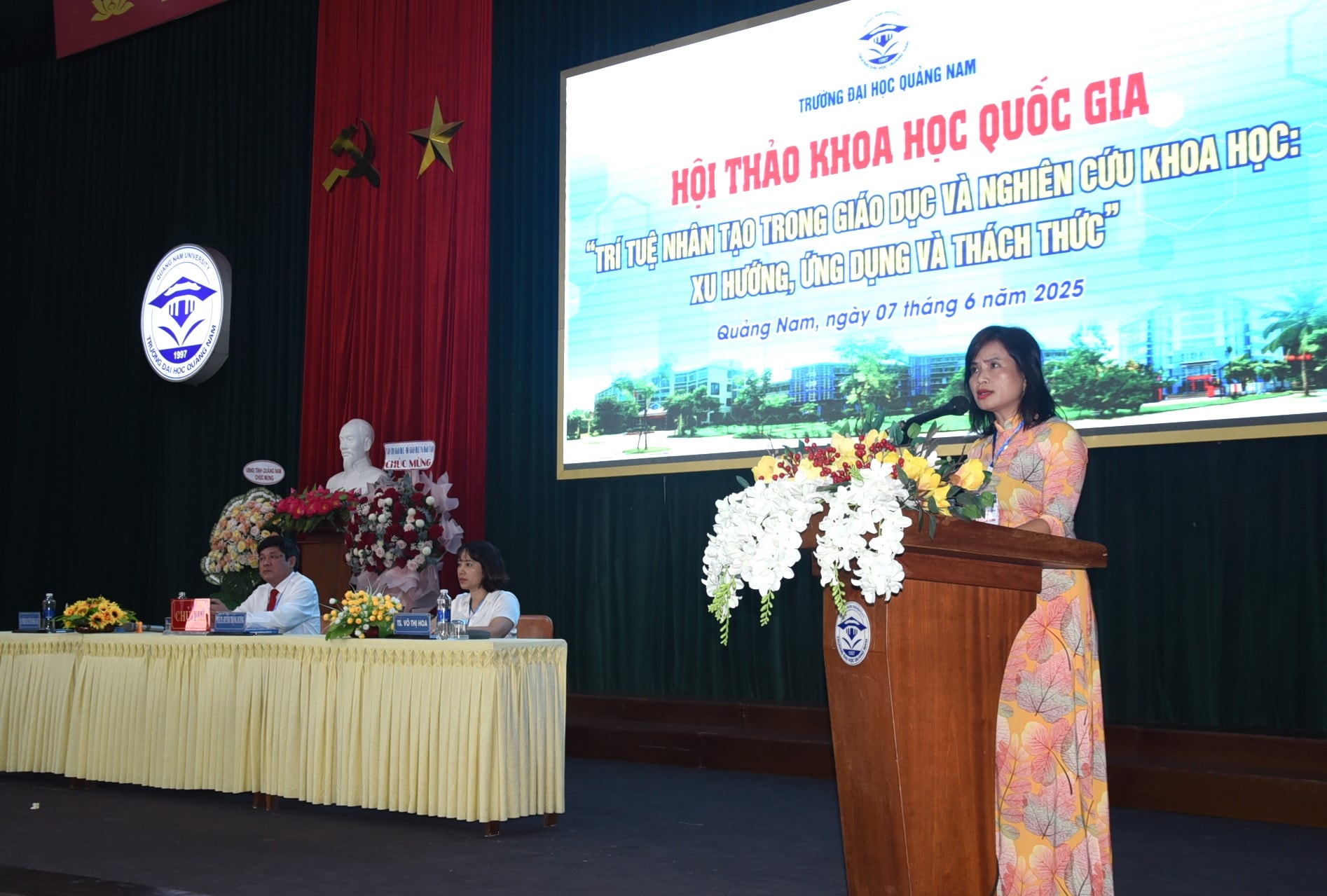
The role of artificial intelligence
Artificial intelligence (AI) is creating profound changes on a global scale. Stating that "AI cannot replace humans, but humans without AI will be replaced," Ms. Luong Bao Tram, on behalf of the research team for the project "Applications of AI in Scientific Research: Opportunities, Challenges, and Some Recommendations" (including Ms. Hong Quy - Hoa Sen University, and Mr. Le Nguyen Trung Kien - Hue University of Economics ), affirmed that integrating AI into scientific research brings many practical benefits such as saving time in document searching, grammar checking, and text formatting.
Furthermore, AI also acts as an "initial critique assistant," capable of providing preliminary feedback on content, suggesting theoretical models, or analyzing relationships between research studies.
“With its superior advantages in speed, data retrieval, and processing capabilities, AI is gradually supporting researchers in expanding their capabilities and reducing technical workloads. However, AI cannot replace critical thinking, evaluation skills, or the ability to create new knowledge – the core qualities of a true researcher,” shared Ms. Tram.
With the topic "Using Quizizz in designing assessment activities in high schools," the representative of the author group from Quang Nam University - Ms. Le Thi My Dieu, M.Sc., affirmed that Quizizz is not only a flexible platform supporting teaching and learning but also helps teachers easily create and manage student assessments in various formats. In the future, further research and the ability to integrate AI into Quizizz could further enhance the learning and teaching experience, bringing about innovative applications in educational assessment.
From another perspective, the research team of MSc. Le Thai Phuong and Phan Kim Ngan from Da Nang University of Architecture, in their study "Using ChatGPT in the research and learning of tourism students: An approach from the Technology Acceptance Model - TAM," concluded that factors such as perceived usefulness, ease of use, attitude towards ChatGPT, and fear of falling behind in AI all positively influence students' ChatGPT usage behavior.
"The research results provide important implications for universities and lecturers in promoting the application of ChatGPT. These include raising students' awareness of the benefits and usefulness of ChatGPT in effectively supporting learning and research; and lecturers needing to proactively guide students on how to effectively utilize ChatGPT," the research team representative suggested.
Promoting the application of AI
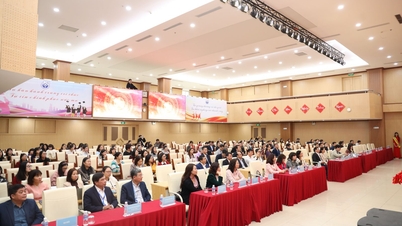
In his opening remarks at the workshop, Dr. Pham Nguyen Hong Ngu, Vice Rector of Quang Nam University, stated that the workshop focused on discussing and clarifying many related issues.
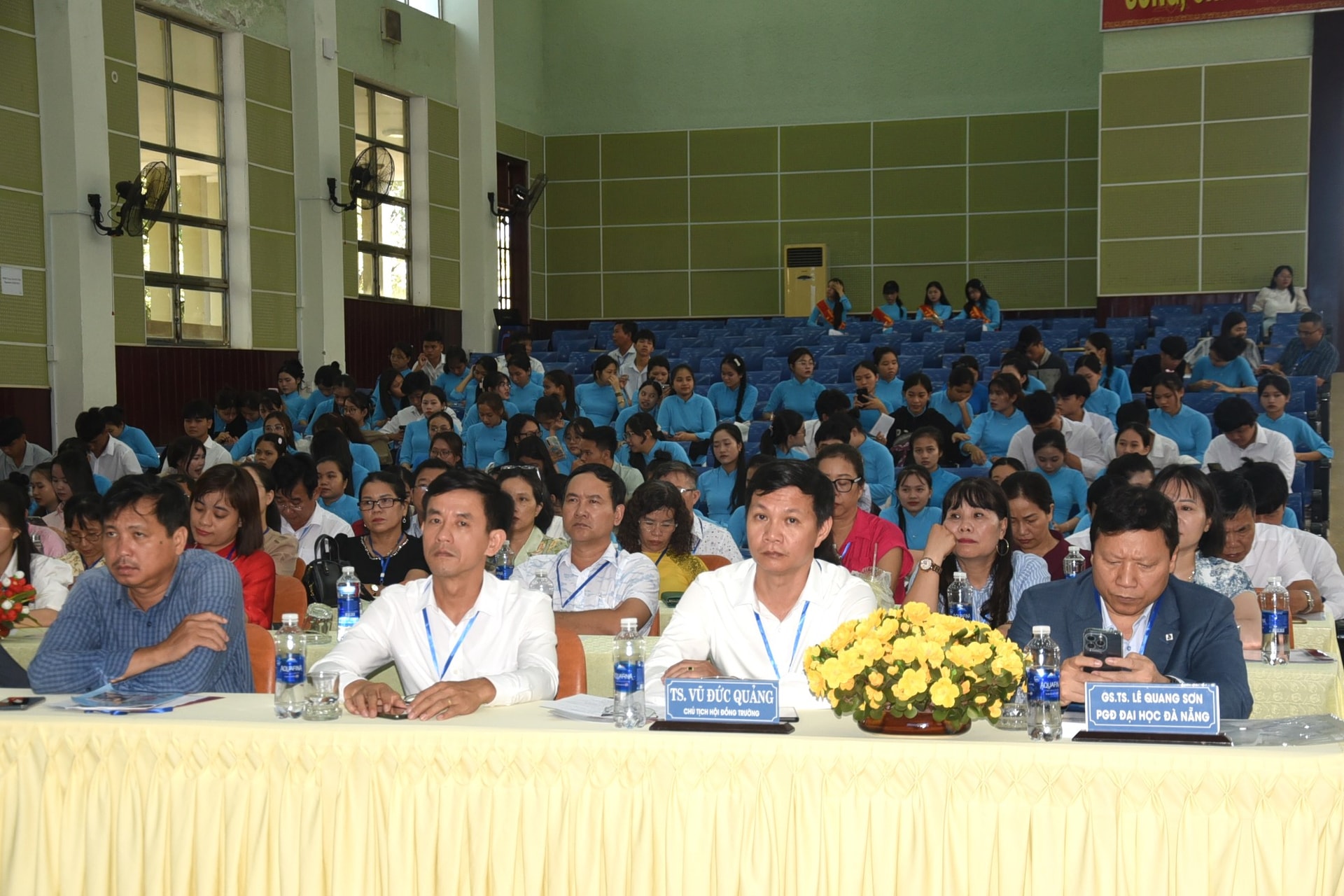
This includes: trends in AI development in education and scientific research – notable achievements, pioneering technologies, and predictions for future development; AI applications in education – the role of AI in curriculum design, learning management, learning outcome assessment, personalized learning, and teaching support; and AI applications in scientific research – automated data analysis, knowledge discovery, support for writing and publishing papers, and the development of research models based on big data.
Alongside the advantages, there are also challenges in deploying AI in education and research – ethical issues, data security, the digital competency gap between training institutions, human resources, and infrastructure; solutions and development directions – support policies, building strategies for training AI human resources, developing a digital ecosystem in education, strengthening interdisciplinary and inter-institutional research cooperation…
"We expect that the results of the workshop will contribute to connecting a network of researchers, lecturers, and administrators, aiming to build a strong academic community and together promote the effective, humane, and sustainable application of AI in education and scientific research in Vietnam," Ms. Ngu shared.
According to Associate Professor Huynh Trong Duong, Rector of Quang Nam University, the fourth industrial revolution is rapidly unfolding worldwide. In this context, AI has become one of the core technologies, profoundly impacting almost all aspects of social life, especially in education and scientific research. AI is transforming the way we teach, learn, and research, from personalizing learning activities and supporting effective teaching to analyzing learning data and assisting in the collection, processing, and analysis of research data.
Quang Nam University successfully organized the conference, receiving 60 papers from authors from more than 30 universities and scientific research institutions nationwide, creating a multi-faceted scientific forum for education managers, scientists, and lecturers to share knowledge, experience, and research results.
Source: https://baoquangnam.vn/tri-tue-nhan-tao-trong-giao-duc-and-nghien-khoa-hoc-3156399.html












































![[VIMC's 40-day rapid rollout] VOSA accelerates the deployment of a comprehensive logistics solution for HODA.](https://vphoto.vietnam.vn/thumb/402x226/vietnam/resource/IMAGE/2025/12/23/1766473634002_vosa-23-12-25-2_upscayl_2x_remacri.jpeg)









![[Photo] Closing Ceremony of the 15th Conference of the Central Committee of the 13th Party Congress](https://vphoto.vietnam.vn/thumb/402x226/vietnam/resource/IMAGE/2025/12/23/1766462841764_a1-bnd-3731-1647-jpg.webp)























Comment (0)