

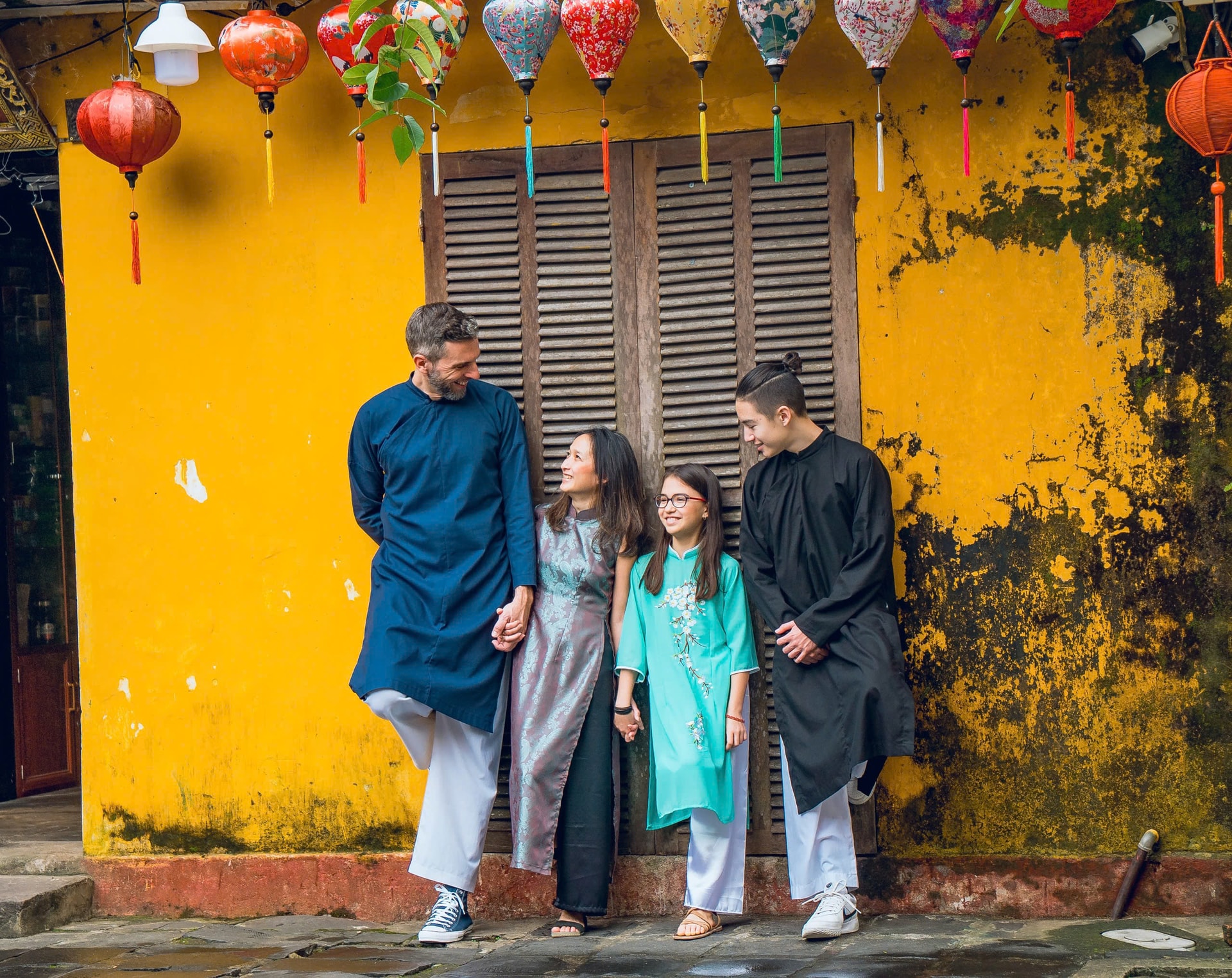
The Vietnamese national costume, as ordered by the king, retains its value system to this day.
According to the scholar Lê Quý Đôn in his *Phủ biên tạp lục*, in 1744, Lord Nguyễn Phúc Khoát laid the foundation for the creation of the five-panel men's ao dai. During the Nguyễn dynasty, the five-panel men's ao dai was inherited and developed to perfection, from its design to the way it was worn. This became the national costume of Vietnam by royal decree, effective for a long time in both the North and South of Vietnam.
The five-panel ao dai is not just an aesthetic design; each detail carries a layer of meaning, reflecting the Vietnamese philosophy of life. With its high, square collar, the five-panel ao dai symbolizes integrity. The five panels evoke the four parents and the wearer themselves. The five buttons represent Benevolence, Propriety, Righteousness, Wisdom, and Trust.
For many young people, these philosophies are not widely known or fully understood. However, for a young man to choose to wear the ao dai is a way of learning to mature and become worthy of the national costume.
Meeting Mr. Hoang Phuc Lam (Cam Le ward), he shared his love for the ao dai (Vietnamese traditional dress) with a voice full of pride: “Since I was little, my parents dressed me in ao dai, so I gradually developed a fondness for it. Later, when I learned more about culture, I realized that the ao dai is a symbol of national identity, a way to remind me to grow up.”
Depending on the occasion, Mr. Lam flexibly chooses different styles of ao dai, from modernized ao dai for casual outings and strolls, to traditional five-panel designs for events or special occasions. And, “There are days when I wear an ao dai to a cafe or for a walk without any specific reason. No one looks at me strangely; they just ask where I bought it. That shows that the ao dai is gradually becoming more accessible in modern life,” he shared.
Commenting on current trends, Mr. Lam believes that besides young people who love culture and the ao dai (Vietnamese traditional dress), the creativity of designers and a more approachable approach are making traditional garments like the five-panel ao dai more attractive to Generation Z. This further confirms that the ao dai transcends gender and age boundaries.
Rejuvenating the traditional Ao Dai dress.
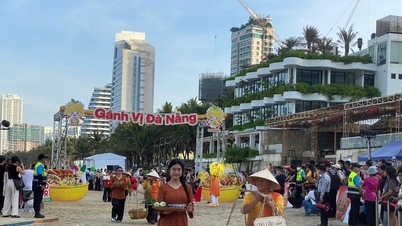
If history has bestowed a prestigious status upon the ao dai, then today's young people are giving it new life. Proof of this is the "Vietnamese Ao Dai" program, organized by students from the Faculty of History, Geography, and Politics at the University of Education (Da Nang University), which, at the end of 2025, transformed Bach Dang pedestrian street into a vibrant cultural space. More than just a performance, it was a way for them to recount the journey of the ao dai from its "golden age" to its "modern era," from the past to the present, using the language of young people. Viewers not only saw but also understood the pride of Vietnamese people in their national and traditional attire.
When Đình Chiến, a photographer in Huế city, heard about the five-panel or single-panel áo dài (traditional Vietnamese dress), he immediately mentioned the "Hundred Flowers Walking Tour" program, which has been held for the past five years in Hanoi , Ho Chi Minh City, and Huế, attracting thousands of participants. Among them, the traditional áo dài dresses held a particular appeal.
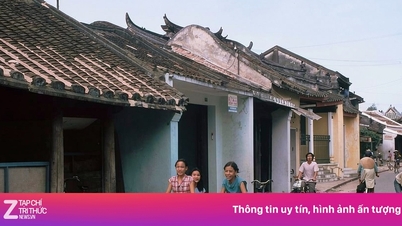
Currently, there's a very popular trend among young people: they seek out ancient cities and historical architectural spaces to take photos, expressing their love for culture and their homeland. And the traditional ao dai has become their language.
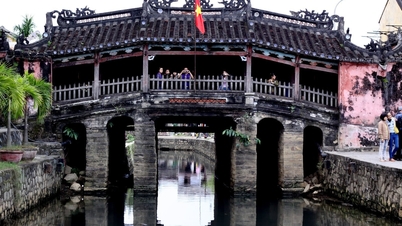
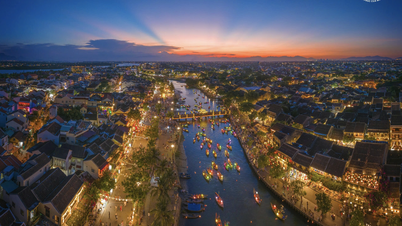
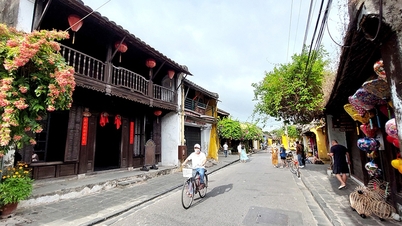
Going further into the story of Vietnam's traditional ao dai, Mr. Nguyen Xuan Ha - Vice Chairman of the Quang Nam Local Values Destination Club - said that it's easy to see many Vietnamese families and foreign tourists enthusiastically wearing ao dai to take photos in the ancient town of Hoi An. And most men choose the five-panel ao dai to show their dignified demeanor. That's how they connect with local culture and affirm their individuality.
Tourists visiting a cultural region always want to immerse themselves in that culture. When a young person dons a traditional Vietnamese áo dài (long dress) or ngũ thân (five-panel dress), they become a cultural ambassador, giving the garment new life. This ensures that Vietnamese traditional clothing is not just found in museums and historical records, but is vibrant on every street corner, in cafes, and at national and community cultural events.
Source: https://baodanang.vn/tro-ve-voi-quoc-phuc-3334308.html


![[Photo] General Secretary and President To Lam presides over a meeting on assessing national development resources.](https://vphoto.vietnam.vn/thumb/1200x675/vietnam/resource/IMAGE/2026/05/20/1779253785852_a1-bnd-2943-8519-jpg.webp)






















































Comment (0)