

The Ministry of Education and Training has just released the draft Law on Vocational Education (amended) for public comment.
Some content has been omitted.
In this draft, the law has omitted the objectives of vocational education and training (VET), the classification of VET institutions; the conditions for establishing, dividing, separating, merging, and dissolving VET institutions; regulations on establishing school councils in VET institutions under the armed forces; administrative procedures for establishing branches and registering additional VET activities; conditions for joint training with foreign countries; conditions for establishing representative offices; and conditions for establishing accreditation organizations.
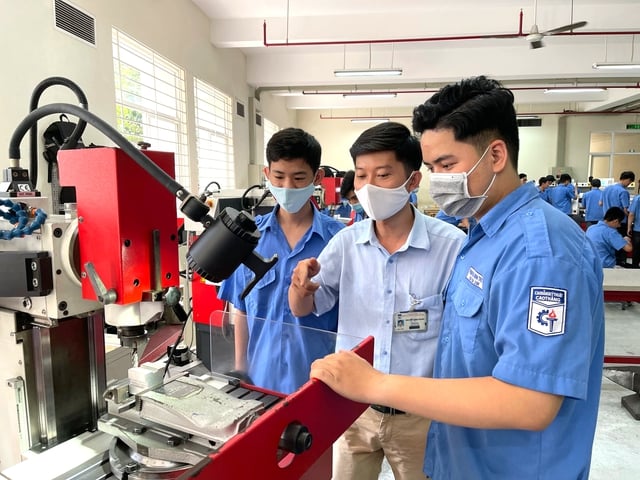
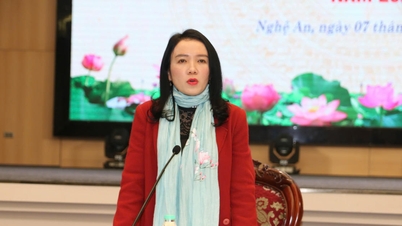
The draft Law on Vocational Education (amended) adds many new provisions.
PHOTO: MY QUYEN
The reason is that the contents are already stipulated in the Education Law, the Teacher Law, and the Public Officials Law (authority to establish, divide, separate, merge, and dissolve vocational education and training institutions; regulations of vocational education and training institutions; state management of vocational education and training; policies for teachers, students, and trainees; objectives of international cooperation in vocational education and training).
According to the Ministry of Education and Training, the adjustments aim to ensure consistency between laws and to decentralize government regulations on investment conditions, thereby creating a basis for reducing investment conditions and administrative procedures to adapt to socio -economic development and vocational education and training activities in each period.
The draft law also amends and improves the curriculum, qualifications, and operational organization of vocational education and training (VET); the organizational structure of VET institutions; the autonomy and accountability of VET institutions; lecturers, teachers, and vocational instructors; state financial policies for VET; the finances and assets of VET institutions; and VET accreditation.
There are two types of universities that offer multiple levels of education.
According to the draft, higher education institutions belonging to the armed forces, and higher education institutions training in specialized fields and professions in the arts will be allowed to participate in training at the college and intermediate levels.
Other new content added includes recognition of academic achievements and accumulated professional skills; the role of businesses in vocational education and training; full-time lecturers and teachers; standards for vocational education and training institutions, training program standards, and quality assurance systems; and investment cooperation activities of Vietnamese vocational education and training institutions abroad.
In particular, the draft Law on Vocational Education and Training (amended) adds an integrated vocational high school program that combines core knowledge from the high school curriculum with vocational expertise for students who have graduated from junior high school.
The addition of these regulations aims to institutionalize the State's guidelines and policies on training and developing human resources to serve socio-economic development, provide human resources for key economic sectors and crucial technologies; and promote a learning society and lifelong learning.
In addition, it is important to attract and utilize foreign experts and scientists , as well as Vietnamese people living abroad, to teach and conduct scientific research at vocational education institutions...
Source: https://thanhnien.vn/truong-dh-nao-duoc-dao-tao-ca-cd-va-trung-cap-18525070117341305.htm




















































































Comment (0)