

(NB&CL) Besides war, armed violence, and deep geopolitical divisions globally, the world in 2024 continues to face another major battle: combating misinformation, fake news, and fraud. This problem will be a never-ending saga and is predicted to become increasingly serious if the world does not work together to implement decisive measures.
Information distortion - a growing threat. Information disruption, particularly misinformation and online fraud, is being hailed as a "global pandemic," a global battle in which traditional journalistic organizations, with their mission to protect the truth, need to play a leading role. However, this battle can only succeed with decisive and fundamental measures at the national and global levels. |
Fake news, misinformation, and especially fraudulent activities have now become an inevitable consequence and negative side effect as the world enters a new era of media. Simply put, the stage is no longer reserved for media outlets with censorship. As we know, the explosion of the internet, high-tech devices, and especially social media has made it possible for anyone to become a "journalist," "reporter," or even a "spokesperson" followed by millions of people.
Social media, a world without rules.
Everything has two sides. The explosion of social media has brought many benefits, such as helping information and knowledge spread rapidly and widely in a spectacular way. Today, information about an accident can reach people within minutes, even those halfway around the world. Similarly, information about natural disasters such as floods, storms, and wildfires is quickly updated and shared through social media platforms, effectively spreading awareness and warnings.
However, along with their positive aspects, social networks and community sharing platforms are bringing about worrying consequences. Even more frightening is that currently, not only humans, but also machines and especially the rapid infiltration of artificial intelligence (AI) are making the internet in general, and technology platforms in particular, a place fraught with risks.

"The information pandemic" on social media. According to statistics published by Redline at the end of June 2024, there are 4.9 billion social media users globally. This survey of American citizens also revealed that a large majority of social media users do not trust the accuracy of information disseminated on these platforms, from Facebook and TikTok to YouTube. Therefore, the organization used the term "information pandemic" to describe the current state of misinformation on social media. |
The world of social media is like a primeval forest, almost without rules. Living in it, people enjoy fertility, freedom, and exhilaration, but this is accompanied by deadly traps. To this day, almost every country is still struggling to manage and organize this "primeval forest," and many have only just begun to address violations, while this "world" has already encompassed all of humanity.
In late November of this year, Australia became the first country in the world to officially enact a law prohibiting children from entering this fascinating, yet dangerous, and virtually unregulated, "primitive" world. Specifically, Australia bans children under 16 from using social media and will impose hefty fines of up to US$32 million if social media platforms violate this rule.
In this context, the explosion of fake news, misinformation, and especially online scams on social media (as well as through other high-tech forms such as fraudulent software applications and websites) continues to be a global problem. In Vietnam, we hear heartbreaking stories every day about victims of scams in all forms on the internet. Globally, this is a problem for every country.
In March of this year, Interpol reported that cyber fraud in Southeast Asia had expanded globally, generating up to $3 trillion annually (equivalent to the GDP of France). Even a British technology company lost $25 million after fraudsters used deepfakes to impersonate a senior manager and order a money transfer. These are, of course, just a few typical examples among millions of online scams.
Is dealing with the spread of misinformation on social media an impossible task?
Despite the relentless efforts of countries and global organizations to prevent or punish illegal activities in cyberspace, particularly on large social media platforms like TikTok, Facebook, and X, only a very small number of cases are actually prosecuted.
What's even more concerning is that, to date, almost no country or organization has held social media platforms accountable for wrongful activities, such as spreading misinformation or even violating the law. In May of this year, Meta itself admitted to finding content "possibly AI-generated" used to distort the truth or deceive on its Facebook and Instagram platforms. This statement shows that social media platforms themselves believe they have the "impartiality" of spreading harmful information; otherwise, they wouldn't have "voluntarily" admitted it.
In fact, big tech companies like Meta, TikTok, Google, Microsoft, and X have been fined billions of dollars worldwide for their violations, but these have mostly been related to violations of user privacy regulations or antitrust laws. There have been almost no penalties against them for violations occurring within their own "home" platforms.
The most notable incident in this area was the arrest of Telegram CEO Pavel Durov in France, accused of facilitating criminal activity on the messaging platform. However, the arrest was considered politically motivated and carried out secretly. It didn't resemble a typical public legal case against a social network or company. In fact, Telegram has never been penalized for criminal activity on its platform, even though the United Nations reported in October 2024 that the platform was a tool used by criminal gangs for illicit transactions.

The world is still struggling to manage the problem of fake news, misinformation, and scams on social media platforms. (Illustration: IJNET)
Therefore, if even in the face of such blatant illegal activities, action against social media platforms or community sharing sites has yet to be taken, it is clear that controlling harmful content, fake news, and misinformation is an even more distant prospect.
As a result, these platforms not only show no fear but are increasingly acting with impunity, encouraging controversial, sensational, nonsensical, or harmful information to attract viewers through their increasingly sophisticated algorithms. It's worth noting that Big Tech companies are even willing to pressure or challenge any attempts to penalize them on this issue. Billionaire Elon Musk, owner of the social network X, expressed his opposition in September 2024 to a new Australian bill proposing to fine social media companies if they fail to prevent misinformation online.
According to this Australian bill, internet platforms could be fined up to 5% of their global revenue if they allow the spread of misinformation. Other major tech platforms such as Google and Meta have also expressed concerns and challenged the new Australian bill. It's worth noting that this is one of the few bills in the world that addresses penalties for social media platforms for spreading misinformation, fake news, and fraudulent activities.
Looking at the world of traditional media and journalism, this paradox is difficult to accept. Everyone knows that if a newspaper or television channel makes even a minor professional error, let alone publishes false or illegal information, the entire organization can face severe penalties, or at the very least, lose its readership. It's not just the reporter or editor who published the information who is held responsible.
The global pandemic is spiraling out of control.
It can be said that the problem of misinformation, fake news, harmful content, and scams is more serious than any war or pandemic, as it can affect an entire generation globally, especially young people. Numerous studies have shown how social media, particularly the addictive short -video features of Facebook, TikTok, and Google, harm the physical and mental health of children.
In a recent study, UNICEF indicated that social media platforms are designed to capture users' attention for as long as possible, exploiting biases and psychological vulnerabilities such as the desire for recognition or the fear of rejection. Excessive social media use is linked to feelings of envy, inferiority, and dissatisfaction with life. Studies even suggest that this habit can lead to symptoms of depression, anxiety, and sleep deprivation, most notably mental illness...
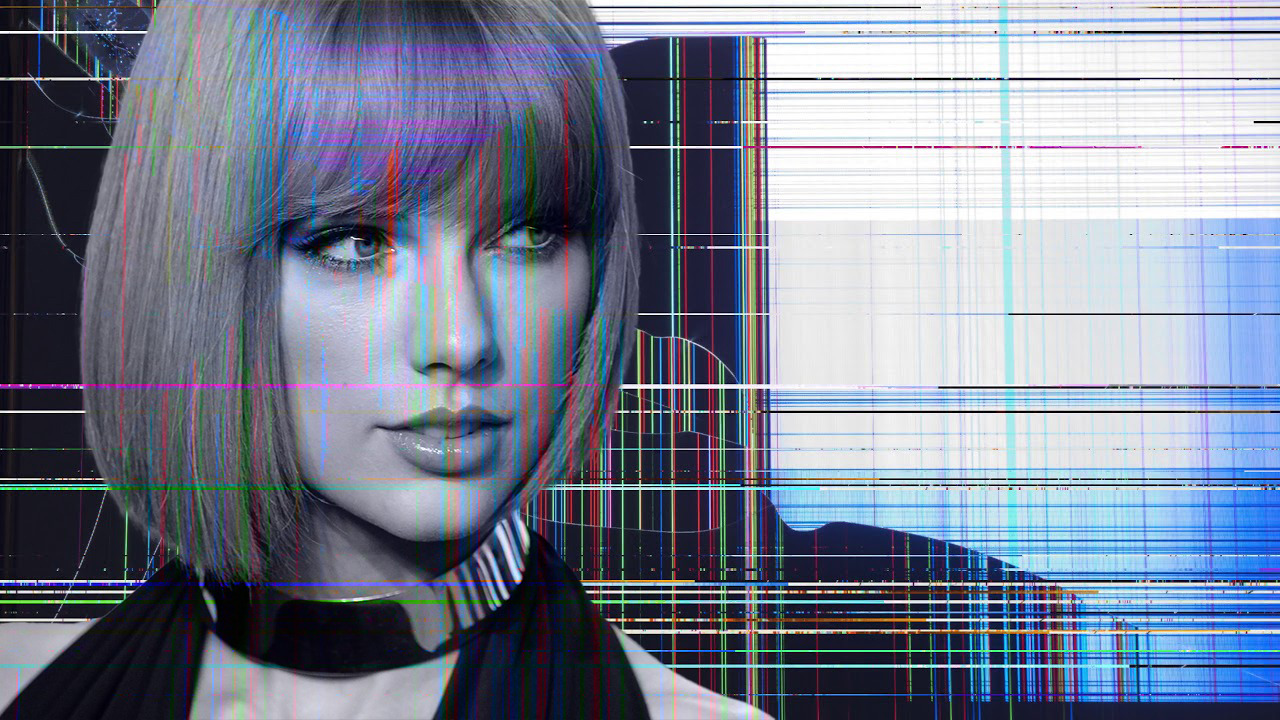
Singer Taylor Swift is one of the famous figures who has fallen victim to the deepfake AI phenomenon. Photo: Herbert Wang
Vietnamese regulations requiring social media platforms to verify users will likely have an effect. Decree 147/2024/ND-CP on the management, provision, and use of Internet services and online information, recently issued by the Vietnamese Government, will come into effect on December 25, 2024. Accordingly, it mandates that social networks must verify users via phone number or personal identification number, and only verified accounts are allowed to provide information (post, comment, livestream) and share information on social networks. This decree is expected to significantly reduce the spread of false and misleading information, and especially fraudulent activities on social networks. |
There are numerous examples showing how misinformation, fake news, and deepfake images can have serious impacts on real life, potentially becoming a global threat. In August of this year, riots erupted due to false information spread on social media claiming that the suspect in the stabbing death of a young girl in the UK was a radical Muslim immigrant (the truth being a British citizen). The riots resulted in thousands of arrests by the police.
In the July 2024 assassination attempt on Donald Trump, social media was also flooded with fake news and conspiracy theories, such as the accusation that a journalist in Italy was the suspect (in reality, a 20-year-old American man). Additionally, there were online distortions claiming the suspect was Chinese or that the incident was a "staged scenario." The spread of misinformation is also fueling hatred regarding conflicts and hotspots around the world, such as the Russia-Ukraine and Israel-Palestine wars, or issues of anti-Muslim and anti-Semitic sentiment.
Furthermore, with the explosion of AI, the fight against misinformation is increasingly spiraling out of control. Deepfake tools and cheap AI impersonators are proliferating and remain largely unregulated.
According to DeepMedia statistics, the amount of deepfake videos and voices has skyrocketed year after year. Deepfake videos more than tripled and deepfake voices more than eight times increased in 2023 compared to 2022. It is projected that approximately 500,000 deepfake videos and voices will be shared on social media globally in 2024.
At the beginning of 2024, a series of AI-generated pornographic images of singer Taylor Swift spread on social media, causing widespread outrage. In addition, numerous politicians around the world, including US President Joe Biden and leaders in the United Kingdom, India, Nigeria, Sudan, Ethiopia, and Slovakia, have also fallen victim to the deepfake phenomenon.
Thus, the problem of fake news, misinformation, and especially online fraud is becoming increasingly serious. In the upcoming AI era, this "global pandemic" could spiral out of control without the concerted efforts of the entire world, particularly policymakers in each country, to prevent it.
Hoang Hai
Source: https://www.congluan.vn/truyen-ky-cuoc-chien-chong-thong-tin-sai-lech-deepfake-va-lua-dao-post328128.html




![[Image] Shipbuilders exposed to steel and record-breaking heat.](https://vphoto.vietnam.vn/thumb/1200x675/vietnam/resource/IMAGE/2026/06/04/1780545781745_ndo_br_img-5402-4683-jpg.webp)





















































![[Video] Sunset at Lap An Lagoon – Where the sun sets over the fishing nets](https://vphoto.vietnam.vn/thumb/1200x675/vietnam/resource/IMAGE/2026/05/31/1780192137701_beach-landscape-sea-water-nature-grass-745871-pxhere-com.jpeg)







































Comment (0)