

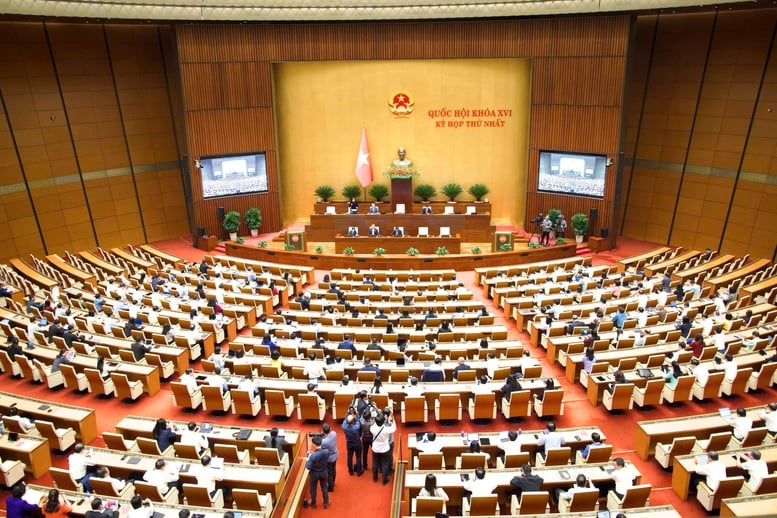
The National Assembly passed a Resolution on environmental protection tax, value-added tax, and special consumption tax on gasoline, diesel, and aviation fuel.
In the context of rapidly fluctuating and unpredictable global energy prices, applying only a fixed tax rate for an extended period would make it difficult for the policy to keep pace with market developments. Granting flexibility to the government – allowing adjustments to the timing, level, and duration of application – has created a mechanism that is more in line with practical realities.
From that perspective, this is not just a solution to stabilize fuel prices or support the economy , but also a significant shift in policy-making thinking: from fixed policies to adaptive policies.
One policy decision – a powerful message about how to make policy.
What is noteworthy about this decision is not the tax reduction—which has been implemented during previous difficult periods—but the way the policy is designed.
This time, the National Assembly did not "frame" policy with detailed regulations, but chose a different approach: establishing principles and granting flexible operational authority to the Government. This division of roles reflects a growing awareness of the characteristics of the current development environment: the need for flexibility and timely response to rapid, complex, and unpredictable changes.
In such a world, policy cannot be designed as a fixed structure, because once enacted, the initial assumptions may have changed. Therefore, how policy is implemented is crucial.
Here, delegation is not simply about decentralization, but about empowering the governing body to respond in real time. This helps shorten the lag between market fluctuations and policy adjustments—an increasingly crucial factor.
The problem isn't with fuel, but with how policies are keeping pace with reality.
Looking at the broader picture, gasoline is just one example. The challenges facing gasoline policy are also common challenges in many other sectors.
In the digital economy, new business models emerge faster than the ability to refine the legal framework. In the technology sector, artificial intelligence is developing at a pace far exceeding the traditional policy-making cycle. In trade and logistics, fluctuations in international markets can change in a very short time.
The common thread in these areas is that practice is outpacing policy .
Meanwhile, the process of policy formulation and adjustment often requires a long time; policies are designed to be "closed," making them difficult to change; and in many cases, the gap between planning and implementation remains quite large. This leads to a paradox: policies are designed to guide practice, but in many cases, they have to follow practice.
And as that gap widens, the cost is not only diminished policy effectiveness, but also missed opportunities for development.
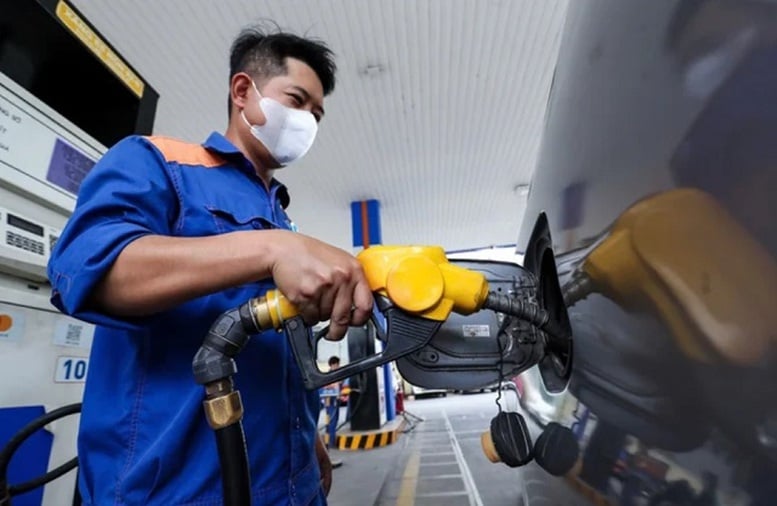
Granting the government greater flexibility—allowing it to adjust the timing, extent, and duration of implementation—has created an operating mechanism that is more in line with practical realities.
From adaptation policies to adaptation governments
The challenges mentioned above show that the issue is no longer about perfecting a few tools, but rather about needing a new approach to policy planning.
At the core of this approach is a shift from a "static policy" mindset to a "dynamic policy" mindset, and further, the building of a highly adaptable government. As Prime Minister Le Minh Hung stated in his inaugural address: Governing with a modern, proactive, and flexible management mindset in all situations.
First and foremost, policies need to be designed to be open and flexible . Instead of trying to perfect every detail from the outset, policies should establish principles, objectives, and limits, while leaving room for adjustments during implementation. Mechanisms such as framework regulations, controlled delegation, or special circumstances clauses should be used more frequently.
Secondly, it is necessary to establish a real-time policy feedback mechanism . In a rapidly changing environment, policies cannot rely solely on periodic reports, but must continuously update information from the market, businesses, and the public. When information is collected and processed promptly, policy adjustments will become faster and more accurate.
Third, it is necessary to institutionalize policy testing mechanisms in new areas. Instead of waiting for a complete legal framework, allowing controlled testing will help reduce risks and promote innovation. This is an approach that many countries have successfully implemented in fields such as financial technology and energy.
Fourth, we must accelerate the development of a data-driven state. When data is connected, shared, and analyzed in real time, the government can identify problems early, predict trends, and adjust policies promptly. Digital transformation, therefore, is not just a matter of technology, but the foundation of modern policy-making capacity.
Fifth, the implementation chain needs to be placed at the center . Policies are only truly valuable when they are effectively implemented. Therefore, clarifying responsibilities, strengthening decentralization coupled with checks and balances, and applying tools to measure results are key elements.
These orientations are not only consistent with practical requirements, but also align with the guiding principles of the Party and Government on improving organizational capacity, building an effective and efficient apparatus, and better serving the people and businesses.
A new requirement for managerial competence.
In the new context, governance capacity is no longer measured by the number of policies issued, but by the ability to make those policies effective in practice.
The requirement of "speed, timeliness, thoroughness, and effectiveness" emphasized by Prime Minister Le Minh Hung should not only apply to specific decisions but should also be elevated to an operating principle for the entire system.
This requires the government not only to be "correct in principle," but also to be quick in responding, flexible in adjusting, and decisive in implementing.
From a policy decision to a management philosophy
The decision on fuel tax policy reveals a noteworthy direction: instead of trying to control all fluctuations with rigid regulations, the policy system is being gradually designed to adapt to volatility. This is not just a temporary solution, but could become an important principle in modern national governance.
In a world where full predictability is impossible, the advantage lies with those nations capable of adapting their policies more quickly to changing realities. In that sense, policy innovation is not merely a technical requirement, but a shift in governance thinking—a factor that can create a nation's strategic competitive advantage in the new era. However, all policies must aim to better serve the people and businesses.
Dr. Nguyen Si Dung
Source: https://baochinhphu.vn/tu-chinh-sach-thue-xang-dau-den-tu-duy-quan-tri-moi-102260421231611132.htm


![[Image] Hanoi's urban life under the challenge of a "scorching hot" environment](https://vphoto.vietnam.vn/thumb/1200x675/vietnam/resource/IMAGE/2026/05/25/1779706979265_nang-nong-t5-2026-minh-duy-7-4636-jpg.webp)
![[Image] Close-up view of the interchange connecting the two expressways and Long Thanh Airport.](https://vphoto.vietnam.vn/thumb/1200x675/vietnam/resource/IMAGE/2026/05/25/1779703378210_ndo_br_z7863716673926-224453a31600126cce10622af6290afd-4549-jpg.webp)






















































































Comment (0)