

Located in a land rich in cultural sediments, formed by the alluvial deposits of the Ma and Chu rivers, Dong Hoang commune (Dong Son district) has a community that formed and established villages and settled the land very early on. One of the few figures frequently mentioned in the historical records of this land is General Phan Doc Giac.
 The temple dedicated to General Phan Độc Giác is currently undergoing restoration and renovation.
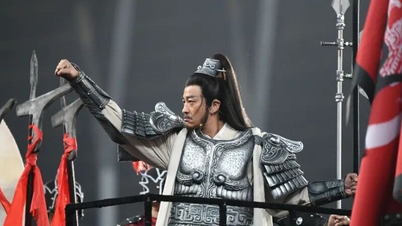
According to the genealogical records of the Hoang Duong village's guardian deity, Phan Doc Giac was born with an extraordinary appearance: bright, jewel-like eyes, red lips, an upturned jawline, high cheekbones, a fleshy horn on his head, a bell-like voice, and an unusually tall stature. Even in his youth, he was proficient in literature and possessed exceptional martial arts skills. Therefore, the people of Hoang Duong village and the surrounding areas revered him and called him a Divine General.
When the Champa invaders attacked our country, faced with such a powerful enemy, King Ly Thai Tong had to personally lead the army to fight them. The night before the expedition, the king dreamt of a five-colored cloud flying by, in which a one-horned deity, sent down by the Jade Emperor, fought the invaders and saved the country. The king ordered the deity to be found and invited to the capital, entrusting him with 10,000 soldiers and one elephant to go into battle.
After defeating the Champa invaders and capturing their general, whom he presented to the king, Doc Giac was rewarded with 1,000 pounds of gold and 1,000 quan of money, and was appointed Governor-General and granted the title of Hung Dung Quan Cong. He distributed the gold and silver granted by the king to the people of Hoang Duong village as capital to buy land and repair their houses.
He served as an official for 10 years, then continued to fight in battles. Upon returning to his hometown on the 10th day of the 3rd lunar month, at Phung Thien Palace, the sky suddenly darkened, three thunderclaps resounded, and people saw a spark of fire fly from his body straight up into the sky.
In gratitude to a man who had devoted himself wholeheartedly to the country, the king bestowed the title of "Eternal Blessing God" upon him (meaning his blessings will last forever and be shared with the nation); and permitted Hoang Duong camp to build a temple and confer divine status upon him.
These stories may be shrouded in mystery, but they are always a source of pride for the people of Cam Tu village, Dong Hoang commune, as they recount them to future generations.
Especially when Mr. Nguyen Van Hung, head of Cam Tu village, introduced that: Throughout the feudal dynasties, the Phan Doc Giac temple had 21 royal decrees. Over time, despite great efforts to preserve them, only 17 remain today. Specifically, there is 1 decree from the Le Gia Tong era, 1 from the Vinh Khanh era, 1 from the Vinh Thinh era, 1 from the Chinh Hoa era, 7 from the Canh Hung era, 3 from the Thieu Tri era, 1 from the Tu Duc era, 1 from the Dong Khanh era, 1 from the Duy Tan era... along with some other valuable artifacts.
 Seventeen royal decrees are preserved by the people of Cam Tu village.
In remembrance of his contributions, the 10th day of the third lunar month each year is also the day when Cam Tu village in particular, and Dong Hoang in general, organize a large-scale festival. The festival lasts for three days at the temple; offerings include sticky rice, white wine, and yellow beef... During the festival, games such as human chess, traditional opera, rice cooking competitions, and tug-of-war are enjoyed by a large and enthusiastic crowd.
“January is the happiest month of the year. After the Chuong market, which is held only one day a year to buy good luck and ward off bad luck on the 6th of January, on the 7th, people eagerly go to watch the wrestling festival,” Mr. Nguyen Van Hung further shared.
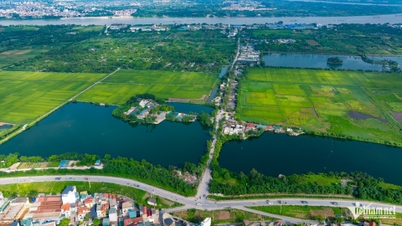
Mr. Nguyen Van Hung guided us on a tour of the Phan Doc Giac temple, which covers an area of over 2,000 square meters. The surrounding countryside and ancient village scenery remain, with a large fish pond in front and a centuries-old banyan tree providing shade right at the temple gate. However, the temple is currently being dismantled for restoration and renovation, and the altar dedicated to the deity has been respectfully moved elsewhere.
"More than 30 years ago, on August 7, 1993, the Phan Doc Giac temple was restored with contributions of money, materials, and labor from the people of Cam Tu village. In January 2015, the temple was recognized as a provincial-level cultural relic. After many years, the temple had seriously deteriorated, and all its components needed repair. To meet the spiritual needs of the people, this year, we are very pleased that with the support of state funding, the temple has begun its repair and restoration," said Ms. Nguyen Thi Chuc, Vice Chairman of the People's Committee of Dong Hoang commune.
Affirming the necessity of the historical site, Mr. Le Xuan Nam, Chairman of the People's Committee of Dong Hoang commune, shared: "It is not by chance that the people of Dong Hoang commune worship Cao Son and Phan Doc Giac, deities who sacrificed themselves to fight foreign invaders and were recognized by the feudal dynasties with official titles. Through the worship of these deities, we remind and educate our descendants about the tradition of patriotism and love for our people, which has always been a continuous and profound source in the character of the people of Dong Hoang and the Dong Son region for centuries."
Nearly 350 households in the village, and the people of Dong Hoang in general, are delighted that the temple dedicated to General Phan Doc Giac has been renovated. Unable to hide his emotions, Mr. Nguyen Van Hung, head of Cam Tu village, said: "Soon, we will be able to welcome him into his new home in a spacious and clean environment. This joy is not only for the people living in the village, but also warms the hearts of his descendants who come from afar."
Text and photos: HUYEN CHI
This article uses material from the book "History of the Dong Hoang Commune Party Committee (1930-2020)", Thanh Hoa Publishing House, 2020.
Source







































































Comment (0)