

Many major health organizations around the world agree that the amount of water needed each day should take into account total fluid intake, thirst, and warning signs from the body, according to the health website Healthline (USA).

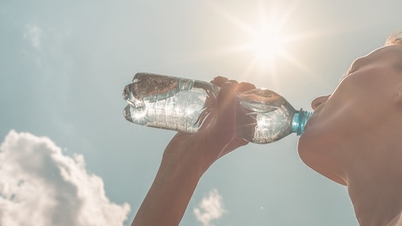
Drinking enough water will help your kidneys function effectively.
PHOTO: AI
The kidneys are responsible for filtering blood, removing dissolved waste products, and regulating water and electrolyte balance in the body. When you don't drink enough water, your urine becomes more concentrated, causing the concentration of substances like calcium, oxalate, and uric acid to increase. These are components that easily crystallize and form kidney stones.
Prolonged dehydration also forces the kidneys to work under unfavorable conditions, potentially increasing the risk of kidney function damage, especially in people with pre-existing kidney disease. Conversely, when the body is adequately hydrated, the elimination of urea, sodium, and other waste products is more efficient, reducing the burden on the kidneys.
The U.S. National Academy of Sciences , Engineering, and Medicine recommends an average daily fluid intake of approximately 3.7 liters for men and 2.7 liters for women, including both water and fluids from food. Of this, about 20% should come from food sources such as vegetables, fruits, and broths. However, this is only a guideline and not a mandatory standard for everyone.
People living in hot and humid environments, engaging in strenuous physical activity, or performing physically demanding work will need to drink more water. Those experiencing dehydration due to diarrhea or vomiting also need to replenish fluids more than usual to compensate for lost fluids.
In particular, people with a history of kidney stones are often advised to drink enough water to produce about 2.5 liters of urine per day. This helps keep the urine diluted and reduces the risk of stone formation.
People with chronic kidney disease need to be cautious.
Conversely, people with chronic kidney disease, heart failure, or those taking diuretics need to be more cautious. There are cases where fluid intake must be restricted to avoid fluid overload.
For healthy individuals, there is some concern that drinking too much water can harm the kidneys. In reality, water intoxication or hyponatremia only occurs in very exceptional cases, when extremely large amounts of water are consumed in a short period, exceeding the kidneys' regulatory capacity.
When sodium in the blood is diluted, it can cause nausea, headaches, altered consciousness, and even seizures. However, for most healthy adults, this risk is very low if they drink only when thirsty and distribute their water intake evenly throughout the day, according to Healthline .
Source: https://thanhnien.vn/uong-bao-nhieu-nuoc-moi-ngay-la-du-de-bao-ve-than-185260126133151297.htm




![[Photo] Reception to welcome General Secretary and President To Lam and his wife on their State visit to the Philippines](https://vphoto.vietnam.vn/thumb/1200x675/vietnam/resource/IMAGE/2026/06/01/1780295488620_vna-potal-chieu-dai-chao-mung-tong-bi-thu-chu-tich-nuoc-to-lam-va-phu-nhan-tham-cap-nha-nuoc-toi-philippines-8798060-7855-jpg.webp)
![[Photo] General Secretary and President To Lam and the President of the Philippines hold talks.](https://vphoto.vietnam.vn/thumb/1200x675/vietnam/resource/IMAGE/2026/06/01/1780286997787_anh-man-hinh-2026-06-01-luc-11-09-43.png)







































































































Comment (0)