

Speaking with a reporter from SGGP newspaper on the occasion of Vietnam's Book and Reading Culture Day (April 21) this year, Mr. Nguyen Nguyen, Director of the Publishing, Printing and Distribution Department (Ministry of Culture, Sports and Tourism), said that it is necessary to carefully consider that it is not that Vietnamese people are reading less, but rather that the way they read is changing, bringing with it new challenges for the publishing industry.

Publication numbers do not reflect reading habits.
Reporter: With TikTok, Reels, and YouTube Shorts dominating most entertainment time, is reading culture gradually fading away? What is your assessment?
Director Nguyen Nguyen: We need to be very cautious when talking about the decline of reading culture. This concept should only be used when there is clear evidence of a systemic decline with specific causes. In reality, the emergence of short-form content platforms mainly changes how people access information, but it does not mean that reading culture has disappeared.
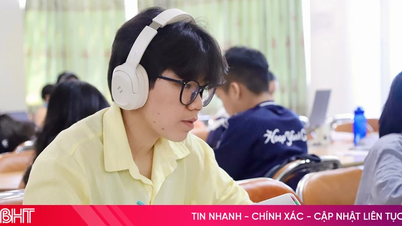
Books are a cultural product, and therefore inevitably influenced by new forms of content. However, this influence is competitive and complementary, not destructive. In the last 5-6 years, indicators of the publishing industry such as revenue, market size, and the number of participating entities have all tended to increase. These numbers are unlikely to increase if the demand for reading were to actually decline. Nevertheless, it cannot be denied that reading habits are becoming more diverse. Some groups, especially students, who should ideally be reading more, are showing signs of reducing the time they spend reading.
The reasons stem not only from academic pressure but also from intense competition from platforms offering fast, concise, and easily accessible content. Conversely, many adult readers, working professionals, and those seeking self-development maintain and even increase their reading habits. Therefore, the overall picture is not entirely negative, but rather shows a clear differentiation between reader groups.
It has been observed that while a large number of books are published, few Vietnamese people read them. What is your opinion on this matter?
There is confusion between two completely different concepts: book production and reading levels. The number of books published is a physical indicator, measurable through the number of titles and copies printed. However, a single book can be read by many people, circulated through libraries, borrowed, or shared. Therefore, the number of books published cannot be used to infer reading levels.
International experience shows that many countries with low per capita publishing output are still considered reading societies thanks to their efficient library systems and sustainable reading habits. Conversely, some places may have high publishing output but not necessarily a correspondingly high reading rate.
In Vietnam, there is currently no truly accurate and reliable data on the number of books read per capita. Previous surveys have been limited in methodology and scale, while large-scale surveys have not guaranteed representativeness. Obtaining reliable figures requires systematic sociological research, representative sampling, and in-depth interviews, demanding significant resources. Therefore, saying that Vietnamese people "read little" based on existing data is not entirely convincing.


Books must adapt to compete with digital content.
How are the development of e-books, audiobooks, and other products supported by technology impacting reading habits, especially among young people?
Technology is not a rival to books, but rather an "extension." In fact, many organizations have built ecosystems from paper books and audiobooks to digital platforms, initially attracting a community of readers.
However, revenue from e-books has yet to see a significant breakthrough. Many publishers are still in the testing phase, searching for an effective model. The biggest obstacles remain infrastructure, copyright issues, and the market. This shows that digital transformation is not just a technology story, but a comprehensive ecosystem problem requiring coordination between publishers, technology companies, and the education system.
Book reviews on social media are booming, helping to spread information but also raising concerns about their subjectivity.
This is an irreversible trend and needs to be recognized as part of the reading ecosystem. On the positive side, reviews help books reach readers faster, especially young people. Many individuals and content creators have invested seriously, contributing to bringing knowledge from books closer to life. However, reviews are inherently personal experiences, while the social media environment amplifies emotions very quickly. A book requires time to read, reflection, and the ability to understand, but many current review contents do not meet these conditions. As a result, evaluations are easily subjective, even misleading. The solution is not to restrict them, but to build a platform of book information that is well-directed and reliable enough to serve as a reference point. With such a "standard axis," review communities can still develop, but within a more balanced ecosystem.
We aim to build a system, a common platform, to provide well-directed book information, helping readers access it in a healthier way. At the same time, we encourage the development of review communities, but they need to be supported with official information.
Many people believe that while there are many books today, they are "bland," lacking real value, and some even liken certain books to effective "pillows" for sleeping.
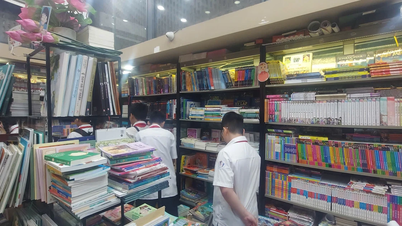
This is a reality that needs to be acknowledged. With approximately 50,000 new book titles available each year, readers often find it difficult to choose engaging books. One reason is that books operate on a market mechanism. As a product, they are subject to the laws of supply and demand, competition, and profit. Therefore, many publishers chase after popular topics, leading to a situation where there are many books but they are of little substance.
In particular, there is a shortage of specialized books such as technical books and vocational books. These are essential types of books, but are difficult to develop due to high costs and a narrow market.

So, does the publishing industry need to shift from quantity to quality?

We are operating under a socialist-oriented market economy model, so we must respect market laws. The role of management is to regulate, create a healthy competitive environment, and encourage products with value. A balance is needed: quantity to maintain the market, and quality to retain readers. At the same time, we must create reading demand from society itself through education and vocational training. For example, if a profession requires certifications or access to specialized materials, the demand for reading will naturally increase.
The publishing industry hopes to build a multi-platform reading ecosystem for the future, but in reality, students are not yet an active readership. In your opinion, what are the reasons for this paradox, and what solutions are needed to make reading more accessible and practical for young people?
There are more and more books available, but young people find it difficult to find the right ones. Without a "point of contact," they easily turn to short content on social media. The solution isn't to force them to read more, but to make reading accessible and immediately useful. When books are directly linked to their learning, career, and life needs, their interest in reading will naturally return.
He repeatedly emphasized that books are the "center" of the cultural industry. How should this be interpreted?
Books need to be placed at the center of cultural industries. They are the foundation of content creation. A book can become a film script, material for theater, and inspiration for many other art forms. However, we currently lack mechanisms to connect these fields. Without solving the content problem, industries like film and performing arts will struggle to develop sustainably.
Source: https://www.sggp.org.vn/van-hoa-doc-dang-thay-doi-post848885.html


























































![[Video] Sunset at Lap An Lagoon – Where the sun sets over the fishing nets](https://vphoto.vietnam.vn/thumb/1200x675/vietnam/resource/IMAGE/2026/05/31/1780192137701_beach-landscape-sea-water-nature-grass-745871-pxhere-com.jpeg)



































Comment (0)