

 |
| Illustrative image. |
The anti-corruption campaign led by General Secretary Nguyen Phu Trong is the largest anti-corruption struggle in Vietnam's entire history, at all levels: systemic, involving individuals and assets.
Hundreds of trials have been conducted, ensuring that the right people are punished for their crimes. However, the impact of corruption lingers and threatens to further erode public trust in the system, undermine social morality, and hinder national development. Recognizing this, we understand the crucial and urgent importance of the fight against corruption.
The fight against corruption is not only about preventing the theft of state and public assets into the pockets of a few powerful individuals, not only about purifying the political system, not only about restoring some of the people's trust in the broken institutions, but also about protecting the dignity of a nation.
For the fight against corruption to succeed, both legally and morally, the unwavering determination and steadfastness of the entire political system, led by General Secretary Nguyen Phu Trong, is the only key to success in this particularly difficult struggle.
The enemies of the nation during the two wars of resistance for independence, freedom, and national reunification were very clear. Under the leadership of the Party and the will of the people, we overcame them and triumphed. However, in peacetime and during the period of national development, our enemies are extremely complex, cunning, shrewd, difficult to identify, and at times very vague. Unlike our enemies in war, the enemies of the nation in peacetime are alongside us, laughing and talking with us, dining with us, and sometimes even participating in the same political organization as us.
| Culture helps every nation to cultivate the conscience of its people and its people. When a person possesses a conscience, they carry within themselves the finest qualities: self-respect, love for humanity, sharing, dedication, and the "moral code" of being human. |
About 20 years ago, in an interview with a provincial police chief published in the monthly edition of "World Security ," the reporter asked, "Between the guns of criminals and money, which do you fear? " The police chief recoiled and replied, "I fear money." The fight against corruption in recent years has eloquently proven that the fear of the provincial police chief 20 years ago was real. That statement continues to warn us.
The truth has proven horrifyingly and undeniably that high-ranking officials in the political system have succumbed to money. If someone were to offer $1 million to bribe them into surrendering, they might simply walk past that person. But with $10 million, $100 million, or even more, someone might start to waver and risk agreeing to participate in the crime, even if they know it's a crime.
These officials, who succumbed to the lure of money, were once well-educated, thoroughly trained, and had proven their capabilities at some point. But at a certain point, they lacked the will to continue and they fell. They couldn't complete the path they had chosen. Materialism triumphed over their conscience.
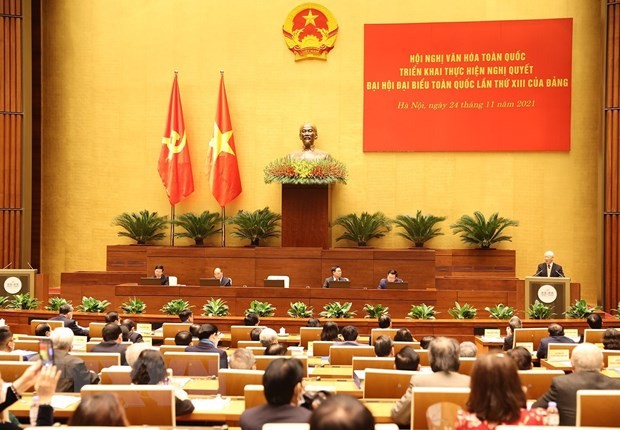 |
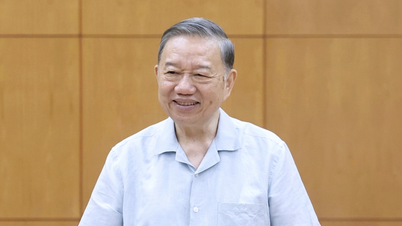
| General Secretary Nguyen Phu Trong delivered a speech at the National Cultural Conference in November 2021. |
If we observe closely, we see that alongside the fight against corruption is the cultural revitalization effort, with a key highlight being the National Cultural Conference chaired by General Secretary Nguyen Phu Trong in November 2021.
At this conference, the General Secretary reiterated President Ho Chi Minh's truth about culture: "Culture illuminates the path of the nation," and affirmed: "As long as culture exists, the nation exists." The Party's fight against corruption has been effectively preventing the degeneration of a segment of Party members and officials in positions of power. But there is an extremely important weapon, or perhaps the most important weapon, in the fight against corruption: culture.
Culture helps every nation to cultivate the conscience of its people and its people. When a person possesses a conscience, they carry within themselves the finest qualities: self-respect, love for humanity, sharing, dedication, and the "moral code" of being human.
Culture enables each individual to self-reflect on their actions within their family and community; it helps individuals understand what happiness is and makes them feel ashamed of their base desires. When people learn to self-reflect, understand the meaning of happiness, feel shame, and repent, they can make informed decisions about their actions. From there, selfishness, greed, and hedonism are curbed by conscience.
Thirty years ago, during a conversation with parents of high school students about guiding teenagers before they become citizens of a country, one parent suggested that writers create a guidebook about the pitfalls of life so their children could foresee and avoid them. I told the parents: If writers were to create a guidebook with 1,000 pitfalls, their children might fall into the 1,001st one when they enter adulthood. The most important thing is to sow the seeds of beauty in the hearts of children. When the tree of beauty grows and flourishes in a person's soul, that person will understand beauty.
| The Party's fight against corruption has been effectively preventing the moral decay of a segment of Party officials and members in positions of power. However, there is an extremely important weapon, or perhaps the most important weapon, in the fight against corruption: culture. |
When one understands beauty, they will be able to discern what is BEAUTIFUL and what is UGLY. And in this way, they will be able to navigate all the pitfalls of life. When people learn about the amount of money some corrupt criminals have obtained from the State and the people's assets, many exclaim: "Why do they need so much money?"
A corrupt criminal doesn't necessarily need such a large sum of money for themselves and their family. But their greed and lack of conscience prevent them from stopping. If they had the capacity for self-reflection, if they had the capacity to question the source of their wealth, if they had the capacity to feel ashamed of their theft, they would stop. Such "capabilities" can only arise from culture.
Therefore, culture is the torch that illuminates the path for an individual and a nation to find their way through the darkness of their soul and walk towards the light.
The legal system and anti-corruption agencies are the last line of defense in the fight against corruption. But the first and most important line is culture. A person, a community that embodies culture (beauty) will be able to overcome the darkness of greed.
The most important and effective "weapon" against evil is conscience, while all other "tools" are secondary. Therefore, we understand even more deeply the need for a concrete, direct struggle against corruption and the revitalization of national culture. This is the great ideology of a nation.
Source
![[Image] Close-up view of the interchange connecting the two expressways and Long Thanh Airport.](https://vphoto.vietnam.vn/thumb/1200x675/vietnam/resource/IMAGE/2026/05/25/1779703378210_ndo_br_z7863716673926-224453a31600126cce10622af6290afd-4549-jpg.webp)
![[Image] Hanoi's urban life under the challenge of a "scorching hot" environment](https://vphoto.vietnam.vn/thumb/1200x675/vietnam/resource/IMAGE/2026/05/25/1779706979265_nang-nong-t5-2026-minh-duy-7-4636-jpg.webp)





















































































Comment (0)