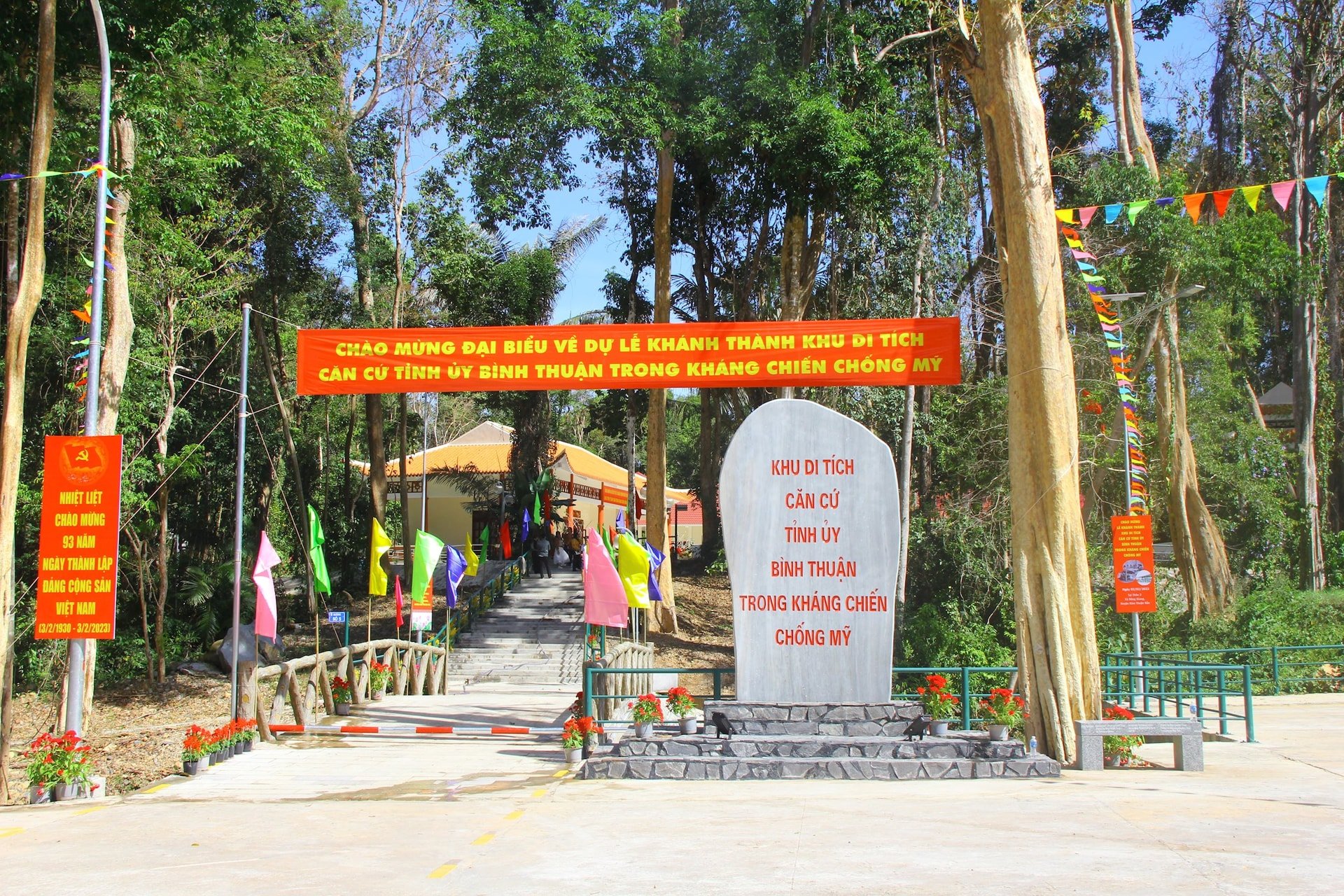
During the resistance war against the US to save the nation, Binh Thuan was one of the heroic and resilient localities, making a significant contribution to the victory of the revolution in the South. On the land of Sa Lon – once an important base of the Binh Thuan Provincial Party Committee – countless glorious victories, noble sacrifices, and historical decisions of a time when courage was unwavering and determination was unyielding have been recorded.
At that location, the Provincial Party Committee Office was not only an advisory and support agency, but also a true "headquarters," a source of unity and strength, affirming its central role in organizing and protecting the continuous leadership of the Provincial Party Committee throughout the most challenging years.
Historical journeys
Immediately after the end of the resistance war against French colonialism, the higher authorities appointed the establishment of the Southern Central Region Party Committee – the predecessor of the Inter-provincial Committee 3 comprising Binh Thuan, Ninh Thuan, and Khanh Hoa – with Comrade Tran Le serving as Secretary of the Party Committee and concurrently Secretary of the Binh Thuan Provincial Party Committee. The Provincial Party Committee's office was then located at Suoi Da Mai (Nui Ong, Tanh Linh), then gradually moved to Rung Ngang (Le Hong Phong area), and finally to A Ra – Sa Lon – which became the longest-lasting military base during the resistance war. The initial office, though small, operated with great flexibility. Each person served as both an administrative officer and a soldier, ready to take up arms, transport food, and protect the office in any dangerous situation.
The period 1961–1964 marked many changes: The agency was successively relocated to the Mac Co area, then to Deo Nam – closer to the plains, closer to the people, and more convenient for command. In April 1967, the administrative organization was restructured: Bac Binh province was created from Hoa Da, Tuy Phong, Phan Ly districts and part of Tuyen Duc. The provincial capital was located in the mountainous Ga Lang area. However, in August 1968, Bac Binh was dissolved and merged with Binh Thuan, and the agency's headquarters moved to Deo Gio Lanh (Ham Thuan). Simultaneously, Binh Tuy province was also established, comprising Ham Tan, Hoai Duc, and Tanh Linh districts, with its office located at the headwaters of the Phan River – Ong Mountain.


In the early 1970s, the Nam Son base was established – a command center for the three provinces of Binh Thuan, Binh Tuy, and Lam Dong. This period saw close cooperation between various departments such as organization, propaganda, and mass mobilization – all operating under one roof: the Provincial Party Committee Office. It was also from here that the two provinces of Binh Thuan and Binh Tuy held political congresses, establishing provisional revolutionary governments – a political victory of immense significance in the struggle in the South.
Following the memorial service for President Ho Chi Minh (1969), in July 1970, Binh Thuan and Binh Tuy held their first Party Congresses during the anti-American war period. This was a significant milestone in consolidating confidence and strengthening the Party organization at the local level. From 1974 to the liberation day of 1975, the Binh Thuan Provincial Party Committee proactively relocated several times, always staying close to the battlefield and the people. Their final base was at kilometer 36 on Provincial Road 8 (now National Highway 28) – a prerequisite for taking over Phan Thiet town on April 19, 1975. At the same time, Binh Tuy, under the leadership of the Provincial Party Committee, with the Provincial Party Committee Office at Nui Lop base, commanded the campaign to liberate the entire province within the first three months of 1975, making a significant contribution to the overall victory of the historic Spring Offensive.
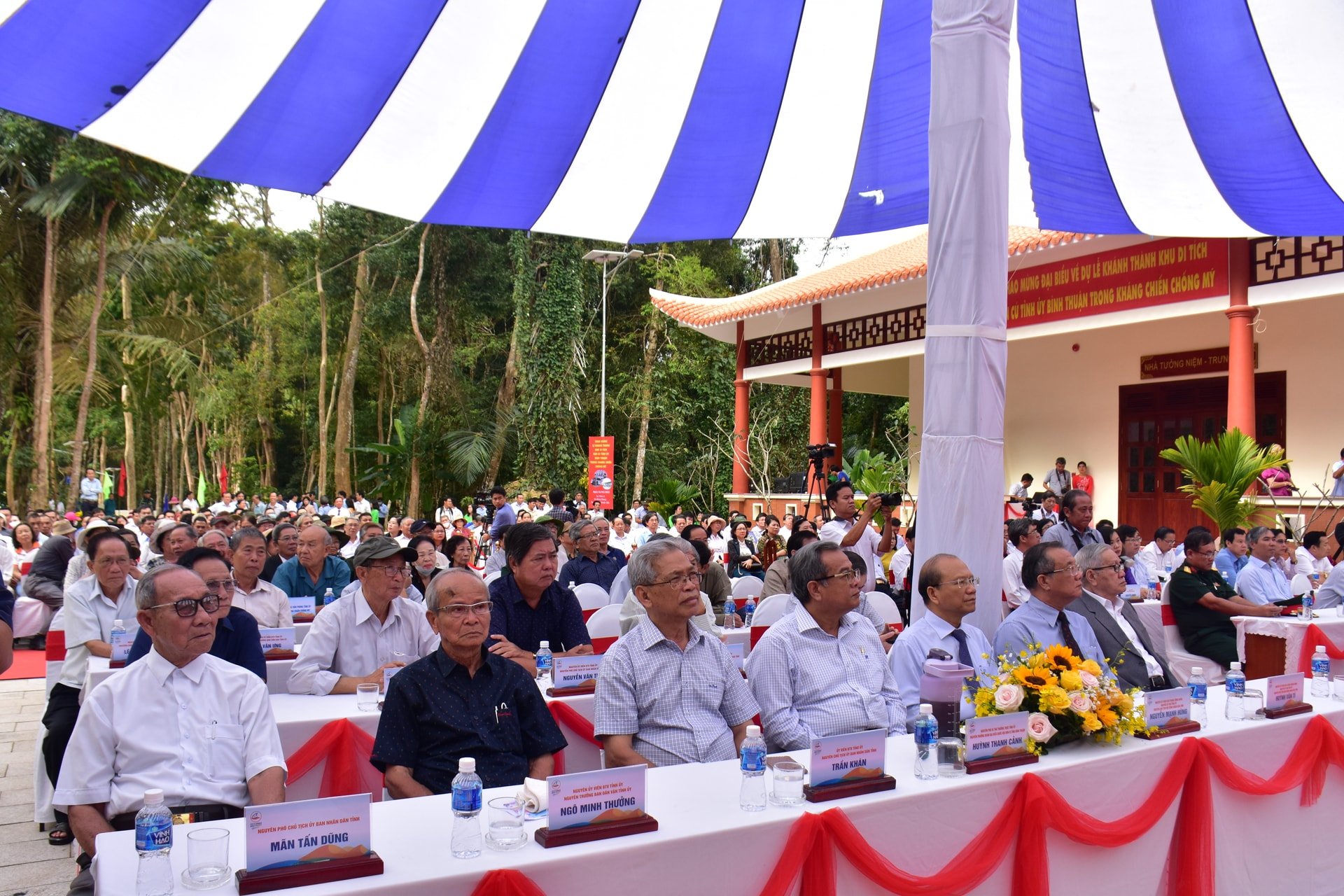
When the Office is the Silent Frontline
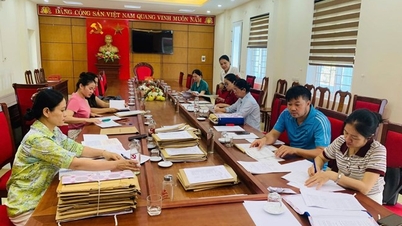
Beyond its advisory, coordinating, and organizational functions, the Binh Thuan Provincial Party Committee Office was also a direct fighting force during the war against the US, contributing to victories of all sizes across the battlefield. During the war, "solving the food problem" was a vital task. Without logistics, there would be no organization. The logistics, administration, and catering departments not only handled cooking but also directly cultivated crops, transported food, and distributed rations according to strict regulations – demonstrating discipline and solidarity. In addition, the Office organized the communications, cryptography, and radio departments – the "lifeline" of information transmission for the entire Provincial Party Committee. The cryptography and radio operators always considered the safety of documents and equipment more important than their own lives. Furthermore, the Office meticulously organized and served the Provincial Party Committee's congresses and conferences: from setting up field halls, digging makeshift kitchens, arranging accommodation and meals, digging bomb shelters for delegates, to preparing content, compiling information, and even organizing hunting trips to improve meals… All aimed at ensuring the conference's success in secrecy and absolute safety.
Not stopping there, the Provincial Party Committee Office also sent many cadres and soldiers to directly participate in many major campaigns: from destroying the Hoai Duc - Bac Ruong sub-district to dismantling the resettlement area and bringing ethnic minorities back to their bases. Many of the Office's cadres were only 17 or 20 years old at the time, not yet knowing what love was, but were ready to sacrifice themselves. Some went on missions and never returned. Some suffered injuries for the rest of their lives. The entire Office has nearly 80 martyrs, including two Heroes of the Armed Forces: Le Van Bang and Nguyen Hoi. Dozens of their mothers were honored as Heroic Vietnamese Mothers.



Continuing the tradition in peacetime.
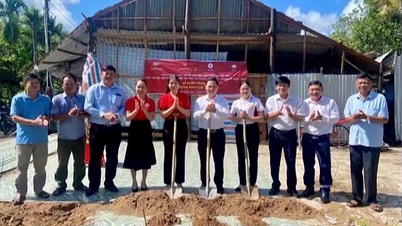
After liberation, many cadres from the Provincial Party Committee Office were assigned by the Party to important positions: from districts and towns to departments and agencies. Some worked as international experts in Cambodia, while others served at Vietnamese embassies abroad. Regardless of their position, they continued to dedicate themselves: some worked in social work, veterans' associations, education promotion associations, and charitable organizations. Some, despite their advanced age and frail health, remained exemplary Party members in their neighborhoods, Party branches, and villages, serving as pillars of grassroots movements. More than 80 martyrs fell during the resistance war, and since the reunification of the country, more than 55 former cadres from the Office have passed away. Many of them contributed to the rediscovery of the historic Sa Lon base – but now they will never have the opportunity to return. Mentioning their names is to remember a generation that "ate wild betel leaves, drank stream water, and slept in the forest," yet never retreated. It is a way to express gratitude, to illuminate memories, and to serve as a guiding light for today and tomorrow.
Although not on the front lines of combat, the Provincial Party Committee Office remains a "launching pad" for important decisions, a place that safeguards the lifeline of leadership, and a place where the courage, intelligence, and camaraderie of an entire generation converge. In this new era, as the country undergoes a powerful transformation, these traditional values remain a source of strength.
Source: https://baobinhthuan.com.vn/van-phong-tinh-uy-binh-thuan-dau-an-mot-thoi-hoa-lua-129671.html




![[Photo] Strengthening character and expertise: Intense training for artillery soldiers.](https://vphoto.vietnam.vn/thumb/1200x675/vietnam/resource/IMAGE/2026/06/30/1782815602541_lu-368-1875-4571-jpg.webp)