

The rapid advancement of technology continues to push the boundaries of what was once considered possible. In a groundbreaking development, Chinese scientists have built a satellite capable of recognizing human faces from a distance of nearly 100km.
This new technology, which utilizes advanced laser systems, has the potential to revolutionize surveillance capabilities on a global scale, sparking both curiosity and concern.

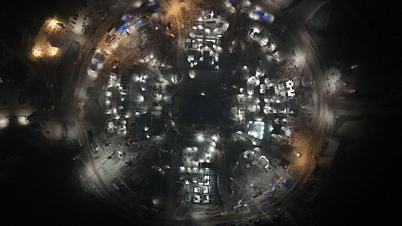
China's satellite surveillance technology has reached a whole new level. Photo: Gen AI
Lidar technology breakthrough
Chinese engineers have developed a satellite equipped with a laser-based remote sensing system called Synthetic Aperture Lidar (SAL). This technology allows the satellite to capture images in two or three dimensions with unprecedented clarity.
Unlike previous systems that relied on longer-wavelength microwave radiation, SAL utilizes optical wavelengths, producing sharper and more detailed images. This innovation marks a significant leap forward in espionage technology, enhancing the capabilities of traditional spy cameras and telescopes by more than a hundredfold.
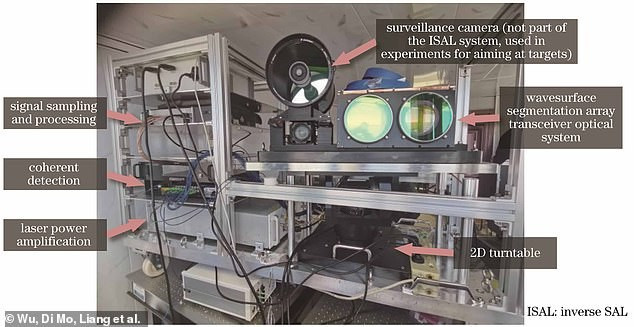
Initial testing of this technology took place on Qinghai Lake in northwestern China. The system demonstrated its capabilities by detecting details as small as 1.7mm from a distance of 101.8 km.
Such precision is achieved by splitting the laser beam through a 4x4 array of microlenses, effectively widening the optical aperture. These advances could allow operators to monitor foreign satellites with previously unimaginable levels of detail, potentially changing the international surveillance landscape.
Global surveillance on an unimaginable scale.
The development of this satellite technology could have profound implications for global surveillance operations. With the ability to capture high-resolution images from space, nations could gain unprecedented insights into the activities of other countries.

Satellite surveillance can now "spot" individual faces like surveillance cameras - Photo: Dima Care
While the ability to monitor foreign satellites in detail could enhance national security, it also raises significant privacy concerns. The potential misuse of such technology to violate individual privacy or conduct unauthorized surveillance is a cause for concern among privacy advocates.
As nations develop their technological capabilities, balancing security and privacy becomes increasingly important. Ethical considerations surrounding the use of such powerful surveillance tools are likely to spark debate.
Synthetic aperture lidar - a technology from science fiction movies.
Synthetic Aperture Lidar (SAL) is an advanced combination of laser radar technology and advanced imaging techniques. By exploiting satellite motion, SAL produces high-resolution images that surpass the capabilities of traditional scanning radar systems.
Using optical wavelengths, which are shorter than those used by microwave-based systems, enhances the sharpness and detail of the resulting images.
During testing, the researchers achieved significant accuracy by using a split laser beam passed through an array of microlenses, expanding the system's optical aperture. This innovation allowed them to overcome previous limitations related to the trade-off between field of view and aperture size.
However, it is important to note that these tests were conducted under ideal weather conditions. Bad weather or visibility issues can significantly affect the accuracy and reliability of the system. The robustness of this technology under a wide range of conditions remains an important area for further research and development.
Future prospects and ethical considerations
As this technology continues to develop, its potential applications are expanding beyond military surveillance.

What if shadowy organizations could track every move of every individual? - Photo: Adobe Stock
The ability to capture high-resolution images from space could have significant implications for fields such as environmental monitoring, disaster management, and scientific research. However, these advances also require careful consideration of ethical boundaries.
The potential for misuse, coupled with concerns about privacy and international trust, underscores the need for a comprehensive regulatory framework. As nations continue to push the boundaries of technological innovation, the global community must collectively address the ethical implications of such advances. How can we ensure that powerful technologies like SALs are used responsibly, balancing the benefits of enhanced oversight with the imperative to protect individual privacy?
In a world where technology continues to advance at a breakneck pace, the development of a satellite capable of facial recognition from space embodies both the promise and the danger of modern innovation.
Source: https://khoahocdoisong.vn/ve-tinh-do-tham-trung-quoc-soi-ro-vat-2mm-tu-hon-100km-post1553399.html

![[Image] Hanoi's urban life under the challenge of a "scorching hot" environment](https://vphoto.vietnam.vn/thumb/1200x675/vietnam/resource/IMAGE/2026/05/25/1779706979265_nang-nong-t5-2026-minh-duy-7-4636-jpg.webp)

![[Image] Close-up view of the interchange connecting the two expressways and Long Thanh Airport.](https://vphoto.vietnam.vn/thumb/1200x675/vietnam/resource/IMAGE/2026/05/25/1779703378210_ndo_br_z7863716673926-224453a31600126cce10622af6290afd-4549-jpg.webp)















![[GALLERY] A completely different iPhone for the 20th anniversary edition](https://vphoto.vietnam.vn/thumb/402x226/vietnam/resource/IMAGE/2026/05/25/1779686871893_212-jpg.webp)




































































Comment (0)